
Fertilization
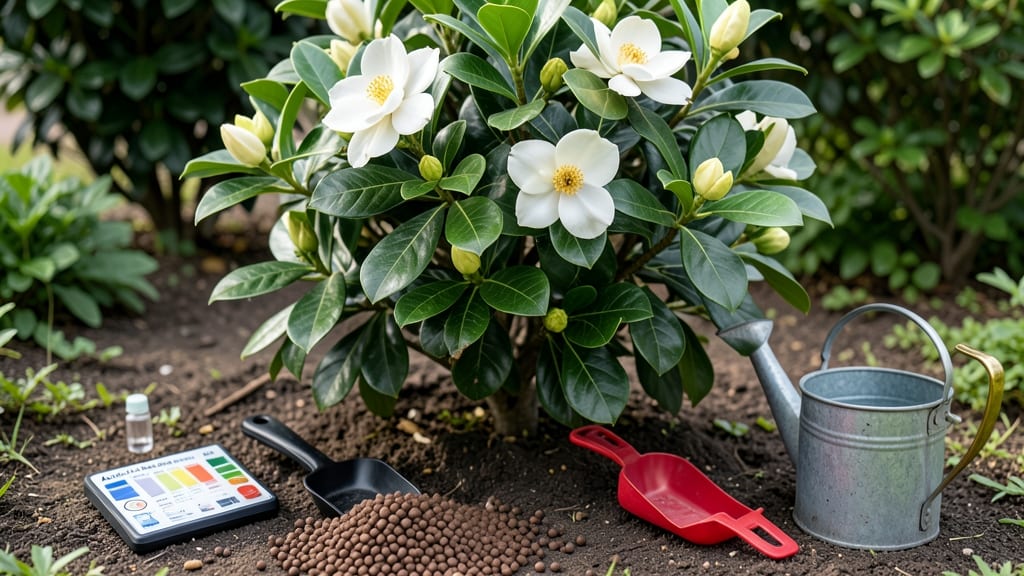
The best fertilizer for a gardenia tree is the secret to those fragrant white blooms you’ve been dreaming of.
Here’s the catch: most garden fertilizers won’t cut it. Gardenias crave acidity and specific nutrients, yet many gardeners end up with yellowing leaves or sparse flowers—all from using the wrong mix. The solution? A fertilizer tailored to their needs, applied at the right time.
In this guide, I’ll walk you through the best organic and synthetic options for your gardenia, how to avoid over- or under-feeding, and even DIY blends using household items. No more guessing—just lush, blooming gardenias that smell as good as they look.
Ready to transform your plant’s health? Let’s dive into the acid-loving fertilizer strategies that work—plus the timing and techniques that make all the difference.
Best acid-loving fertilizers for gardenia trees to boost blooms
Gardenias are acid-loving plants that demand precise nutrition to produce their signature fragrant white blooms. The wrong fertilizer can stunt growth or even kill your plant, while the right blend—rich in iron, magnesium, and phosphorus—will transform your gardenia into a lush, flowering powerhouse.
Let’s explore the best organic and synthetic options tailored for gardenias, including their NPK ratios and micronutrient profiles.
Gardenias thrive in soil with a pH between 5.0 and 6.5, so acid-loving fertilizers are a must. These fertilizers not only provide essential nutrients but also help maintain the acidic soil environment your gardenia craves.
Whether you prefer slow-release granules or liquid feeds, the key is choosing a formula designed for azaleas, camellias, or rhododendrons, as these share similar soil needs.
Below, we compare the top organic and synthetic fertilizers for gardenias, highlighting their NPK ratios, micronutrient content, and ease of use. Each option supports vibrant blooms and glossy foliage while keeping your soil’s acidity in check.
| Fertilizer Type | NPK Ratio | Micronutrients | pH Adjustment | Best For | Application |
|---|---|---|---|---|---|
| Espoma Azalea/Camellia | 6-6-6 | Iron, magnesium, sulfur | Maintains acidity | Established gardenias | Slow-release granules |
| Miracle-Gro Azalea, Camellia, Rhododendron | 8-3-9 | Iron, manganese, zinc | Acidifying | Potted and in-ground | Liquid feed |
| Fish Emulsion (Organic) | 5-1-1 | Nitrogen, calcium, potassium | Mildly acidic | New growth phase | Foliar spray or soil drench |
| Peat Moss + Bone Meal | 3-15-0 | Phosphorus, calcium | Highly acidic | Blooming season | Soil amendment |
| Composted Pine Bark | N/A (organic matter) | Slow-release nutrients | Acidifies soil | Long-term soil health | Mulch or soil mix |
For organic gardeners, fish emulsion and composted pine bark are excellent choices. These options not only provide essential nutrients but also improve soil structure and maintain acidity naturally. Peat moss mixed with bone meal is another powerhouse for encouraging vibrant blooms, thanks to its high phosphorus content.
Synthetic fertilizers like Espoma Azalea/Camellia and Miracle-Gro Azalea blend offer precise nutrient control with balanced NPK ratios. The 8-3-9 ratio in Miracle-Gro is ideal for gardenias, as it prioritizes phosphorus for blooms while providing enough potassium for root strength.
Both options also include iron and manganese, which are critical for preventing yellowing leaves—a common issue in gardenias.
When selecting a fertilizer, consider your gardenia’s current growth stage. During spring and early summer, focus on a higher nitrogen fertilizer (like 6-6-6) to promote leafy growth. Shift to a phosphorus-rich formula (like 3-15-0) in late summer and fall
How to apply gardenia tree fertilizer without burning roots
Applying fertilizer to your gardenia tree can feel intimidating, especially when you want to avoid root burn or nutrient overload. The key lies in timing, dilution, and application methods that align with your plant’s natural growth cycle.
Gardenias are sensitive to over-fertilization, so precision is everything. Let’s break down the best practices to keep your tree thriving without harming its delicate roots.
First, always use a slow-release, acid-loving fertilizer formulated for azaleas or camellias, as these blends mimic the pH 5.0-6.5 soil gardenias prefer. Avoid generic all-purpose fertilizers, which can disrupt the soil’s acidity and cause nutrient imbalances.
For best results, apply fertilizer during the active growing season—from April through September—when your gardenia is absorbing the most nutrients.
⚠️ callout-warning
Applying undiluted fertilizer or exceeding recommended doses can lead to root burn, leaf scorch, or even plant death. Always dilute liquid fertilizers to half-strength for first-time applications and monitor your gardenia’s response closely.
Signs of over-fertilization include yellowing leaves, crispy leaf edges, or white crust on the soil surface. If you notice these, flush the soil with water immediately to dilute excess salts.
For soil applications, spread a 1 tablespoon of granular fertilizer around the drip line (the outer edge of the tree’s canopy) for young gardenias or 1 cup per 10 square feet for mature trees.
Gently scratch the fertilizer into the top 2 inches of soil to avoid direct root contact, which can cause irritation. Water the area thoroughly to help the nutrients dissolve and penetrate the soil evenly.
If you prefer liquid fertilizers, dilute them to half-strength and apply them to the soil—not the leaves—using a watering can with a rose attachment for even distribution.
Foliar feeding (spraying fertilizer directly on leaves) is not recommended for gardenias, as it can clog stomata and lead to leaf damage. Always apply liquid fertilizer in the early morning to allow the tree to absorb nutrients before the heat of the day.
After applying fertilizer, water deeply to help the nutrients reach the root zone. Avoid fertilizing during hot afternoons or when the tree is stressed (e.g., after transplanting or during drought). Instead, choose cool, cloudy days for application to minimize stress.
Repeat the process every 4-6 weeks during the growing season, but reduce frequency in late summer to prepare the tree for dormancy.
To maximize nutrient absorption, mulch around the base of your gardenia with 2-3 inches of organic mulch, such as pine bark or compost. This helps retain moisture, regulate soil temperature, and slowly release nutrients over time.
Avoid piling mulch directly against the trunk, as this can smother the roots and attract pests. With the right approach, your gardenia will reward you with vibrant blooms and lush foliage all season long.
🌸