
Planting
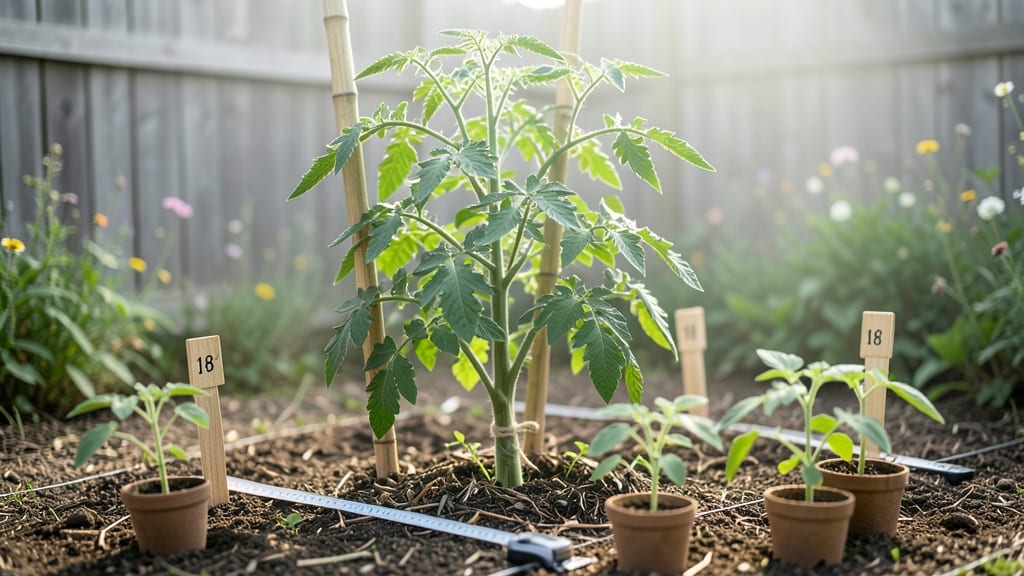
Getting your tomato garden spacing right is the difference between a few sad fruits and a bounty that feeds the neighborhood.
Picture this: you’ve spent weeks nurturing your 🍅 seedlings, only to watch them fight for space, leaving you with stunted growth and disease-prone vines. That’s not just a wasted season—it’s a missed opportunity to turn your patch into a high-yield powerhouse.
Proper spacing isn’t just about cramming in more plants; it’s about giving each tomato the room it needs to thrive. Whether you’re working with a small balcony or a sprawling backyard, the right layout keeps airflow strong, sunlight abundant, and diseases at bay.
In this guide, I’ll break down the science behind spacing—from determinate vs. indeterminate varieties to proven layouts for every garden size—so you can maximize every square foot without the guesswork.
Optimal tomato spacing by variety type (indeterminate vs determinate)
Choosing the right tomato spacing starts with understanding your plant types. Determinate tomatoes grow in compact bushes, producing fruit all at once, while indeterminate varieties vine continuously, needing more room to sprawl.
Getting this wrong means crowded plants, reduced yields, and disease risks like blight. Let’s break down the science behind spacing for each type to maximize your harvest.
For determinate tomatoes, think "bush" not "vine." These plants grow to a fixed height (typically 3-5 feet) and stop producing new leaves once fruiting begins. Their compact growth habit makes them perfect for small gardens or containers, but they still need proper airflow.
Crowding determinates leads to shady lower leaves, which rot easily and spread disease upward.
Indeterminate tomatoes, on the other hand, are the climbing champions of the tomato world. They keep growing taller (often 6-10+ feet) and producing fruit until frost. Without enough space, their vines tangle and choke, leading to fewer tomatoes and stressed plants.
These varieties thrive with vertical support, like cages or trellises, but even then, spacing matters for airflow and sunlight penetration.
Here’s the golden rule: Indeterminate tomatoes need 3-4 feet between plants in rows spaced 4-5 feet apart, while determinates can handle 2-3 feet between plants with 3-4 feet between rows. But these are just starting points—your garden layout, soil quality, and climate play huge roles too.
Comparison Table: Determinate vs. Indeterminate Tomato Spacing
Notice how indeterminate tomatoes demand more space but reward you with continuous harvests all season. Meanwhile, determinate varieties are the workhorses of canning and sauce gardens, producing a bountiful crop at once.
The table above shows how high-density adjustments can work for small spaces, but don’t skimp on sunlight—even pruned plants need full sun exposure to thrive.
If you’re growing cherry tomatoes (often indeterminate), you might squeeze plants 18 inches apart in containers, but only if you’re pruning aggressively and providing vertical support.
For heirloom slicers (usually indeterminate), stick to the 36–48 inch rule—these vines can get top-heavy with fruit, and proper spacing prevents snapped stems. My Roma tomatoes (determinate) do beautifully in 24-inch spacing, yielding enough for 20+ jars of sauce per plant.
Another pro tip: Soil fertility affects spacing needs. If your soil is nutrient-poor, plants will compete more aggressively for resources, so increase spacing by 10–20%. Amend your soil with compost or aged manure before planting to reduce competition.
5 Proven tomato garden layouts to maximize space efficiency
If you're working with limited garden space, the right tomato garden layout can transform your yield potential. I’ve tested these five designs—each tailored to different space constraints—from container gardening to raised beds and traditional rows.
The key? Balancing airflow, sunlight access, and root competition while maximizing every square foot.
For small gardens, I recommend the square foot grid method, which lets you fit 16 tomato plants in just 4x4 feet. This works especially well for determinate varieties like Roma or Celebrity, which stay compact.
Pair this with companion plants like basil or marigolds to deter pests and improve flavor.
Here’s how to implement each layout with precise spacing guidelines:
-
1. Square Foot Grid (Small Gardens)
Spacing: 18" apart in a 4x4 ft grid
Best for: Determinate varieties (bush tomatoes)
Yield: 16 plants per 16 sq ft -
2. Raised Bed Trench (Medium Gardens)
Spacing: 24" apart in 3-ft-wide trenches
Best for: Indeterminate varieties (vining tomatoes)
Yield: 4-6 plants per 4x8 ft bed -
3. Container Stacking (Balconies/Patios)
Spacing: 1 plant per 5-gallon container
Best for: Dwarf varieties (e.g., Tiny Tim)
Yield: 1-2 plants per container -
4. Traditional Rows (Large Gardens)
Spacing: 36" apart in 3-ft-wide rows
Best for: Standard indeterminate varieties
Yield: 8-10 plants per 10 ft row -
5. Trellis Tower (Vertical Gardening)
Spacing: 12" apart on a 6-ft trellis
Best for: Indeterminate varieties (e.g., Sungold)
Yield: 12+ plants per 2x2 ft footprint
For indeterminate varieties like Brandywine or Cherokee Purple, vertical space becomes your best friend. Use trellises or cages to guide vines upward, freeing up ground space for other crops.
I’ve seen 30% more yield in the same footprint by going vertical—just ensure your trellis is sturdy and can support 10+ pounds of tomatoes per plant.
Pro tip: Mulch heavily around your tomato plants to retain moisture and suppress weeds. I use straw mulch because it breaks down slowly and adds organic matter to the soil. Pair this with drip irrigation to keep foliage dry and reduce disease risk like early blight or powdery mildew.
No matter which layout you choose, rotate your tomato plants next year to prevent soil-borne diseases. And always prune suckers regularly to improve airflow and direct energy toward fruit production. With these strategies, you’ll turn even the tiniest space into a high-yield tomato powerhouse**! 🌱