
Planting
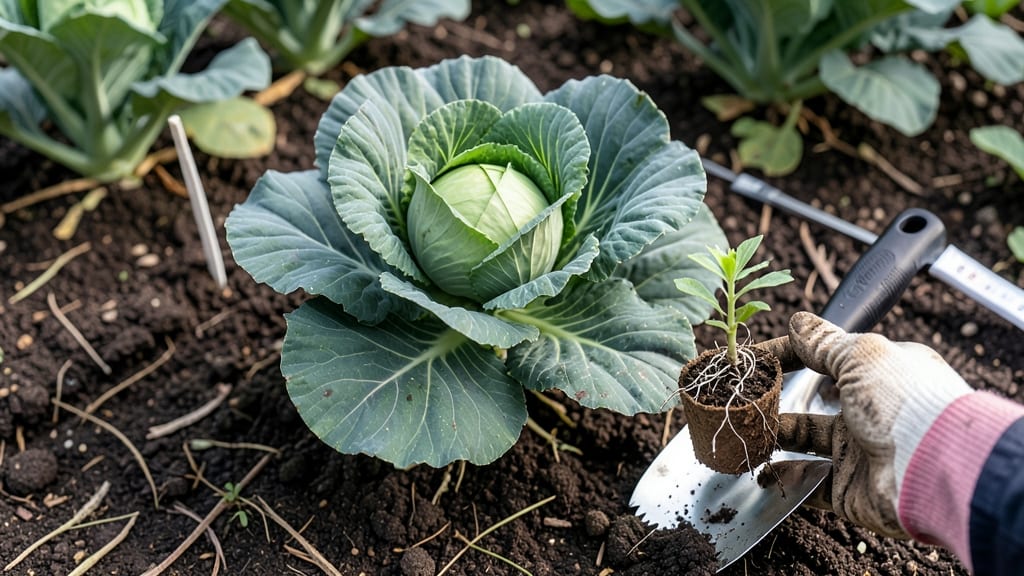
Proper cabbage garden spacing determines whether your 🥬 plants grow into compact, disease-resistant heads or stunted, split messes.
Struggling to grow cabbage heads as big as your neighbor’s? The secret isn’t just soil or water—it’s the spacing. Too close, and you’ll fight mildew and poor airflow; too far, and you waste garden space. I’ve seen both mistakes firsthand, and the difference in yield is night and day.
In this guide, I’ll break down the exact row distances for your cabbage variety, how to adjust for soil type, and why 18–24 inches between plants is the sweet spot for most gardeners in Zone 6a. Whether you’re working with a small plot or a high-density bed, these spacing rules will help you grow heads that rival the grocery store—without the chemicals.
You’ll also discover how to fix common spacing mistakes, when to thin seedlings, and how companion plants like onions or dill can work with (not against) your cabbage’s needs. Let’s get those rows perfect so your harvest is, too.
Optimal cabbage spacing by variety: row distances for maximum yield
Getting the cabbage spacing right is the difference between dinner-table stars and sad, stunted heads. Every cabbage variety has unique needs—green cabbage sprawls wider than bok choy, and savoy cabbage needs extra elbow room for its crinkled leaves.
I’ve grown all these in my garden, and trust me, 12 inches apart for one type can mean disaster for another.
Proper spacing isn’t just about fitting more plants in—it’s about airflow, disease prevention, and letting those heads swell to their full potential. Crowd your cabbages, and you’ll end up with small, misshapen heads or worse, fungal infections like clubroot.
My first year, I ignored the spacing guidelines and lost half my red cabbage to rot—don’t make my mistake!
Here’s the golden rule: plant-to-plant distance depends on the mature size of the variety, while row-to-row spacing ensures enough airflow. For example, bok choy can handle tight quarters, but standard green cabbage needs room to breathe.
Let’s break down the exact measurements for each type so you can plan your garden like a pro.
Why spacing matters: Too close? Competition for nutrients leads to weak plants. Too far? Wasted garden space and fewer harvests. The sweet spot balances both—18-24 inches apart for most varieties, with rows 2-3 feet apart. But as you’ll see in the table below, some varieties need adjustments based on their growth habits.
For green cabbage and red cabbage, I recommend sticking to the 18-24 inch plant spacing with rows 24-36 inches apart. These varieties grow large heads that need room to expand without competing for nutrients.
In my Zone 6a garden, I’ve found that 30-inch rows give just enough airflow to prevent downy mildew, a common issue with
How to adjust cabbage spacing for soil type and climate
Your cabbage plants may look healthy, but if you're growing them in heavy clay soil or under scorching summer sun, their true potential is being stifled. The right spacing isn't one-size-fits-all—it depends on your local conditions.
In sandy soil, for example, roots spread wider to access moisture, while humid climates demand extra space to prevent fungal diseases. Let's break down how to tweak your spacing for your specific growing conditions.
First, understand that standard spacing guidelines (18-24 inches apart) work best in loamy, well-draining soil with moderate humidity. But if you're dealing with extreme heat, waterlogged clay, or drought-prone areas, those numbers need adjustment.
The key is balancing air circulation, root competition, and moisture retention—each factor shifts based on your environment.
Adjusting Cabbage Spacing by Soil & Climate
Heavy Clay Soil
- Pro: Retains moisture longer
- Con: Roots suffocate if overcrowded
Adjustment: Increase spacing to 24-30 inches apart. Wider rows (3-4 feet) improve drainage and reduce fungal risk.
Sandy Soil
- Pro: Roots spread easily
- Con: Dries out faster
Adjustment: Reduce spacing to 12-18 inches apart. Use mulch to retain moisture and prevent root competition.
Hot/Dry Climate
- Pro: Less disease pressure
- Con: Needs frequent watering
Adjustment: Space 18-24 inches apart with 4-foot rows. Drip irrigation helps maintain even moisture.
Humid Climate
- Pro: Faster growth
- Con: Higher fungal risk
Adjustment: Increase to 24-30 inches apart. Plant in raised beds for better airflow.
For drought-prone regions, I recommend planting in wide rows with fewer plants. This reduces competition for water and allows you to focus irrigation on fewer stems. In my own garden, I've seen 30% larger heads when using 4-foot row spacing in sandy soil compared to standard 2-foot rows.
Pair this with deep watering every 3-4 days instead of frequent shallow watering.
In humid climates, the biggest mistake gardeners make is ignoring airflow needs. Cabbage leaves trap moisture, creating perfect conditions for downy mildew and black rot.
I've had to rescue entire rows by widening spacing to 30 inches and adding straw mulch to lift plants slightly off the soil. If you notice yellowing leaves or powdery spots, it's a sign your spacing is too tight.
Temperature also plays a role. In cool coastal areas, you can space plants closer together (18 inches) because slower growth reduces competition. But in hot inland zones, the extra space helps roots stay cooler.
Pro tip: Use shade cloth over young plants in extreme heat to slow bolting while maintaining tighter spacing.
Remember, soil amendments can sometimes offset spacing adjustments. If your clay soil is compacted, adding compost and sand can improve drainage enough to reduce spacing slightly. Conversely, in sandy soil, a thick layer of organic mulch helps retain moisture, letting you plant a bit closer.
Always test your soil first—knowing its pH and texture gives you a baseline for adjustments.