
Watering
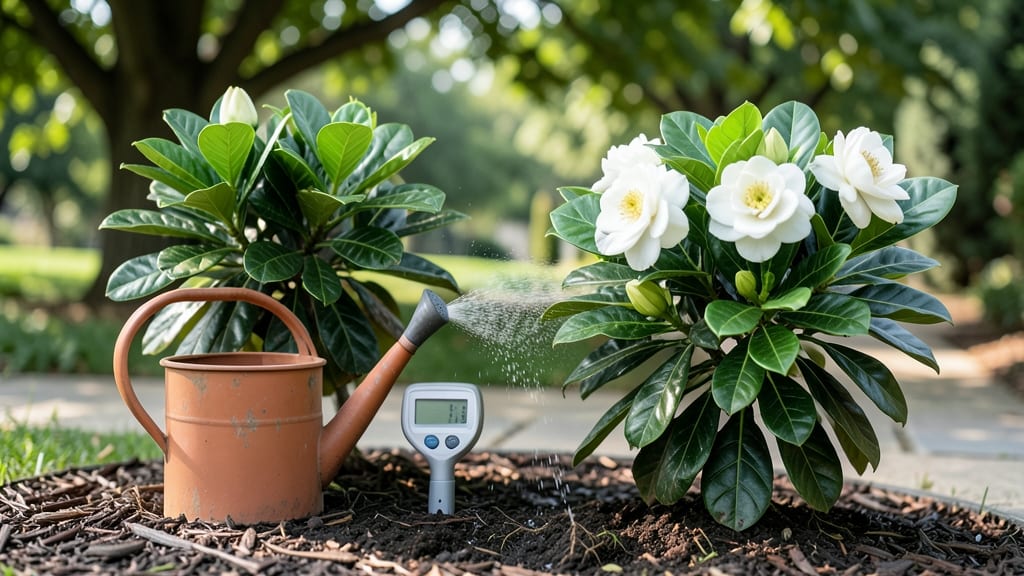
Mastering your gardenia’s water requirements is the difference between fragrant blooms and a sad, wilted shrub.
Picture this: You’ve poured hours into nurturing your 🌸 gardenia, only for it to refuse blooming or—worse—develop root rot. The culprit? Watering that’s either too stingy or too generous.
Too little, and the plant throws a tantrum by dropping buds. Too much, and you’re staring at a plant with yellow leaves and mushy roots.
Here’s the good news: gardenias aren’t high-maintenance if you follow a few simple rules. The key? Deep, infrequent watering in the morning, adjusted for the season. In summer’s heat, you’ll water daily, while winter’s chill slows things down to once every two weeks.
Container gardenias need even more attention—drying out faster than their in-ground cousins.
Below, I’ll break down the exact schedule, how to read your plant’s thirst cues, and the best ways to keep moisture just right—without drowning those delicate roots.
Gardenia watering schedule by season: how much and when to water for optimal blooms
Mastering your gardenia watering schedule is the key to those dreamy, fragrant blooms you adore. This tropical beauty thrives on consistent moisture but despises soggy roots—balancing these needs is an art.
I’ve grown gardenias for over 10 years, and I’ll share exactly how I adjust watering by season to keep my plants lush and blooming year after year.
Gardenias are semi-tropical plants that love warmth and humidity, but their water needs shift dramatically between seasons. In summer’s heat, they’ll drink like a thirsty traveler, while in winter’s chill, they barely need a sip.
The trick? Pay attention to your soil moisture and environmental clues like temperature and humidity before reaching for the hose.
Spring is when your gardenia wakes up from dormancy and starts pushing out new growth. This is the time to increase watering gradually—start with every 3-4 days and adjust based on rainfall.
I always check soil moisture by sticking my finger 1-2 inches deep; if it feels dry, it’s time to water. Morning watering is critical in spring because it gives the foliage time to dry before evening, reducing fungal risks like powdery mildew.
Summer is the most demanding season for gardenias. With high temperatures and intense sunlight, your plant will need water almost daily. I water mine in the early morning (before 8 AM) to prevent water from evaporating too quickly. A good rule of thumb?
If the top ½ inch of soil feels dry, it’s time to water. During heatwaves, I even increase frequency to every 2 days and add a layer of mulch to retain moisture. Container gardenias dry out faster—check them daily in extreme heat.
Fall is when gardenias start slowing down for winter. Reduce watering to every 5-7 days and let the top 2 inches of soil dry out between waterings. This gradual reduction helps prevent root rot while keeping the plant hydrated enough to store energy for next year’s blooms.
I also stop fertilizing in late fall to signal the plant that it’s time to rest. If your gardenia is in a pot, move it to a shadier spot to reduce water loss.
Winter care is all about minimal intervention. Gardenias in USDA Zone 6a (like mine) need very little water—every 10-14 days should suffice. The goal is to keep the roots just barely moist, not soggy. I only water if the top 3 inches of soil are completely dry.
If you’re growing a gardenia in a container, move it indoors or to a protected location where temps stay above freezing. Overwatering in winter is a common mistake that leads to root rot.
Morning watering is non-negotiable for gardenias. Watering in the evening or night leaves moisture on the leaves all night, creating the perfect conditions for fungal diseases like botrytis. I set a reminder on my phone for 7 AM every day during summer to ensure I don’t miss a watering.
For container gardenias, I also use a self-watering pot with a moisture meter to keep tabs on soil conditions without guesswork. If you’re unsure whether your gardenia needs water, always check the soil first—never water on a schedule alone.
Humidity plays a huge role in gardenia watering. In low-humidity environments (like my home in Arizona), I increase watering frequency
Signs your gardenia is overwatered or underwatered: how to fix common mistakes
Your gardenia thrives on balance—too little water and its glossy leaves wilt, too much and you’ll face root rot. The key is monitoring soil moisture and leaf health. Start by checking the top 2 inches of soil; if it’s dry, it’s time to water.
If it’s still damp, hold off. Yellowing leaves with brown edges? That’s your first warning sign.
Overwatered gardenias often show mushy stems and leaves that turn yellow with a soggy feel. Underwatered plants, meanwhile, develop crispy, brown leaf edges and droop dramatically. Both conditions stress the plant, but the fixes couldn’t be more different.
Let’s break down the symptoms and solutions so you can save your fragrant blooms.
Gardenia Watering: Pros & Cons
- Yellow leaves with soft stems
- Root rot (black, mushy roots)
- Fungal growth on soil surface
- Brown, crispy edges on leaves
- Drooping, wilting foliage
- Slow growth or no new blooms
- Stop watering immediately
- Repot in well-draining soil with perlite
- Ensure pot has drainage holes
- Water deeply until runoff
- Use morning watering to reduce evaporation
- Add mulch around base to retain moisture
To diagnose the issue, perform a simple soil drainage test. Fill a pot with gardenia soil, add water, and time how long it takes to drain. If water pools after 30 minutes, your soil is too dense.
Amend it with sand or perlite to improve airflow. For potted gardenias, choose containers with multiple drainage holes—this prevents water from pooling at the roots.
Mulching is another game-changer. Apply a 2-inch layer of organic mulch (like pine bark) around your gardenia’s base. This helps retain moisture without suffocating roots. Just keep mulch 2 inches away from the stem to avoid rot. In hot climates, mulch also shields roots from extreme temperatures, reducing stress.
If you suspect root rot, act fast. Gently remove the plant from its pot and inspect the roots. Healthy roots are firm and white; rotten ones are black and mushy. Trim away the bad roots with sterilized scissors, then repot in fresh, well-draining soil.
Avoid watering for 3-5 days to let the roots recover. For severe cases, consider a hydrogen peroxide soak (1 part peroxide to 10 parts water) to disinfect the roots.
Remember, gardenias love consistent moisture but hate soggy soil. Aim for 1 inch of water per week, adjusting for rain or heat. In summer, you may need to water every 2-3 days, while winter slows water needs to every 10-14 days.
With these fixes, your gardenia will bounce back with lush foliage and fragrant blooms in no time! 🌸