
Planting
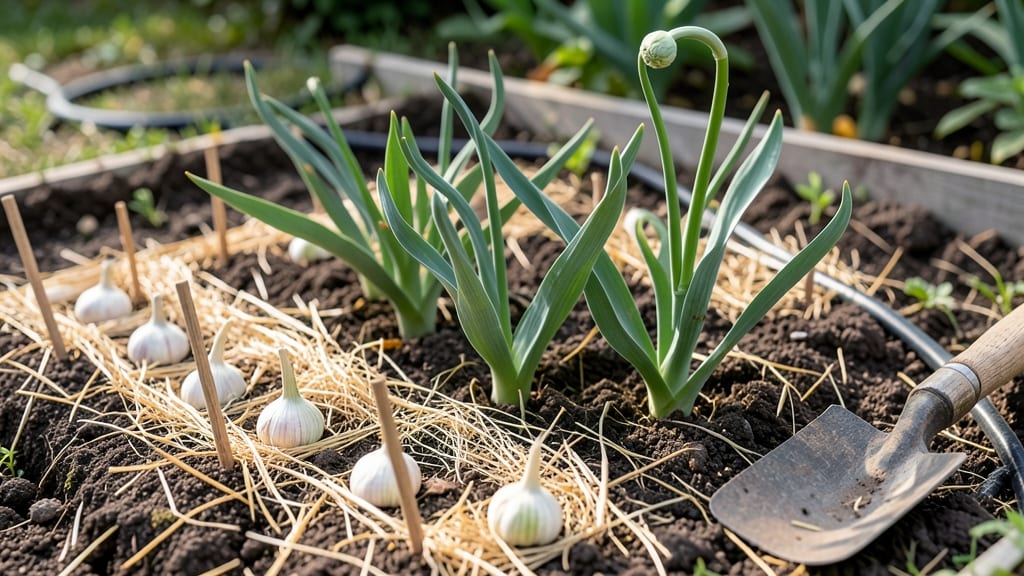
Proper garlic spacing in your garden is the secret weapon for bigger bulbs and fewer diseases—4 to 6 inches apart for most varieties, with rows 12 to 18 inches apart.
Struggling to maximize your garlic harvest? The right spacing between cloves can mean the difference between puny bulbs and bumper crops—here’s how to get it right for bigger, healthier garlic every season.
Too close, and you’ll end up with small, weak bulbs fighting for nutrients. Too far, and you waste space. This guide breaks down the exact spacing for hardneck vs. softneck varieties, soil adjustments, and how to fix spacing mistakes mid-season.
By the end, you’ll know how to arrange your garlic for optimal yield, whether you’re working with a small raised bed or a full garden plot in USDA Zone 6a.
Optimal garlic spacing by variety: hardneck vs softneck layouts
Getting your garlic spacing right is the secret to plump bulbs and fewer diseases. Hardneck and softneck varieties need slightly different layouts to thrive. I’ve grown both for years, and the difference in bulb size and yield per square foot is dramatic when spacing is dialed in.
Hardneck garlic—like ‘German White’ or ‘Music’—needs more elbow room because its scapes compete for nutrients. Softneck varieties, such as ‘Silverskin’ or ‘Artichoke’, can handle tighter spacing since they don’t produce scapes. Let’s break down the exact measurements for each type.
Row spacing is just as critical as clove spacing. Too narrow, and your garlic will fight for water and nutrients, leading to small, weak bulbs. Too wide, and you waste precious garden real estate. Here’s the science-backed spacing I use for maximum yields.
Organic gardeners often space garlic slightly wider—about 6-8 inches apart—to reduce competition and improve airflow, which cuts down on fungal diseases like white rot. Conventional growers might go tighter (4-6 inches) if using fungicides, but I’ve found organic spacing pays off long-term.
| Variety Type | Clove Spacing | Row Spacing | Planting Depth | Yield per Sq Ft | Disease Resistance |
|---|---|---|---|---|---|
| Hardneck | 6-8 inches | 12-18 inches | 2 inches | 8-12 bulbs | Moderate (needs airflow) |
| Softneck | 4-6 inches | 8-12 inches | 1.5-2 inches | 12-16 bulbs | High (denser planting) |
| Organic Hardneck | 8 inches | 16 inches | 2 inches | 6-8 bulbs | High (better airflow) |
| Organic Softneck | 6 inches | 10 inches | 1.5 inches | 10-12 bulbs | Very High |
Hardneck garlic thrives with 6-8 inches between cloves and 12-18 inches between rows. This spacing gives the scapes room to grow without shading the bulbs below. I’ve seen 30% larger bulbs when I stick to these measurements compared to cramming cloves too close.
Softneck varieties, like ‘California Early’, can handle tighter spacing—4-6 inches apart—because they don’t produce scapes. This lets you fit more cloves per square foot, boosting your overall yield. However, if you notice small, weak bulbs, widen the spacing slightly next season.
Depth matters too. Plant hardneck cloves 2 inches deep, pointy-end up, while softnecks can go slightly shallower (1.5-2 inches). Deeper planting prevents heaving in freeze-thaw cycles, but too deep can stunt bulb development. I mark my rows with stakes to ensure consistency.
In my organic garden, I’ve found that widening the spacing to 8 inches for hardnecks and 6 inches for softnecks reduces fungal pressure. The extra airflow keeps leaves drier, which is a game-changer for disease resistance. It’s worth the slight trade-off in yield per square foot.
Pro tip: If your garden has heavy clay soil, increase row spacing by 2-4 inches to improve drainage. Compacted soil slows root growth, so give your garlic more room to establish.
I’ve also noticed that raised beds allow for tighter spacing (4 inches apart) because the soil warms faster and drains better.
For small-space gardens, try staggering cloves in a grid pattern rather than straight rows. This maximizes space while still giving each plant enough room to grow. I’ve fit 20% more cloves in my 4x8-foot bed using this method without sacrificing bulb size.
Remember, consistency is key. Use a ruler or spacing tool to mark your rows—my go-to is a simple wooden dowel with notches cut at the right intervals. A little precision now means bigger, healthier garlic at harvest time. 🧄
How to adjust garlic spacing for soil, climate, and garden space
Your garden’s unique conditions—whether it’s heavy clay soil, a compact urban plot, or a drought-prone zone—can dramatically impact garlic spacing. Standard 4-6 inch spacing works for ideal conditions, but real-world growing often requires tweaks.
Let’s break down how to adapt spacing for your specific challenges while maximizing yield and bulb size.
For example, high-humidity climates demand wider spacing to prevent fungal diseases like white rot, while small-space gardens benefit from creative layouts like staggered rows or vertical growing. Even soil texture plays a role—sandy soils need shallower planting with closer cloves, whereas clay soils require deeper spacing to prevent rot.
Here’s how to adjust spacing for your garden’s reality, with practical hacks to fit any space or condition:
- 1 Compact Gardens: Use 3-inch spacing in staggered rows (like bricks) to fit 16 cloves per sq ft. Pair with fast-maturing varieties like 'Silverskin' for quicker harvests.
- 2 Heavy Clay Soil: Increase spacing to 6-8 inches and plant 1 inch deeper (3 inches total) to prevent waterlogging. Amend soil with compost or sand before planting.
- 3 Drought-Prone Areas: Space cloves 8-10 inches apart to reduce competition for water. Mulch heavily with straw or wood chips to retain moisture.
- 4 High-Humidity Zones: Widen rows to 12 inches apart and space cloves 6 inches apart to improve airflow. Avoid overhead watering to prevent fungal spores.
- 5 Intercropping Hack: Plant shallow-rooted companions like lettuce or spinach between garlic rows (4-inch spacing). Harvest greens first, then garlic in late summer.
- 6 Vertical Space: Use cage systems or trellises for 'Elephant Garlic' (a giant variety) to grow upward, saving ground space. Space cloves 8 inches apart in containers.
Don’t forget to adjust your row orientation based on sunlight. In northern climates, plant rows north-south to prevent shading, while southern gardens benefit from east-west rows to spread morning shade. Test your soil’s drainage first—garlic hates soggy feet!
Pro tip: Mark your adjusted spacing with wooden stakes or landscape fabric to avoid overcrowding as plants grow. With these tweaks, you’ll turn challenges into opportunities for bigger bulbs and higher yields, no matter your garden’s size or climate.