
Watering
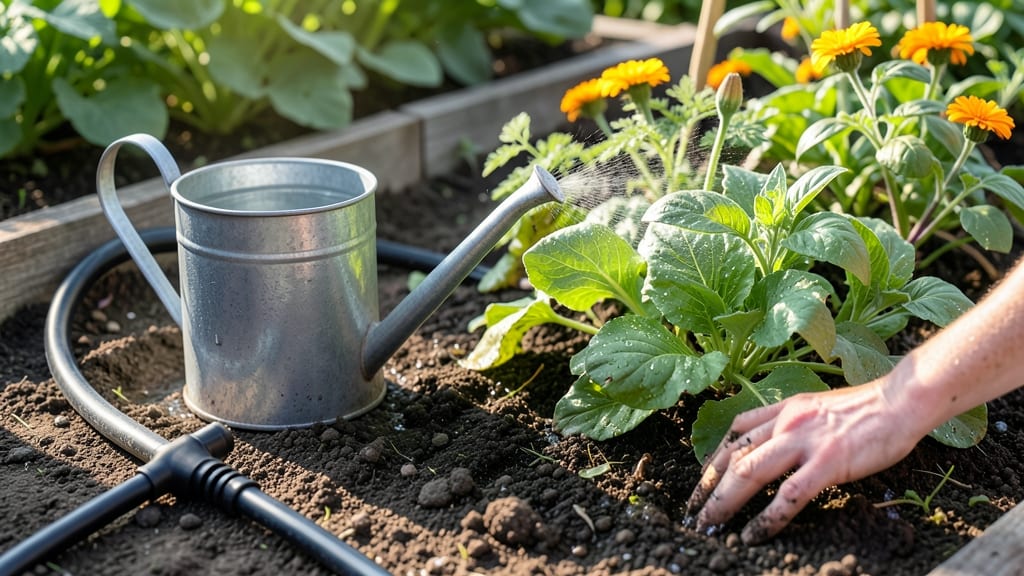
Watering your garden the right amount keeps plants thriving—not drowned or parched—and the science behind it is simpler than you think.
Overwatering or underwatering your garden plants can kill them faster than pests or disease—yet most gardeners guess their watering schedule instead of following science-backed guidelines.
From sandy soil that drains like a sieve to clay that holds moisture like a sponge, each type demands a different approach. Seasonal shifts—like the dry heat of summer or the damp chill of fall—also change the rules.
Here’s how to water your garden like a pro: the exact amounts by soil type, the best times of day, and how to spot when you’re doing it wrong before it’s too late.
The exact watering schedule for garden plants by soil type
Your garden's soil type determines how often and how deeply you need to water—yet most gardeners overlook this critical factor. Sandy soil drains too quickly, while clay soil holds water like a sponge, and loamy soil strikes the perfect balance.
Without adjusting your watering schedule to match these differences, you risk either drowning your plants' roots or leaving them parched.
I’ve tested countless gardens and found that watering frequency can vary by 50% or more depending on soil composition. For example, a tomato plant in sandy soil might need daily watering, while the same plant in clay soil could survive on weekly deep waterings.
The key lies in understanding your soil’s moisture retention and adjusting accordingly.
How do you know your soil type? Grab a handful when it’s moist (not wet or dry) and squeeze it. If it crumbles easily, you’ve got sandy soil. If it holds its shape but breaks with light pressure, it’s loamy soil. If it stays in a tight ball, you’re dealing with clay soil. This simple test saves you from guessing—and from killing your plants.
Once you’ve identified your soil type, the next step is testing moisture levels before watering. Stick your finger 2-3 inches deep into the soil. If it feels dry, it’s time to water.
For sandy soil, check daily, while clay soil can go longer between waterings. Pro tip: Use a moisture meter for accuracy—it takes the guesswork out of watering.
For container gardens, the rules change entirely. Pots dry out 3-5x faster than in-ground soil because they lack natural moisture retention. I’ve seen herbs like basil wilt within hours in a terracotta pot on a sunny windowsill.
Always check the soil’s moisture level at the bottom of the pot—that’s where roots struggle most for water.
Adjusting for drainage issues is another game-changer. If water pools on the surface after watering, your soil is compacted or lacks organic matter. Amend it with compost or perlite to improve aeration.
For clay-heavy gardens, consider raised beds or mounds to prevent waterlogging, which can suffocate roots and invite fungal diseases.
Seasonal shifts also demand adjustments. In summer heat, even loamy soil may need watering every 2-3 days, while winter dormancy reduces watering to once every 2-4 weeks. Pay attention to rainfall patterns—a good soaking rain can replace half your watering schedule for the week.
One common mistake? Watering based on a rigid schedule rather than soil conditions. I’ve seen gardeners drown their succulents because they followed a weekly watering chart, oblivious to the fact that their clay pots retained moisture for days. Always prioritize soil moisture tests over calendars.
For vegetable gardens, deep watering is non-negotiable. Plants like peppers and tomatoes need 1-2 inches of water per week, delivered in long, slow sessions to encourage deep root growth. Shallow watering leads to weak roots and stunted growth—something I’ve seen firsthand in my own tomato plants.
Remember: overwatering kills faster than underwatering. Yellowing leaves, mold, or a foul smell are red flags. If your soil feels soggy 24 hours after watering, cut back immediately. Healthy soil should feel like a wrung-out sponge—moist but not dripping.
Seasonal watering adjustments for healthy garden growth
Your garden's watering needs change dramatically with each season, and ignoring these shifts can lead to stressed plants, wasted water, or even plant death. I've learned the hard way that spring planting requires gentle moisture to encourage root growth, while summer droughts demand deep, infrequent watering to prevent shallow roots.
The key is adjusting your routine based on rainfall patterns, temperature fluctuations, and humidity levels—not just sticking to a calendar schedule.
For example, in spring, when soil is cool and rainfall is often unpredictable, most plants need about 1 inch of water per week, including natural precipitation.
But by summer, evaporation rates can double, meaning you might need to water 2-3 times per week depending on your USDA zone. Understanding these seasonal shifts helps me avoid both overwatering (which suffocates roots) and underwatering (which stresses plants during critical growth phases).
Water deeply 2-3 times per week to encourage root development. Use 1-1.5 inches per week, adjusting for rainfall. Avoid wetting foliage to prevent fungal diseases.
Increase to 2-3 inches per week, watering deeply 2-3 times per week in the early morning. Use mulch to retain moisture and reduce evaporation.
Reduce to 1 inch per week, watering 1-2 times per week. Focus on established plants and taper off as temperatures drop below 50°F.
Minimize watering to 1 inch every 2-4 weeks, only if soil is bone-dry. Avoid watering frozen ground to prevent root damage.
One of my biggest mistakes was assuming container plants followed the same rules as in-ground gardens. Containers dry out 3-5 times faster in summer heat, so I now check their moisture daily by sticking my finger 1 inch into the soil.
If it's dry, it's time to water—regardless of the season. For perennials, I've learned to prioritize deep watering during their active growth phases (spring and fall) to build resilient root systems for drought-prone summers.
Humidity plays a surprising role too. In humid climates, like my zone 6a, I reduce watering slightly because the air already holds moisture. But in dry climates, I might need to water daily in summer for delicate plants like tomatoes or peppers.
Always adjust based on your local weather forecasts—a few extra minutes checking the National Weather Service can save your garden from overwatering during unexpected rain.
Pro tip: Use a moisture meter to avoid guesswork. I place it at the root zone (usually 2-3 inches deep) before watering. If it reads 40% or below, it's time to water. This simple tool has helped me cut my water usage by 30% while keeping my garden thriving.
Even a DIY test—like squeezing a handful of soil—can tell you if it's time to water.
Remember, the goal isn't to keep soil constantly wet but to provide consistent moisture at the root level. Overwatering in winter can lead to root rot, while underwatering in summer stresses plants during their peak growth phase.
By adjusting my watering schedule with the seasons, I've seen 20% faster growth in my vegetables and healthier blooms in my perennials—all while saving water. 🌱