
Watering
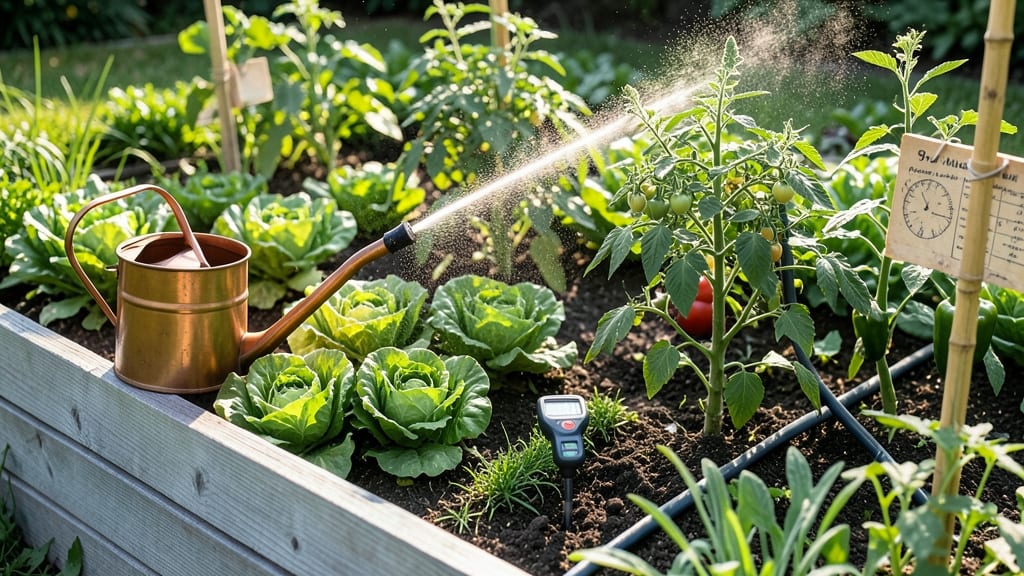
Watering your veg garden the right way—how often and how much—makes the difference between thriving plants and sad, wilted leaves.
Picture this: You step outside after a long day, ready to harvest crisp lettuce or juicy tomatoes, only to find your garden looking more like a sad salad than a bountiful harvest.
Too much or too little water can turn your green thumb into a brown disaster—but getting it right means juicy tomatoes, crisp lettuce, and bountiful harvests.
Most veggies need deep, consistent moisture, not just a quick sprinkle. The key is understanding your soil type—sandy soil drains fast, while clay holds water like a sponge—and adjusting your watering schedule accordingly.
In summer, you might need daily watering, while cooler months can stretch that to every few days.
Here’s what you’ll discover: a soil-tested schedule for common vegetables, signs your plants are thirsty (or drowning), and smart watering tricks like mulching and morning watering to keep your garden thriving all season long.
How often to water vegetable gardens by plant type and soil conditions
Watering your vegetable garden isn't a one-size-fits-all task—it's a delicate balance that changes with plant type, soil composition, and even the season. Leafy greens like lettuce and spinach need frequent, shallow watering, while root crops such as carrots and potatoes prefer deep, infrequent soaking.
Understanding these differences can mean the difference between thriving plants and wilted disappointment.
The soil type in your garden plays a crucial role too. Sandy soil drains quickly, requiring more frequent watering, while clay soil holds moisture longer, demanding careful monitoring to avoid waterlogging. Even the climate zone you're in affects how often you should water—humid areas need less than dry, arid ones.
To simplify the process, I’ve created a plant-by-plant watering guide that accounts for soil conditions. This table will help you determine the ideal watering frequency for your garden, ensuring your vegetables stay hydrated without drowning in excess moisture.
For leafy greens, shallow watering keeps the soil surface moist, encouraging rapid growth. In sandy soil, this might mean watering every day, while clay soil can hold moisture longer, reducing the frequency. Always water in the morning to allow foliage to dry, preventing fungal diseases like powdery mildew.
Root crops like carrots and beets need deep watering to encourage root development. In sandy soil, water every 2-3 days to a depth of 3 inches, while clay soil can go longer between waterings. Check moisture by sticking your finger 3-4 inches into the soil—if it feels dry, it’s time to water.
Fruiting plants such as tomatoes and peppers require consistent moisture, especially during flowering and fruiting. In sandy soil, water every 1-2 days to maintain even moisture, while clay soil can handle slightly longer intervals.
Always water at the base of the plant to avoid wetting the leaves, reducing disease risk.
Regardless of the plant type, always <
5 Signs your vegetable garden needs water (and when to hold back)
Your vegetable garden is like a thirsty friend—it won’t always tell you when it’s parched, but it will show you. Learning to read these visual and tactile clues helps you avoid both drought stress and overwatering.
The key? Pay attention to leaf texture, soil moisture, and plant behavior—not just your watering schedule.
Overwatering is just as harmful as underwatering. Too much moisture suffocates roots, while too little stunts growth. The trick is finding that sweet spot where soil stays consistently moist but never soggy.
Start by checking the top 1-2 inches of soil—if it’s dry, your plants need water. If it’s muddy, hold off!
-
1. Wilting Leaves (But Not Always!)
Leaves that droop by midday often signal thirst—but check the soil first. If the top inch is dry, water deeply. If the soil is moist, wilting could mean root stress or heat exhaustion.
-
2. Soil Pulls Away from Pot Edges
Cracked or pulled-away soil in containers or raised beds means it’s bone-dry. Stick your finger in—if it feels like sandpaper, water immediately. For in-ground gardens, dig 1-2 inches deep.
-
3. Yellowing Leaf Edges (Not Full Leaves)
Brown or yellow edges only? This is often underwatering. If the entire leaf yellows, it may be overwatering or nutrient deficiency. Test soil moisture to confirm.
-
4. Stunted Growth or Flower Drop
Plants like tomatoes or peppers that stop growing or drop flowers are usually thirsty. Root crops like carrots may split if soil dries out unevenly.
-
5. Fungal Smells or Moldy Soil
A musty odor or white fuzzy mold on soil means overwatering. Let the soil dry out slightly before watering again. Improve drainage with compost or perlite if needed.
Leafy greens like lettuce and spinach wilt faster than root crops, while tomatoes and peppers show stress through blossom end rot (black spots) when water is inconsistent. Always water at the base, not the leaves, to prevent disease.
Morning watering is ideal—it gives plants a full day to absorb moisture before evening evaporation. Avoid watering at night, as damp foliage invites fungal infections. Mulch with straw or wood chips to lock in moisture and reduce stress signals.
Remember, soil type matters. Sandy soil drains fast and needs daily checks, while clay holds moisture longer. Adjust your watering based on weather too—hot, windy days dry soil faster. Trust your plants’ visual cues, not just a rigid schedule!