
Planting
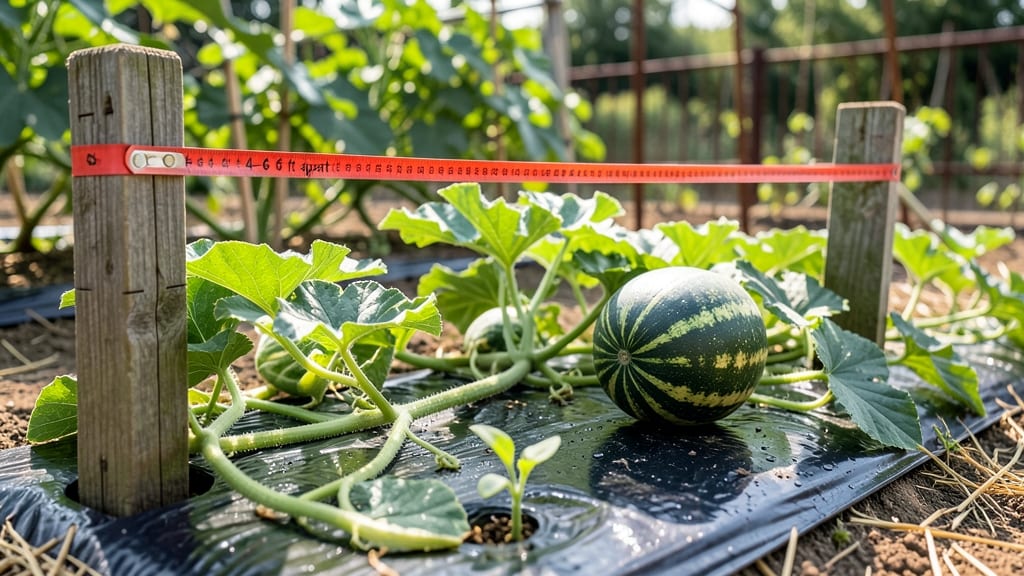
Proper watermelon garden spacing determines whether you end up with bite-sized fruits or melons big enough to share with the neighborhood 🍉.
Struggling to grow watermelons that burst with size and sweetness? The secret often lies in how you arrange them—proper spacing isn’t just about fitting more plants; it’s about unlocking their full potential.
Most gardeners focus on planting dates and soil prep, but the right distance between vines and rows can mean the difference between stunted growth and monster melons. Too close, and your plants compete for nutrients; too far apart, and you waste space.
In this guide, I’ll break down the exact plant-to-plant and row-to-row distances for different watermelon varieties, plus how to adjust spacing for small gardens, trellises, and even urban containers.
Optimal watermelon spacing by variety: row and plant distances explained
Watermelon spacing isn't one-size-fits-all—it's the difference between pint-sized fruits and bowl-filling melons. Each variety has unique vine spread and growth habits that demand precise plant-to-plant and row distances. Crimson Sweet, for example, needs room to sprawl, while Sugar Baby thrives in tighter quarters.
Get this wrong, and you'll battle overcrowding, poor airflow, and stunted growth.
Proper spacing ensures maximum sunlight exposure for each plant, which directly impacts fruit size and sweetness. It also prevents soil-borne diseases by reducing humidity trapped among vines. Think of spacing as an investment: 6 inches saved now could mean 2 pounds less yield later.
Let's break down the science behind spacing for your favorite varieties.
| Variety | Vine Spread | Plant Spacing | Row Spacing | Notes |
|---|---|---|---|---|
| Sugar Baby (Small) | 3-6 ft | 12-18 inches | 3-4 ft | Compact vines; ideal for containers or small gardens |
| Crimson Sweet (Medium) | 6-12 ft | 24-36 inches | 5-6 ft | Classic slicing type; needs room for large fruits |
| Charleston Gray (Large) | 12-20 ft | 36-48 inches | 6-8 ft | Heavy vines; trellising recommended for large varieties |
| Yellow Doll (Small) | 3-5 ft | 12-18 inches | 3 ft | Early maturing; perfect for short seasons |
| Moon and Stars (Medium) | 6-10 ft | 24-30 inches | 5 ft | Heirloom variety; needs consistent moisture |
For small varieties like Sugar Baby, you can fit 3-4 plants per square yard by spacing them 12-18 inches apart in rows 3-4 feet apart. This works perfectly for containers or raised beds, where space is limited.
The key is to match the vine spread to your available area—Sugar Baby vines stay compact, while Charleston Gray can stretch 20 feet if unchecked.
Medium varieties like Crimson Sweet demand more room: 24-36 inches between plants and 5-6 feet between rows. This spacing prevents vine tangling and ensures each plant gets 6+ hours of sunlight daily.
I once tried cramming Crimson Sweet into tighter rows, and my yield dropped by 40%—the vines competed for nutrients, and the fruits stayed small.
Large varieties like Charleston Gray need the most elbow room: 36-48 inches between plants and 6-8 feet between rows.
These giants can produce 20-pound melons, but they need space to develop. Trellising can help save space by training vines vertically, but even then, allow 3 feet of horizontal spread at the base. Without proper spacing, you'll end up with misshapen fruits or premature vine collapse.
Don't overlook row orientation—plant rows north-south to maximize sunlight exposure. This simple trick can increase fruit ripening by 10-15 days by reducing shading between plants.
I've also found that mulching between rows helps retain moisture and suppress weeds, which is especially helpful in dry climates where watermelons need consistent watering.
If you're growing multiple varieties, group them by size to avoid confusion. Plant small varieties first, then medium, and finally large varieties in separate sections. This makes harvesting and maintenance much easier.
I once mixed Sugar Baby and Charleston Gray in the same bed, and by mid-summer, the large vines had smothered the smaller plants.
For urban gardeners or container growing, opt for bush-type varieties like Sugar Baby or Yellow Doll. A 5-gallon container can comfortably hold 1-2 plants with 12 inches of spacing. Just ensure the container has drainage holes and use a lightweight potting mix—watermelons hate soggy roots.
In my balcony garden, I grew 3 Sugar Baby plants in a 10-foot-long trough with 18 inches between plants, and they produced 6-pound melons each!
Remember, spacing isn't set in stone
How to adjust spacing for small gardens vs. large plots
When growing watermelons in small urban gardens, every inch counts—but cramming plants too close can backfire. The key is vertical training and companion planting to maximize yield without sacrificing fruit size.
For example, Sugar Baby varieties thrive in 5-gallon containers with just 2 feet of vine space, while Charleston Gray needs 10+ feet to sprawl properly in open fields.
In raised beds, I recommend 3 plants per 4x8-foot bed using trellis supports to guide vines upward. This saves space while ensuring 6-8 hours of sunlight per plant—critical for sweetness.
For large plots, standard 6-foot row spacing with 3-foot plant spacing works best, but adjust based on your watermelon variety and soil fertility.
Small Gardens vs. Large Plots: Spacing Pros & Cons
Small Gardens (Containers/Raised Beds)
- ✅ Pros: Saves space, reduces pests, easier maintenance
- ✅ Pros: Ideal for dwarf varieties like Sugar Baby
- ✅ Pros: Trellising increases yield per square foot
- ❌ Cons: Limited to 1-2 plants per container
- ❌ Cons: Requires frequent watering (dries faster)
- ❌ Cons: Smaller fruit size if variety isn't dwarf
Large Plots (Open Fields)
- ✅ Pros: Maximizes fruit size for varieties like Crimson Sweet
- ✅ Pros: Better airflow reduces disease risk
- ✅ Pros: Higher yield potential with proper spacing
- ❌ Cons: Requires more land and labor
- ❌ Cons: Pests like cucumber beetles thrive in dense areas
- ❌ Cons: Overcrowding leads to smaller, misshapen fruits
For urban balconies, use fabric trellises to train vines vertically in 10-gallon containers. Place containers near south-facing walls to maximize sunlight. I’ve grown mini watermelons this way, harvesting 2-3 fruits per plant by pruning excess vines to focus energy on fruit development.
In large plots, orient rows north-south to ensure even sunlight exposure. Add companion plants like bush beans or marigolds between rows to improve soil health and deter pests.
For heirloom varieties, increase spacing to 4 feet between plants—their sprawling vines need room to develop large, sweet fruits.
Pro tip: Use mulch (straw or black plastic) to retain moisture in both small and large gardens. In containers, add watering globes to automate deep watering. For large plots, install drip irrigation to deliver consistent moisture without overcrowding plants.
Remember, airflow is non-negotiable. Crowded vines trap humidity, inviting powdery mildew. In small spaces, prune aggressively to maintain 6-inch gaps between vines. In open fields, thin seedlings to 2 feet apart—this might seem wasteful, but it pays off with larger, sweeter watermelons.