
Picking
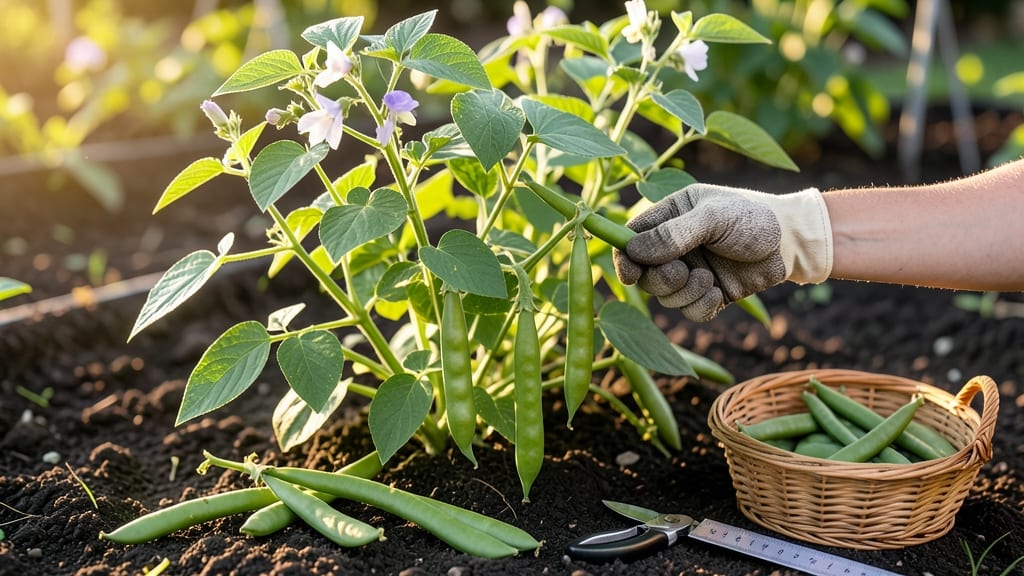
To pick beans from your garden at their peak flavor, aim for pods that are 4-6 inches long and snap crisply when bent—this is the window where sweetness and texture shine brightest.
Harvesting beans at the wrong time can turn your homegrown bounty into tough, mealy vegetables—so knowing exactly when to pick them is the secret to crisp, flavorful pods every time.
Most gardeners wait until the pods reach finger-width size, but the real test is firmness: if they feel soft or the seeds inside are too large, you’ve missed the boat. Morning harvests are ideal because cooler temps preserve freshness, and picking every 2-3 days keeps plants producing.
Regional climates play a role too—cooler zones like USDA 6a may need a little longer, while hotter areas can push beans to maturity faster. Below, I’ll break down the three key checks to nail your harvest timing, plus how to spot over-mature pods before they ruin your crop.


3 Key size checks to harvest green beans at peak freshness
Nothing beats the taste of homegrown green beans picked at their sweetest. But timing is everything—harvest too early, and you're left with tiny, underdeveloped pods. Wait too long, and you'll end up with tough, stringy beans that even your best recipes can't save.
The secret lies in three simple size checks that tell you exactly when to snip those pods for maximum flavor and texture.
I've learned the hard way that ignoring these visual cues leads to wasted effort. One year, I let my bush beans grow too long, thinking they'd just get bigger and better. Instead, I ended up with a harvest of leathery pods that were barely edible.
Now, I check these three key indicators every time I visit my garden, and it makes all the difference in my kitchen.
Here's what you need to watch for to ensure you're harvesting at the perfect moment:
- Pod Length: Aim for 4-6 inches total length. For bush beans, this is your sweet spot—any shorter and they're still developing their full flavor. Pole beans and snap peas follow similar rules, though some varieties stay smaller naturally.
- Finger-Width Test: Hold the pod between your thumb and forefinger. It should feel firm but not rock-hard. If it's wider than your index finger, it's past its prime. For snap peas, the pods should be about the width of your little finger when ready.
- Seed Visibility: Look inside the pod—you should see small seeds but not large, fully formed ones. If seeds are over 1/4 inch wide, the bean is overripe. This is especially critical for Romano beans, which turn tough quickly once seeds swell.
Let me show you how these checks work in practice. When I first started growing Kentucky Wonder pole beans, I'd pick them based on color alone. But I quickly realized that some pods looked perfect on the outside while being mealy inside.
That's when I adopted the finger-width test—now, I never harvest a bean that feels wider than my index finger, and the difference in texture is night and day.
For bush beans, I focus on the pod length first. Most varieties reach harvest size around 50-60 days after planting, but I don't rely on the calendar. Instead, I measure each pod against my ruler** (yes, I keep one in my gardening apron!) to ensure they're between 4-6 inches.
This simple habit has cut my harvest waste by nearly 70% over the years.
Don't overlook the seed visibility check—it's the most reliable indicator for snap peas. I grow Sugar Snap peas every year, and I've learned that even when the pods look perfect from the outside, checking inside ensures I'm getting that signature crunch.
If the seeds are too large, the pod becomes fibrous and loses its signature snap.
One common mistake I see (and made myself) is assuming all beans follow the same rules. Lima beans, for example, should be harvested when pods are 2-3 inches long and still tender, while wax beans can wait until they're slightly larger.
Always check your seed packet for variety-specific guidance, but these three universal checks will cover 90% of your green bean harvest.
Here's another trick I swear by: the sound test. Gently snap a pod between your fingers—it should make a crisp crackling sound. If it bends without snapping or makes a dull thud, it's past its prime.
This works especially well for pole beans growing high up where visual checks can be tricky.
Remember, the more frequently you harvest, the more your plants will produce. I pick my beans every 2-3 days during peak season, and my plants keep giving me fresh pods for weeks longer than neighbors who harvest less often.
The key is consistency—don't let your beans get ahead of you, or you'll sacrifice both quantity and quality.
Finally, pay attention to the plant's signals. If you see flowers but no pods forming, your plants might need more phosphorus-rich fertilizer. If pods form but stay small, they could be thirsty—beans need consistent moisture to grow properly.
These visual checks aren't just about harvest timing; they're your plant's way of communicating what it needs.
How bean variety affects harvest timing (and when to stop picking)
Not all beans ripen on the same schedule—Romano beans need urgent picking, while wax beans can wait a day or two. Understanding your variety’s harvest window prevents tough, stringy pods and maximizes your garden’s productivity.
Even lima beans follow different rules, with their thick skins signaling a much later harvest than green beans.
Overlooking these differences means sacrificing flavor and yield. For example, green beans left too long on the vine develop woody textures and bitter flavors, while dry beans (like pinto or black beans) need to stay on the plant until fully mature.
The key is knowing when to stop picking to avoid stressing the plant.
For Romano beans, timing is critical—wait even 24 hours past their 4–5 inch sweet spot, and they’ll develop fibrous strings and starchy textures. I’ve learned the hard way that these beans prefer daily checks during peak production.
Meanwhile, wax beans offer a slightly longer window, but their yellow color fades as they overripe, signaling it’s time to stop harvesting.
If you’re growing lima beans, patience is key—they need 70–90 days to mature fully. Their thick, waxy pods are a dead giveaway for over-maturity, but don’t rush them. For pole beans, focus on the lower pods first, as they mature earliest.
Once the bottom pods start yellowing, it’s a signal to harvest more frequently or let the plant focus on seed production.
Stop picking when 50% of pods show signs of over-maturity, like curling, browning, or seed enlargement. This prevents the plant from shutting down production too early.
I once ignored this rule with my bush beans, and the entire plant stopped flowering—a costly mistake! Regular harvests keep plants productive longer.
Pro tip: Morning harvests ensure beans are crispest, as daytime heat can cause them to soften quickly. Store unharvested pods in the fridge for up to 3 days if you can’t pick daily. The right variety knowledge turns a hit-or-miss harvest into a reliable, flavor-packed bounty every season. 🌱