
Picking
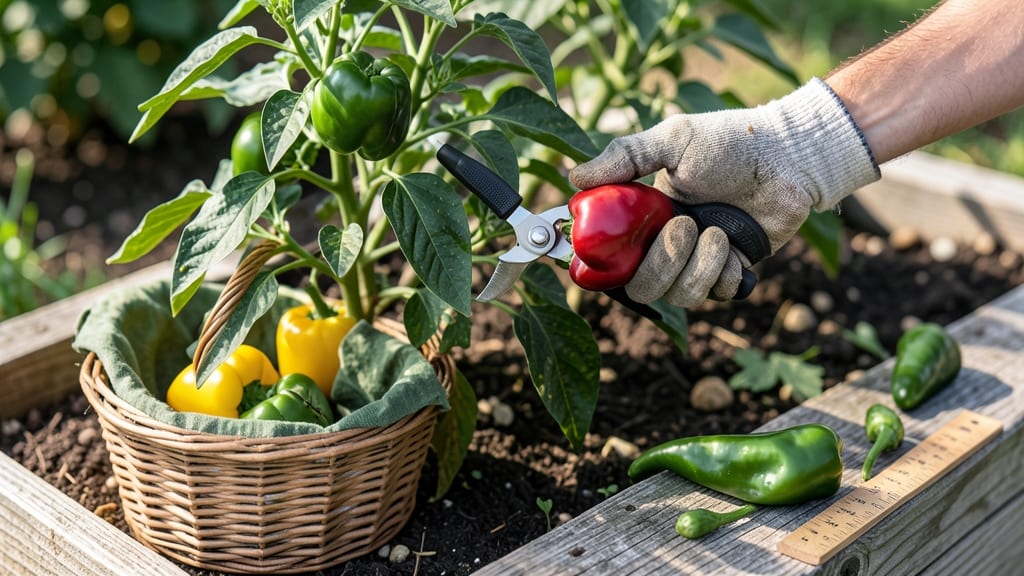
To pick bell peppers from your garden at their flavor peak, watch for the color shift from green to deep, consistent hues like red, yellow, or purple 🌶️ — that’s when sweetness and texture hit their sweet spot.
Most gardeners wait for full color, but the real game-changer is the firmness test: a ripe pepper should yield slightly when pressed with your thumbnail. Miss this window, and you’re left with tough walls or underripe peppers that never develop their full potential.
Season matters too: in cooler climates like USDA Zone 6a, peppers may take longer to ripen, so start checking for readiness in early July. Heatwaves can speed up ripening, while cloudy spells slow it down — adjust your checks accordingly.
Here’s what you’ll learn: the 5 key signs of perfect ripeness (beyond color), how to avoid common harvesting mistakes, and pro tips to extend shelf life once you’ve picked them.


Bell pepper color stages: when to harvest for sweetness vs. heat
Bell peppers undergo a fascinating color transformation that directly impacts their flavor, sweetness, and heat levels. Understanding these color stages helps you harvest at the perfect moment for your culinary goals—whether you prefer milder green peppers or sweeter red varieties.
The journey from green to red isn't just about aesthetics; it's a biochemical process triggered by sunlight exposure, temperature, and maturity. Let's break down each stage so you can time your harvest like a pro.
When bell peppers first appear, they're solid green and packed with chlorophyll, which gives them their signature color. At this stage, they're often milder and slightly bitter, with a crunchy texture that holds up well in stir-fries.
Many gardeners harvest them green, but if you wait, nature has more flavor surprises in store. The transition from green to other colors is driven by carotenoids and anthocyanins, pigments that develop as the pepper matures under optimal growing conditions.
Here's your quick reference guide to bell pepper color stages, including when to harvest for peak flavor and how each color affects storage life:
| Color Stage | Flavor Profile | Best For | Harvest Time | Storage Life |
|---|---|---|---|---|
| 🟢 Green | Crisp, slightly bitter, mild heat | Stir-fries, pickling, fresh snacks | 60-75 days after transplant | 2-3 weeks in fridge |
| 🟡 Yellow | Sweeter, fruity, less bitter | Salads, roasting, stuffed peppers | 75-85 days after transplant | 3-4 weeks in fridge |
| 🟠 Orange | Balanced sweetness, mild heat | Grilled dishes, sautéing | 80-90 days after transplant | 3-4 weeks in fridge |
| 🔴 Red | Sweetest, richest flavor | Raw salads, cooking, preserving | 90-100 days after transplant | 4-6 weeks in fridge |
| 🟣 Purple | Sweet with earthy notes | Unique dishes, decorative plates | 90-100 days after transplant | 3-4 weeks in fridge |
The transition from green to red isn't just about waiting—it's about creating the right conditions. Full sun exposure (6-8+ hours daily) and consistent warmth (70-85°F) accelerate color development. If your peppers stay green too long, check for shade issues or cool nights, which can stall ripening.
The sweetness peak occurs when peppers reach their deepest color, thanks to increased sugar content (up to 3x more than green) and reduced chlorophyll.
For heat-loving varieties like jalapeños or habaneros, you'll often harvest them green or partially colored since their heat profile develops before full ripening. But for classic bell peppers, waiting for full color development delivers the sweetest results.
Pro tip: Yellow and orange peppers often get overlooked but offer a perfect balance of sweetness and mild heat—ideal for grilling or stuffing.
Temperature plays a crucial role in color development. Cooler nights (below 60°F) can slow down the ripening process, while consistent warmth speeds it up. If you're in a short growing season zone, consider using row covers or black plastic mulch to extend the season and encourage full ripening.
The key is monitoring your plants daily and acting when the color shift becomes noticeable.
One common mistake is harvesting peppers based solely on size rather than color. A pepper might be 3-4 inches long but still green at the stem, indicating it's not fully ripe.
Always check for consistent color across the entire pepper—no green patches at the stem end. This ensures you're getting the peak flavor and texture that comes with full maturity.
Storage life varies dramatically by color stage. Green peppers last about 2-3 weeks in the fridge, while red peppers can last 4-6 weeks due to their higher sugar content. For longer storage, consider freezing or fermenting your harvest.
The deeper the color, the better they'll hold up—so if you're planning to store peppers for winter, let them ripen fully before picking.
Remember that each pepper variety has its own timeline. Some hybrids ripen faster, while heirlooms may take longer. Keep a harvest journal to track your plants' progress and adjust your expectations based on your climate.
With the right knowledge, you'll go from guessing to precision harvesting, ensuring every pepper you pick is at its flavor peak.
5 Key signs your bell peppers are ready to pick (beyond color)
Bell peppers may seem ready just because they’ve changed color, but true ripeness involves more than a simple hue shift. I’ve learned the hard way that picking too early means bland, rubbery peppers, while waiting too long can lead to overripe messes.
The secret lies in combining visual cues with tactile tests to pinpoint the perfect moment. These five key signs go beyond color to ensure you harvest at peak flavor and texture.
First, let’s talk about size benchmarks. Mature bell peppers typically measure between 3 to 4 inches in length, depending on the variety. Smaller peppers (under 2 inches) are usually underdeveloped, while oversized ones may have tougher skins.
I always compare mine to a standard ruler—if they’re consistently within this range, they’re likely ready. Environmental factors like temperature and sunlight also play a role in ripening speed, so peppers in hotter climates may mature faster.
- 1 Firmness Test: Press a pepper gently with your thumbnail. A ripe pepper should yield slightly but not feel mushy. If it feels rock-hard or overly soft, it’s not ready yet.
- 2 Stem Separation: Twist the pepper gently at the stem. If it snaps cleanly with a slight resistance, it’s ready. A stubborn stem means it’s not ripe enough, while a stem that pulls away too easily signals overripeness.
- 3 Glossy Skin: Ripe peppers develop a smooth, shiny surface. Dull or wrinkled skin indicates the pepper is past its prime. I always run my fingers over the skin—if it feels velvety, it’s time to pick.
- 4 Uniform Color: Check for consistent color across the entire pepper. If there’s still a hint of green near the stem, it’s not fully ripe. For example, red bell peppers should be deep red all over, not just at the tip.
- 5 Temperature Matters: Peppers ripen faster in warmer climates (75-85°F) but slow down in cooler weather. If your summer is short, prioritize harvesting when peppers meet the above signs, even if they’re not fully colored.
Don’t overlook the environmental factors that can trick you into picking too early or too late. For instance, low sunlight can delay ripening, while high heat might cause peppers to mature too quickly.
I’ve seen peppers turn red overnight in late summer but still feel firm—those need more time. Always combine these signs with your local climate conditions for the best results.
One pro tip I swear by: harvest in the morning after dew has dried. Peppers are firmer and less prone to bruising, making them easier to handle. Plus, the flavor is often more intense.
If you’re unsure, pick a pepper and taste it—you’ll quickly learn what “perfect” feels like for your palate. Over time, you’ll develop an instinct for when they’re ready.
Remember, bell peppers continue to ripen off the plant if stored properly, so don’t stress if they’re not perfectly colored. But for the best flavor and texture, aim to pick them when they meet these five signs. Your taste buds—and your dinner guests—will thank you! 🌶️