Planting
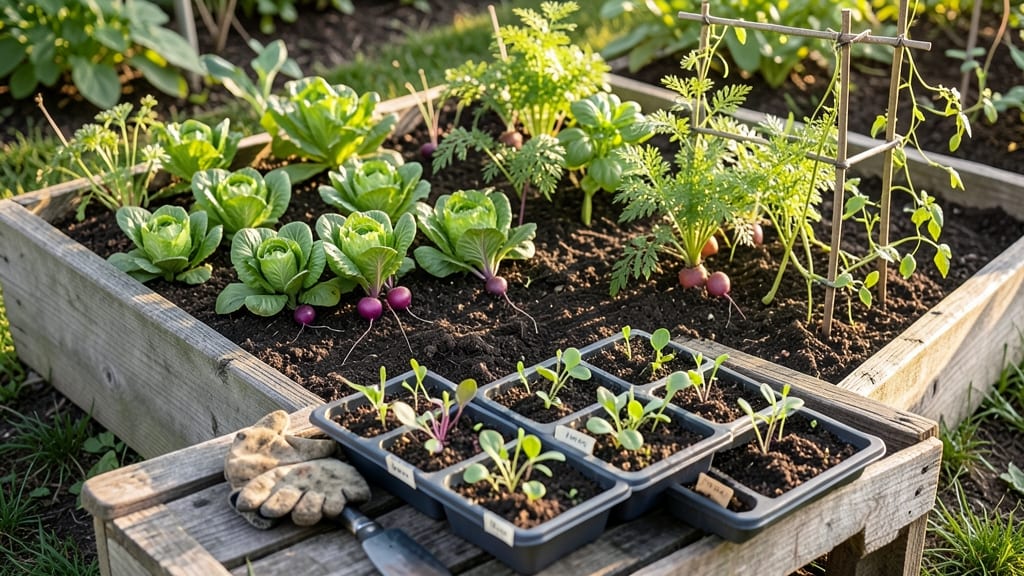
Planting a garden at the right time ensures your 🌱 thrives instead of struggling—miss the window, and you’ll be fighting weeds, pests, or stunted growth all season.
Timing your garden planting by frost dates isn’t just guesswork—it’s the difference between a thriving harvest and a wasted season. But with USDA zones spanning from Alaska to Florida, how do you calculate the exact windows for your location?
Most gardeners in Zone 6a (like me!) start seeds indoors by mid-March, then transplant after the last frost—usually around April 15—when soil warms to 60°F. But that’s just the start: summer crops like tomatoes need a longer growing season, while quick greens can handle cooler temps.
Below, I’ll break down how to pinpoint your planting windows by crop type, frost dates, and even microclimates—so you can avoid my rookie mistake of planting beans too early (they bolted in 48 hours).
How to calculate your planting windows using frost dates
Planting your garden at the right time means knowing your last frost date—the average date when temperatures drop below 32°F (0°C) in spring. This critical number determines when to sow seeds or transplant seedlings outdoors.
Without it, you risk frost damage to tender plants or missing the optimal growing window. The good news? Calculating your planting windows is simpler than you think, and I’ll walk you through the exact steps.
First, find your USDA hardiness zone (most gardeners fall between Zone 5 and Zone 9). Then, locate your average last frost date—this varies dramatically across regions. For example, Zone 5 might see its last frost in mid-May, while Zone 9 could be frost-free by mid-February.
These dates are the backbone of your planting schedule, dictating when to start seeds indoors, transplant seedlings, and even when to harvest before the first frost of fall.
🌱Pro Tip: Use the National Weather Service or Almanac’s Frost Calculator (free tools!) to get your exact last frost date by entering your zip code. These tools account for local variations and historical data, so you’re not guessing.
📅 Step-by-Step: Calculate Your Planting Windows
- Step 1: Find your USDA Zone (e.g., Zone 6a, Zone 8b) using the USDA Plant Hardiness Zone Map. This tells you your general climate range.
- Step 2: Look up your average last frost date for spring and first frost date for fall. Use tools like the Old Farmer’s Almanac or your local Cooperative Extension Service.
- Step 3: Adjust for microclimates—areas near lakes, hills, or urban heat islands can have earlier or later frost dates than the average. For example, a south-facing slope may warm up faster in spring.
- Step 4: Calculate your frost-free growing season by subtracting the last frost date from the first frost date. This tells you how many days you have to grow crops like tomatoes or peppers, which need 90–120 days of warmth.
- Step 5: Use a planting calendar (like the one from Johnny’s Selected Seeds) to match your frost dates with the days to maturity for your crops. For example, if your last frost is May 10 and you’re growing bush beans (60 days to harvest), plant them by March 12.
- Step 6: For warm-season crops (like peppers or cucumbers), wait until 2–3 weeks after your last frost date to transplant seedlings. Soil temperature should be at least 60°F (15°C) for optimal growth.
Once you’ve nailed down your frost dates, the next step is adjusting for soil temperature. Many seeds won’t germinate until the soil reaches 50–70°F (10–21°C). Use a soil thermometer to check—if it’s too cold, wait or start seeds indoors.
For example, cool-season crops like lettuce can handle 40°F (4°C) soil, while warm-season crops like squash need 70°F (21°C) or higher.
Don’t forget about fall planting! Some vegetables, like kale and spinach, thrive in cooler weather and can be sown 6–8 weeks before your first frost.
Use the same frost-date math in reverse: if your first frost is October 15, plant these crops by early September for a late-season harvest. This extends your growing season and maximizes your garden’s productivity.
🌡️Key Adjustment: If you’re in a high-altitude area (like Denver or Colorado Springs), frost dates can be 2–4 weeks later than the average for your zone. Always check local records or ask your local nursery for tailored advice.
For gardeners who want to automate the process, apps like Gardenate or PlantNet let you input your zip code and get customized planting schedules based on frost dates, soil conditions, and even moon phases (yes, some gardeners swear by lunar planting!).
These tools handle the math for you, so you can focus on the fun part—digging in the dirt.
Finally, keep a garden journal to track your frost dates over the years. Weather patterns shift, and your local frost dates might change slightly each season. By recording when frost hits (or doesn’t hit!) in your area, you’ll refine your planting windows year after year.
Over time, you’ll develop a gut instinct for when it’s safe to plant, turning guesswork into garden confidence.
Best planting times by vegetable type (cool vs. warm season crops)
Knowing when to plant a garden depends entirely on whether your crop thrives in cool or warm seasons. Cool-season vegetables like lettuce and spinach tolerate light frosts, while tomatoes and peppers need warm soil to germinate.
Below is a simple breakdown to help you time your plantings perfectly for your USDA zone and local frost dates.
For cool-season crops, aim to plant 4-6 weeks before your last frost date—this gives them time to mature before summer heat sets in. Warm-season crops, on the other hand, should wait until after your last frost and when soil temperatures reach at least 60°F (15°C).
Adjust for your region: Northern gardeners may plant later, while Southern gardeners can start earlier.
📅 Summary Table: Planting Times by Vegetable Type
| Vegetable | Type | Best Planting Time | Notes |
|---|---|---|---|
| Lettuce | Cool Season | Early spring (4-6 wks before last frost) or fall (8-10 wks before first frost) | Bolt-resistant varieties for summer |
| Spinach | Cool Season | Early spring or late summer (60-70 days before frost) | Tolerates light frost |
| Tomatoes | Warm Season | After last frost (soil 60°F+) | Start indoors 6-8 wks before transplant |
| Peppers | Warm Season | After last frost (soil 70°F+) | Slow to germinate in cold soil |
| Carrots | Cool Season | Early spring or late summer (60-70 days before frost) | Sow directly, thin seedlings |
| Cucumbers | Warm Season | After last frost (soil 65°F+) | Vining varieties need trellis |
| Broccoli | Cool Season | Early spring or late summer (70-80 days before frost) | Harvest before bolting |
| Beans | Warm Season | After last frost (soil 60°F+) | Direct sow after danger of frost |
| Onions | Cool Season | Early spring (4-6 wks before last frost) | Start from sets or seeds |
| Squash | Warm Season | After last frost (soil 70°F+) | Plant after soil warms |
For succession planting, repeat sowings every 2-3 weeks for crops like lettuce or radishes to ensure a continuous harvest. Warm-season crops like tomatoes and peppers can also benefit from a second planting in mid-summer for a fall harvest, provided your first frost arrives late enough.
Always check your local frost dates and adjust planting times accordingly. In warmer climates (zones 8-10), you can plant warm-season crops as early as February, while cooler zones (3-5) may need to wait until May or June.
Use row covers or cold frames to extend your cool-season growing window in early spring or late fall.
Pro tip: Keep a planting journal to track what works best in your garden. Note any adjustments you make based on microclimates (e.g., a sunny south-facing bed warms up faster than a shady spot). With practice, you’ll fine-tune your planting timeline for maximum yields every season! 🌱