
Tools
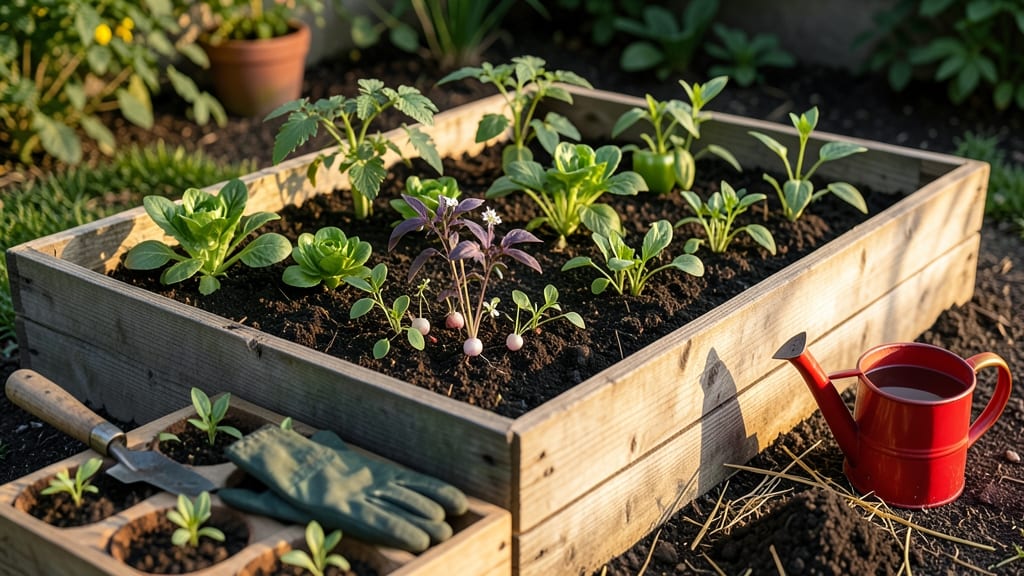
An 8x8 raised garden is the ultimate space-saver for small yards, balconies, or even urban patios—packing big harvests into just 64 square feet.
Transforming a tiny 8x8-foot space into a thriving garden isn’t just possible—it’s a game-changer for urban gardeners and small-space growers. With the right layout, you can grow enough produce to feed a family while maximizing every square inch of your raised bed.
Whether you’re growing cherry tomatoes or leafy greens, the key is smart planning.
This compact size lets you try vertical gardening, companion planting, and seasonal swaps without sacrificing yield. No more wasted space—just efficient rows that fit your favorite crops and your lifestyle.
Below, I’ll show you how to design your 8x8 raised garden for maximum productivity, from soil prep to harvest-ready layouts that work year-round.
Optimal 8x8 raised garden layouts for high-yield planting
A 64-square-foot raised bed might seem small, but with square-foot gardening and vertical stacking, you can grow more than you’d expect. The key lies in crop spacing, companion planting, and seasonal rotation.
Whether you're in a cool coastal climate or a hot inland zone, these layouts adapt to your conditions while maximizing yield.
Start by dividing your 8x8-foot bed into a 1-foot grid, creating 64 individual squares. Each square can hold a different plant based on its mature size and growth habits.
For example, bush beans (4 plants per square) thrive alongside lettuce (16 plants per square), while tomatoes (1 plant per square) need their own space but can climb a trellis to save ground space.
Here’s how to organize your bed for maximum productivity:
| Plant Type | Sun Needs | Spacing (per sq ft) | Mature Height | Companion Plants |
|---|---|---|---|---|
| Cherry Tomatoes | Full Sun (6-8 hrs) | 1 plant | 3-4 ft (trellis) | Basil, Lettuce, Carrots |
| Bush Beans | Full Sun (6+ hrs) | 4 plants | 1-2 ft | Corn, Cucumbers, Radishes |
| Lettuce | Partial Sun (4-6 hrs) | 16 plants | 0.5-1 ft | Carrots, Radishes, Strawberries |
| Peppers | Full Sun (6-8 hrs) | 1 plant | 2-3 ft | Basil, Onions, Spinach |
| Radishes | Full Sun (4-6 hrs) | 9 plants | 0.5-1 ft | Lettuce, Spinach, Carrots |
| Basil | Full Sun (6+ hrs) | 4 plants | 1-2 ft | Tomatoes, Peppers, Oregano |
| Carrots | Full Sun (6+ hrs) | 16 plants | 0.5-1.5 ft | Lettuce, Radishes, Onions |
| Green Onions | Full Sun (4-6 hrs) | 16 plants | 0.5-1 ft | Carrots, Beets, Lettuce |
For cool climates, prioritize leafy greens, root vegetables, and early-season herbs. In hot climates, focus on heat-tolerant crops like okra, peppers, and sweet potatoes.
Use seasonal rotation to avoid soil depletion—swap heavy feeders like tomatoes with lighter crops like beans or lettuce in subsequent seasons.
Vertical space is your best friend in an 8x8 raised bed. Install trellises along the sides for pole beans, cucumbers, or squash. This frees up ground space for shallow-rooted plants like radishes or lettuce.
A 3-foot trellis can support 6-8 plants, doubling your yield without expanding your footprint.
Companion planting boosts yields by deterring pests and improving soil health. For example, basil near tomatoes repels flies, while marigolds planted around the bed deter nematodes. Group plants with similar water needs together to simplify irrigation. A drip irrigation system works perfectly for precise watering in tight spaces.
Plan for succession planting to extend harvests. After harvesting early radishes (in 30 days), replant the space with bush beans or lettuce. This keeps your 8x8 garden productive year-round. In fall, swap summer crops for kale, spinach, or garlic, which thrive in cooler weather.
Don’t forget to mulch your bed to retain moisture and suppress weeds. Use straw or shredded leaves for a natural, low-maintenance solution. Mulching also regulates soil temperature, protecting root crops like carrots and beets from extreme heat or cold.
With these high-yield layouts, your 8x8 raised garden can produce enough for a family of four—vegetables, herbs, and even edible flowers—while keeping your space organized and efficient. Start small, experiment with combinations, and watch your harvest grow!
Best crops for an 8x8 raised garden by season
Your 8x8 raised garden can produce a surprising bounty if you choose the right crops for each season. Spring and fall offer cool-season vegetables like leafy greens and root crops, while summer thrives with heat-loving plants. Succession planting extends harvests, ensuring fresh produce year-round.
Let’s dive into the best space-efficient crops for each season and how to maximize your yield.
For spring planting, focus on fast-growing, cool-weather crops that tolerate light frosts.
These include bush beans, radishes, and spinach, which mature quickly and leave room for summer replacements. Hardiness zones 5-8 can start seeds indoors 4-6 weeks before the last frost, while zones 9-11 can direct-sow in early spring.
In microclimates with colder nights, use row covers to protect tender seedlings.
Here’s how to optimize your 8x8 raised garden by season with high-yield, space-saving crops:
- 1 Spring (March-May): Plant bush beans, radishes, and lettuce for quick harvests. Use succession planting every 2 weeks to keep a steady supply. Spinach and kale thrive in cooler temps and can be harvested multiple times.
- 2 Summer (June-August): Switch to cherry tomatoes, peppers, and bush cucumbers. Train vining plants like pole beans or cucumbers vertically to save space. Basil and dill are perfect companions and fill gaps between larger plants.
- 3 Fall (September-November): Replant kale, carrots, and turnips for late harvests. Succession plant every 3 weeks until 6 weeks before the first frost. Use row covers to extend the season for heat-sensitive crops like spinach.
- 4 Winter (December-February): In mild climates (zones 8-10), grow broccoli, cabbage, and peas. Use cold frames or greenhouses to protect plants from frost. Herbs like parsley and cilantro also tolerate cooler temps and add flavor to winter meals.
- 5 Microclimate Tips: Adjust planting based on your local microclimate. If your garden is shadier, prioritize leafy greens and herbs. For hotter spots, opt for drought-tolerant plants like zucchini or eggplant. Always monitor soil temperature—cool-season crops need 50°F+, while warm-season crops thrive at 60°F+.
To maximize space, pair companion plants like basil with tomatoes or carrots with onions. This not only saves room but also deters pests naturally. Succession planting is key—replace harvested crops with new ones every 2-3 weeks to keep your garden productive.
For example, after harvesting radishes in 30 days, replant with bush beans or lettuce.
Don’t forget to rotate crops annually to prevent soil depletion and disease buildup. Keep a planting journal to track what works best in your 8x8 raised garden. With these strategies, you’ll enjoy a continuous harvest and make the most of your small space—no matter the season!