
Tools
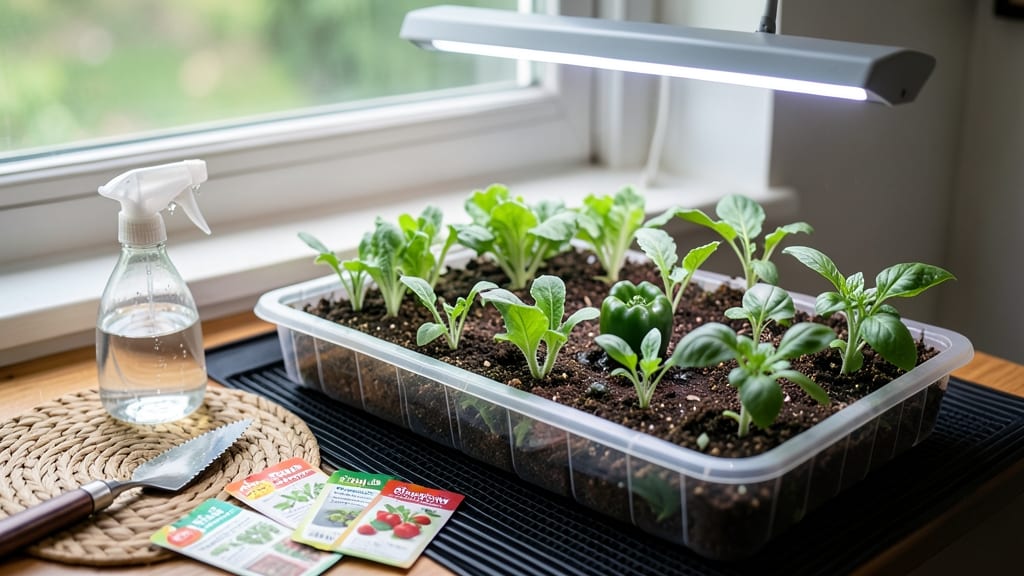
Starting garden seeds indoors at the right time means the difference between a garden bursting with tomatoes and peppers and a season of disappointment.
Picture this: You’ve got six-foot-tall tomato plants just as the first frost hits, or worse, your seedlings are still puny when the last frost passes. Timing is everything, and it all comes down to knowing your frost dates, your zone, and how long each plant needs to mature.
In Zone 6a, where many gardeners start seeds in February or March, the math is simple: count back 4-8 weeks from your last frost (April 15 for most areas) and adjust for fast growers like lettuce or slow ones like eggplants.
Get it wrong, and you’ll either be transplanting too early or too late.
Below, I’ll break down the exact dates for your region, how to tweak for unpredictable weather, and the three key signs your seedlings are ready to hit the garden.
How to calculate indoor seed starting dates by plant type and hardiness Zone
Getting your indoor seed starting dates right is like solving a puzzle—each piece (your hardiness zone, last frost date, and plant’s days-to-maturity) must align perfectly. Skip this step, and you’ll either end up with overgrown seedlings crowding your windowsill or tiny transplants struggling in the garden.
The key? A simple formula that accounts for your local climate and the specific needs of each plant.
First, find your USDA hardiness zone (use the USDA Plant Hardiness Zone Map)—this tells you when to expect your last spring frost. For example, in Zone 5, the last frost typically falls around May 15, while in Zone 8, it’s closer to March 15.
This date is your transplant deadline: seedlings must be ready to move outdoors 2-4 weeks before this date to avoid frost damage.
Next, check the days-to-maturity on your seed packet—this is the number of days from sowing to harvest. For warm-season crops like tomatoes or peppers, subtract 8-12 weeks (their ideal indoor growing time) from your last frost date.
For cool-season crops like lettuce or spinach, subtract 4-6 weeks since they mature faster. This gives you your indoor start date.
Here’s the formula in action: Indoor Start Date = Last Frost Date – Days to Maturity + Buffer Weeks For a tomato in Zone 6 (last frost: May 1, days to maturity: 80 days), the math looks like this: 5/1 – 80 days + 2 weeks = ~February 20.
| Plant Type | Days to Maturity | Indoor Start Window | Notes |
|---|---|---|---|
| Warm-Season Crops (Tomatoes, Peppers, Eggplants) | 60–90 days | 8–12 weeks before last frost | Need warm soil; transplant after frost |
| Cool-Season Crops (Lettuce, Spinach, Kale) | 30–60 days | 4–6 weeks before last frost | Tolerate light frost; can direct-sow |
| Herbs (Basil, Cilantro, Dill) | 30–70 days | 6–8 weeks before last frost | Basil needs warmth; cilantro bolts in heat |
| Flowers (Marigolds, Petunias, Snapdragons) | 45–90 days | 6–10 weeks before last frost | Petunias need long indoor time |
Adjust your indoor start date based on your plant’s growth speed. Fast growers like radishes or arugula can start closer to the frost date (just 4 weeks indoors), while slow growers like broccoli or cabbage need 6–8 weeks indoors.
Pro tip: Warm-season crops (tomatoes, peppers) often need grow lights to prevent leggy seedlings—factor in light setup time if you’re using artificial light.
For Zone 7 and above, where last frosts happen earlier (e.g., March 15), you can start warm-season seeds indoors as early as January. But in Zones 3–5, wait until late February or March to avoid overcrowded seedlings before your garden is ready.
Always err on the side of starting too early—you can delay transplanting if needed, but overgrown seedlings are harder to recover.
Don’t forget to account for transplant shock! Seedlings need 2–4 weeks to acclimate outdoors (a process called hardening off). If you’re in a cooler microclimate (like a high-elevation area), add an extra 1–2 weeks to your buffer.
For example, if your last frost is May 10, aim to transplant by April 25, meaning your indoor start date should be 2–3 weeks earlier than your initial calculation.
Use this customizable formula for any plant:
- Find your last frost date (USDA zone map).
- Subtract the days-to-maturity from the seed packet.
- Add 2–4 weeks for hardening off.
- Adjust for slow/fast growers or microclimate quirks.
For basil in Zone 8
Best indoor seed starting times for top vegetables and herbs by Zone
Your hardiness zone and last frost date are the foundation for successful indoor seed starting. For example, in Zone 5, I start tomatoes 6-8 weeks before the average May 15 frost date, while lettuce only needs 4 weeks.
Each zone has its own rhythm—miss the window, and you’ll either rush seedlings or end up with late-season harvests. Let’s break down the best timing for 10+ popular crops, including adjustments for early/late varieties and microclimates.
Regional microclimates can shift your timing by 1-2 weeks. If you live near a large body of water or in a valley, your last frost date might be later than the official average. I always check local weather records for the past 5 years to refine my schedule.
For instance, in Zone 7, I might start peppers 2 weeks earlier in a sheltered microclimate compared to an exposed hilltop. Use these guidelines as a starting point, then tweak based on your specific conditions.
Common mistakes can derail even the best-laid plans. One of my biggest lessons? Starting slow-growing plants like eggplants too early. They’ll get leggy and weak before transplanting time. Another pitfall is ignoring seed packet instructions—some varieties (like cherry tomatoes) mature faster than standard types. Always cross-reference your zone with the days-to-maturity listed on the packet.
For herbs like cilantro and parsley, I’ve learned to start them indoors 4-6 weeks before the last frost, but with a twist: these plants prefer cooler temperatures. If my indoor space gets too warm, they’ll bolt prematurely.
I solve this by placing them on a cool windowsill or using a small fan to circulate air. Dill and coriander are another story—they’re finicky about timing, so I often