
Light Requirements
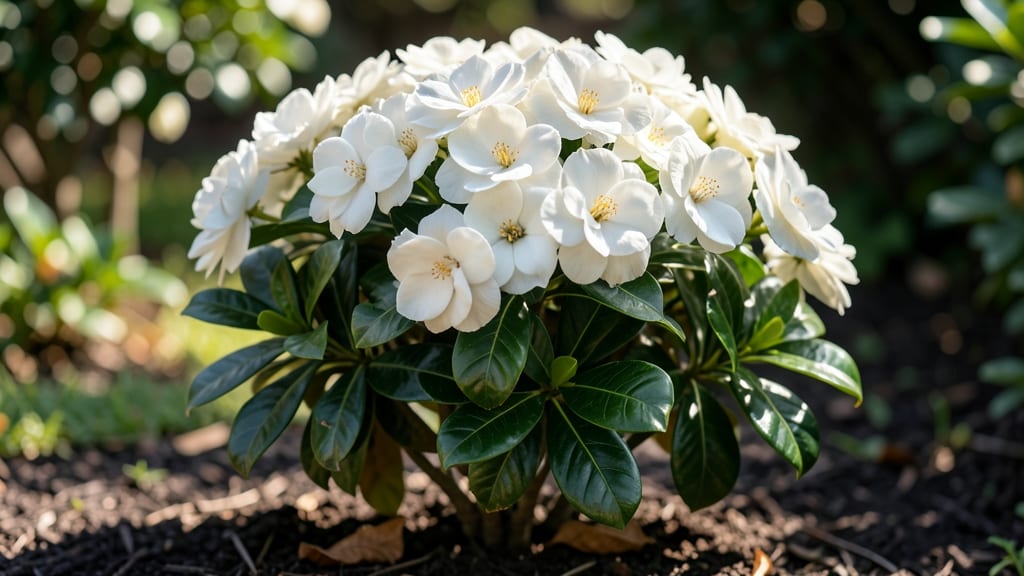
The August Beauty gardenia’s sun requirements hinge on morning sun and afternoon shade to produce its signature fragrant blooms 🌸—a balance that keeps its leaves lush and its perfume undiluted.
Here’s the catch: too much midday sun, and you’ll watch those glossy leaves crisp at the edges while buds refuse to open. I’ve seen gardeners in Zone 6a swear by full sun, only to end up with leggy, sparse-blooming shrubs by August.
The secret isn’t just hours of light—it’s the quality of that light.
This guide breaks down exactly how to mimic the dappled shade of a tropical forest, from pruning techniques to shade-cloth hacks, so your August Beauty stays perfumed and vibrant all summer long.
You’ll learn the optimal 4-6 hours of morning sun, how to spot sunburn early, and when to adjust care as August’s heat peaks—because a gardenia that looks healthy but won’t bloom is missing its most important ingredient.

Why August Beauty gardenias need morning sun only (and what happens if you get it wrong)
Your August Beauty Gardenia thrives on morning sunlight because its tropical roots evolved under dappled forest canopies in Southeast Asia. The 4-6 hours of morning sun (6 AM–12 PM) provides the perfect balance of photosynthesis energy without the heat stress of afternoon rays.
This delicate balance is why gardeners in USDA Zones 7-10 often see blooms fail when light conditions shift.
The light spectrum these plants crave is rich in blue and red wavelengths during morning hours—ideal for chlorophyll production and floral bud development. Afternoon sun, however, delivers intense infrared radiation, which overheats leaves and disrupts the plant’s metabolic processes.
This mismatch explains why even well-watered gardenias can suddenly drop buds or develop leaf scorch.
🌸
⚠️ Critical Sun Mistakes & Their Damage
- Afternoon Sun Exposure: Causes leaf scorch (brown, crispy edges) within 2-3 days.
- Full Sun All Day: Stunts blooms by 30-50% due to heat shock.
- Inconsistent Light: Leads to bud drop and fungal risks (like powdery mildew).
Pro Tip: Use a shade cloth (30-50%) if morning sun exceeds 6 hours.
When your gardenia gets too much afternoon sun, the chloroplasts in leaves overheat, triggering a protective response that halts photosynthesis. This stress causes oxidative damage, visible as yellowing between leaf veins (a classic sign of chlorosis).
Over time, the plant diverts energy from blooming to repairing damaged tissue, resulting in fewer fragrant white flowers—the very trait that makes this variety so prized.
The light spectrum during morning hours (400–700 nm) is also critical for floral scent production. Gardenias produce their signature aroma through volatile organic compounds (VOCs), which require cool, indirect light to synthesize properly.
Afternoon heat disrupts this process, leading to weaker fragrance or even buds that fail to open.
🌿
In August’s intense heat, the stakes are even higher. Temperatures above 85°F (29°C) combined with direct afternoon sun can raise leaf temperatures to 100°F+ (38°C+), mimicking a heatwave in their native habitat.
While gardenias are tropical, they’ve adapted to filtered light conditions, not the brutal exposure of a southern U.S. summer. This explains why gardenias in Arizona or Florida often need afternoon shade even if they’re labeled as "sun-loving."
Another hidden risk is fungal infection. Damaged leaves from sunburn create entry points for pathogens like Botrytis blight, which thrives in the high humidity of summer afternoons.
You might notice gray mold on buds or black spots on leaves—both clear signs your gardenia is struggling with light stress compounded by poor air circulation.
🪴
To test if your gardenia is getting the right light, observe its new growth for 3 weeks. Healthy morning-sun gardenias produce dark green, glossy leaves with tight, unopened buds. If you see light green or yellowing leaves, it’s a red flag for too much sun.
Conversely, pale, leggy growth signals insufficient light. The goal is bright indirect light—think of it as "sun through a sheer curtain".
For gardeners in containers, this means positioning your plant east-facing on a balcony or using a reflective surface (like white walls) to bounce light gently.
If you’re in a west-facing garden, plant near tall shrubs or trees to cast natural shade after 12 PM. Even a 50% shade cloth can make the difference between abundant blooms and struggling foliage.
☀️
How to optimize sunlight for August Beauty gardenias: a step-by-step light management guide
August Beauty Gardenias thrive on morning sunlight but struggle with afternoon heat, which can scorch their delicate leaves and reduce blooming. In August, with 12+ hours of daylight, managing sunlight becomes critical.
The key is creating a filtered light environment that mimics their native tropical shade conditions while still providing enough energy for vibrant blooms.
Without proper light management, you’ll see leaf burn, bud drop, and weakened stems. These plants evolved under dappled forest light, so we’ll replicate that with strategic placement, pruning, and shade solutions. Let’s break down the best methods to protect your gardenia while keeping it blooming beautifully.
Comparison Table: Natural vs. Artificial Light Solutions for August Beauty Gardenias
| Solution | Method | Best For | Ease of Use |
|---|---|---|---|
| Natural Light | East-facing placement | Outdoor garden beds | ⭐⭐⭐⭐⭐ |
| Natural Light | Dappled shade trees | Established gardens | ⭐⭐⭐⭐ |
| Natural Light | 30-50% shade cloth | Containers & in-ground | ⭐⭐⭐⭐ |
| Artificial Light | LED grow lights (5000K) | Indoor setups | ⭐⭐⭐ |
| Artificial Light | Reflective surfaces | Low-light areas | ⭐⭐⭐⭐ |
| Artificial Light | Sheer curtains (white) | Indoor containers | ⭐⭐⭐⭐⭐ |
Start with strategic pruning to shape your gardenia for optimal light exposure. Remove overlapping branches and thin out dense foliage to allow airflow and light penetration. Focus on the outer canopy to ensure morning sun reaches the inner stems, where most buds form.
Prune in early August to give new growth time to harden before the hottest days.
For containers or in-ground plants, use 30-50% shade cloth to filter afternoon rays. Secure it 3-4 feet above the plant to avoid blocking airflow. If using cloth, choose white or silver to reflect heat while allowing blue light spectrum (critical for blooming).
For indoor gardenias, place them near an east-facing window with a sheer curtain to diffuse harsh light.
Adjust your gardenia’s light exposure gradually—never move it from full shade to full sun overnight. If transitioning outdoors, acclimate over 7-10 days by increasing sun exposure by 1 hour daily.
In high-humidity regions, supplement with circulation fans to prevent fungal issues from trapped heat. Monitor leaves for yellowing or crisp edges, signs of sun stress or overwatering.
For artificial light solutions, use LED grow lights with a 5000K color temperature for 6-8 hours daily. Position lights 12-18 inches above the plant and adjust height as it grows.
Pair with a timer to mimic natural daylight cycles. If using reflective surfaces like mirrors, angle them to bounce indirect light onto shaded areas without creating hot spots.