
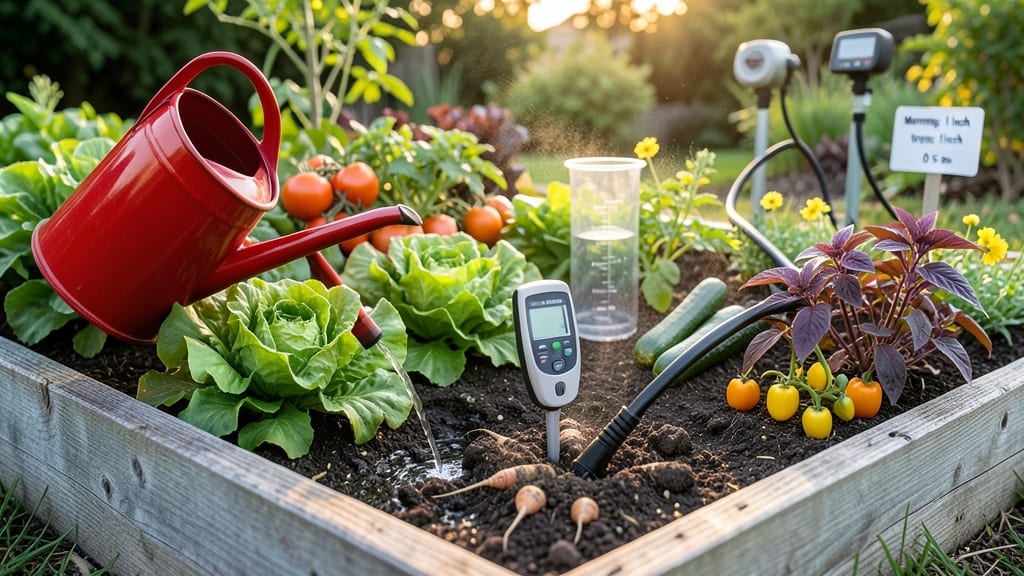
How Much Water Does a Vegetable Garden Need: Science-Backed Weekly Schedule by Crop Type

Watering

How Much Water Does a Vegetable Garden Need: Science-Backed Weekly Schedule by Crop Type

To water a vegetable garden properly, you need 1 to 2 inches of water per week—but timing, soil type, and crop needs make all the difference between thriving plants and wasted effort.

Most gardeners overestimate how much their 🥬 vegetable garden actually needs, drowning roots or leaving them parched. The truth? Deep, infrequent watering beats light sprinkles every day, and your soil type dictates how often you should check.

In this guide, we’ll break down the science behind watering schedules, from leafy greens that hate soggy soil to root crops that need steady moisture. You’ll learn how to adjust for rain, heatwaves, and even your local climate—plus the tools that make watering smarter, not harder.

Skip the guesswork and start with a plan that matches your garden’s unique needs. By the end, you’ll know exactly when to water, how much to give, and how to spot the warning signs before they become problems.

📅 Annual Watering Schedule
❄️ JAN
1x/wk
❄️ FEB
1x/wk
🌸 MAR
1x/wk
🌸 APR
2x/wk
🌸 MAY
2x/wk
☀️ JUN
2x/wk
☀️ JUL
2x/wk
☀️ AUG
2x/wk
🍂 SEP
1x/wk
🍂 OCT
1x/wk
❄️ NOV
2x/mo
❄️ DEC
2x/mo
High (Summer)
Medium (Spring/Fall)
Low (Winter)

Science-backed water requirements by vegetable type: weekly schedule for optimal growth

Watering your vegetable garden isn't a one-size-fits-all task—each plant has unique needs based on its growth stage, root depth, and climate zone. For example, tomatoes need consistent moisture to prevent blossom-end rot, while carrots require deep watering to grow straight roots.

Research shows that 1-2 inches of water per week is ideal for most vegetables, but timing and technique matter just as much as quantity.

To avoid common mistakes like overwatering (which causes root rot) or underwatering (leading to stunted growth), I’ve broken down the weekly watering schedules for 12 popular vegetables.

These guidelines account for soil type, seasonal temperature shifts, and growth phases—so you can tailor your approach whether you're in a hot, dry climate or a cool, humid region.

Below, you’ll find a science-backed summary table with watering recommendations, followed by detailed tips for each vegetable type. Remember: deep watering (soaking the soil 6-12 inches down) is always better than shallow, frequent watering, as it encourages root development and drought resistance.

Vegetable Weekly Water Needs Key Growth Stages Soil Depth to Water Climate Adjustments
Tomatoes 1.5–2 inches (2–3x/week) Seedling, Flowering, Fruiting 6–12 inches Increase by 30% in Zone 9+
Peppers 1–1.5 inches (2x/week) Seedling, Flowering, Fruit Set 4–8 inches Reduce by 20% in arid zones
Leafy Greens (Lettuce, Spinach) 1–1.25 inches (3–4x/week) Germination, Leaf Growth 2–4 inches Increase by 50% in hot weather
Root Crops (Carrots, Radishes) 1 inch (2–3x/week) Germination, Bulb Formation 3–6 inches Keep soil consistently moist
Cucumbers 1.5–2 inches (3x/week) Vining, Flowering, Fruiting 8–12 inches Mulch to retain moisture
Beans (Green, Dry) 1–1.25 inches (2–3x/week) Seedling, Pod Formation 4–6 inches Reduce watering in humid climates
Onions 1 inch (2x/week) Bulb Development 4–8 inches Taper off watering 2 weeks before harvest
Corn 1.5–2 inches (3x/week) Tasseling, Ear Formation 10–12 inches Critical during silking stage
Squash (Zucchini, Pumpkin) 1.5 inches (2–3x/week) Vining, Flowering, Fruit Swelling 6–10 inches

How to adjust your watering plan for soil type, weather, and seasonal changes

Your vegetable garden’s watering needs aren’t one-size-fits-all. Sandy soil drains water like a sieve, while clay soil holds moisture like a sponge. Even the same plants need different care in drought conditions versus humid summers.

Without adjustments, you risk root rot or stunted growth—both costly mistakes for your harvest. Let’s break down how to fine-tune your watering schedule for real-world conditions.

Start by testing your soil’s moisture retention. Dig a 6-inch hole, fill it with water, and time how long it takes to drain. Sandy soil drains in under an hour, while clay soil may take days.

This tells you whether to water lightly and often or deeply and infrequently. For example, tomatoes in sandy soil might need daily shallow watering, but the same plants in clay soil could thrive on weekly deep soaks.

🌱Key Adjustments by Soil Type:

  1. Sandy Soil: Water 2-3 times weekly (1/2 inch per session). Use mulch to slow evaporation.
  2. Clay Soil: Water once weekly (1-2 inches deep). Avoid overhead watering to prevent crusting.
  3. Loamy Soil: Water every 4-5 days (1 inch per week). Ideal for most vegetables.
  4. Seasonal Shift: Reduce watering by 30-50% in fall/winter when growth slows.
  5. Heatwave Alert: Increase frequency to daily for leafy greens and root crops.

Weather plays a bigger role than most gardeners realize. During high humidity (like summer afternoons), water in the early morning to prevent fungal diseases. In drought conditions, focus on deep watering—aim for 6-12 inches down—to encourage root growth. A simple trick: Check soil moisture by pressing your finger 1 inch deep. If it’s dry, it’s time to water.

Seasonal changes demand proactive adjustments. In spring, young plants need consistent moisture to establish roots. By summer, increase watering but avoid wetting foliage to deter pests. Fall is the time to taper off, letting soil dry slightly between waterings.

And in winter, most vegetables enter dormancy—reduce watering to bi-weekly unless you’re growing winter greens like kale.

Watch for warning signs of overwatering or underwatering. Yellowing leaves with crisp edges signal underwatering, while mushy stems or moldy soil mean you’re overdoing it. For root crops like carrots, uneven growth or cracking indicates inconsistent moisture.

Adjust your schedule immediately—your plants will thank you with healthier yields and fewer pests.

Pro tip: Use a rain gauge or tuna can to measure rainfall. If you’ve had 1 inch of rain, skip watering that day. Pair this with mulching (2-3 inches of straw or wood chips) to retain moisture and regulate soil temperature.

With these tweaks, your vegetable garden will stay thriving year-round, no matter what Mother Nature throws your way. 🌿

★★★★★4.8(11 reviews)
Categories Watering