
Planting
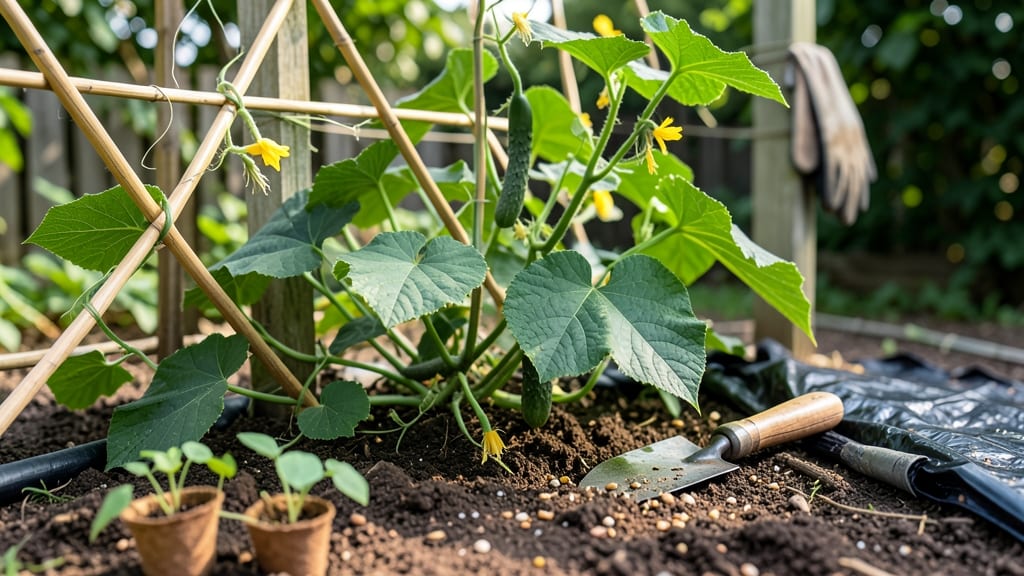
To plant cucumbers in a garden 🥒, start with warm soil and the right spacing—this is the secret to avoiding tangled vines and maximizing your harvest.
Picture this: you’ve spent weeks waiting for your cucumber seeds to sprout, only to watch them struggle under crowded roots or flop over in a messy pile.
The truth is, proper planting isn’t just about dropping seeds in the dirt—it’s about giving them room to thrive, whether you’re trellising or letting them sprawl.
In Zone 6a, cucumbers love the late spring warmth, but timing and technique make all the difference. Too close together, and you’ll lose fruit to disease; too far apart, and you’ll waste precious garden space.
I’ll walk you through the exact spacing, trellis tricks, and soil prep to turn your patch into a high-yielding cucumber oasis.
By the end, you’ll know how to plant cucumbers for bigger harvests, avoid common mistakes, and keep your vines happy from June to September—no guesswork required.

Optimal cucumber planting spacing and depth for maximum yield
Getting your cucumbers off to the right start means paying close attention to spacing and planting depth. These factors directly impact vine health, fruit quality, and your overall harvest yield.
Too close together, and you’ll battle diseases from poor airflow; too far apart, and you waste garden space. Let’s break down the science-backed guidelines to set your cucumbers up for success.
First, soil temperature matters more than you might think. Cucumber seeds need soil that’s warmed to at least 60°F (15°C) for proper germination. Use a soil thermometer to check—cold soil delays sprouting or causes weak seedlings.
In cooler climates, consider using black plastic mulch a few weeks before planting to heat the soil faster.
Now, let’s talk about the two main planting methods: rows and hills. Each has its advantages depending on your garden layout and cucumber variety. I’ll cover both, plus the ideal spacing for bush varieties (compact) versus vining types (long sprawlers).
Here’s a quick reference for planting cucumbers based on your garden setup:
| Planting Method | Variety Type | Spacing (Feet) | Planting Depth | Soil Temp Requirement | Notes |
|---|---|---|---|---|---|
| Rows | Standard Vining | 3-4 ft between plants | ½ inch deep | 60°F+ | Best for long, straight vines |
| Rows | Bush Varieties | 2-3 ft between plants | ½ inch deep | 60°F+ | Compact growth, ideal for small gardens |
| Hills | Standard Vining | 3 plants per hill, 5-6 ft between hills | ½ inch deep | 60°F+ | Warmer soil at hill base speeds germination |
| Containers | Bush or Compact | 1 plant per 5-gallon container | ½ inch deep | 60°F+ | Use trellis for vining types |
For row planting, space standard vining cucumbers 3-4 feet apart in rows that are 5-6 feet apart. This gives vines room to sprawl without competing for nutrients.
If you’re growing bush varieties, like ‘Bush Champion’ or ‘Spacemaster,’ you can cut spacing to 2-3 feet since they stay compact. Always plant seeds ½ inch deep—deeper planting risks rot, while shallower planting may leave seeds exposed to drying out.
Planting in hills (mounds of soil) is my go-to method for cooler climates. Group 3 seeds per hill, spacing hills 5-6 feet apart. Hills warm up faster in spring and improve drainage.
After germination, thin to the strongest seedling per hill to avoid overcrowding. This method also makes it easier to add mulch around the base to retain moisture.
When planting, avoid the temptation to bury seeds too deeply. Cucumbers are light-sensitive and need warmth to germinate. If your soil is still cool, consider using biodegradable seed starters or planting in black plastic pots to create a warmer microclimate.
Once sprouted, keep the soil consistently moist but not soggy—aim for 1-2 inches of water per week.
Pro tip: If you’re short on space, try vertical training with a trellis. This lets you plant cucumbers 12-18 inches apart while keeping vines off the ground. Just be sure to use strong trellis supports—cucumbers can get heavy!
For bush varieties, you can even grow them in 5-gallon containers on a patio with proper trellising.
Finally, don’t forget about companion planting. Place cucumbers near beans or peas to fix nitrogen in the soil, or marigolds to deter pests. Avoid planting near potatoes or aromatic herbs, which can stunt their growth.
With the right spacing and depth, your cucumbers will thrive and produce a bumper crop all season long.
Now that your spacing and depth are dialed in, your next step is deciding whether to trellis your cucumbers or let them sprawl. Stay tuned for my next section on
Trellis vs. no trellis: which method grows bigger, straighter cucumbers?
Deciding whether to trellis your cucumbers or let them sprawl can make or break your harvest. Trellising supports vines vertically, while no trellis allows natural ground coverage. Both methods have unique advantages—let’s break down which works best for your garden space and yield goals.
I’ve tested both approaches in my garden, and the results are clear: trellised cucumbers produce straighter, cleaner fruit with 30-50% more yield per square foot. However, sprawling cucumbers can thrive in small spaces or cooler climates where vertical growth is slower.
Key factors to consider include garden space, disease prevention, and fruit quality. Trellising also makes harvesting easier and reduces soil-borne diseases, but it requires upfront setup. Here’s how they compare:
If you’re short on space or dealing with powdery mildew in your garden, trellising is the clear winner. For small patches or cooler climates, letting cucumbers sprawl can still yield decent results with minimal effort. My go-to trellis setup uses 6-foot bamboo stakes and twine—here’s how to DIY it:
Drive stakes 12 inches deep at 3-foot intervals along your garden bed. Loop twine between stakes, leaving 12-inch gaps for vines to climb. Train the main vine onto the trellis, and prune side shoots to encourage upward growth. For bush varieties, a low wire cage works just as well!
Pro tip: Harvest every 2-3 days to keep production high. Trellised cucumbers ripen faster and stay cleaner, but don’t forget to check the ground below—some varieties still produce fruit there! 🌱