
Watering
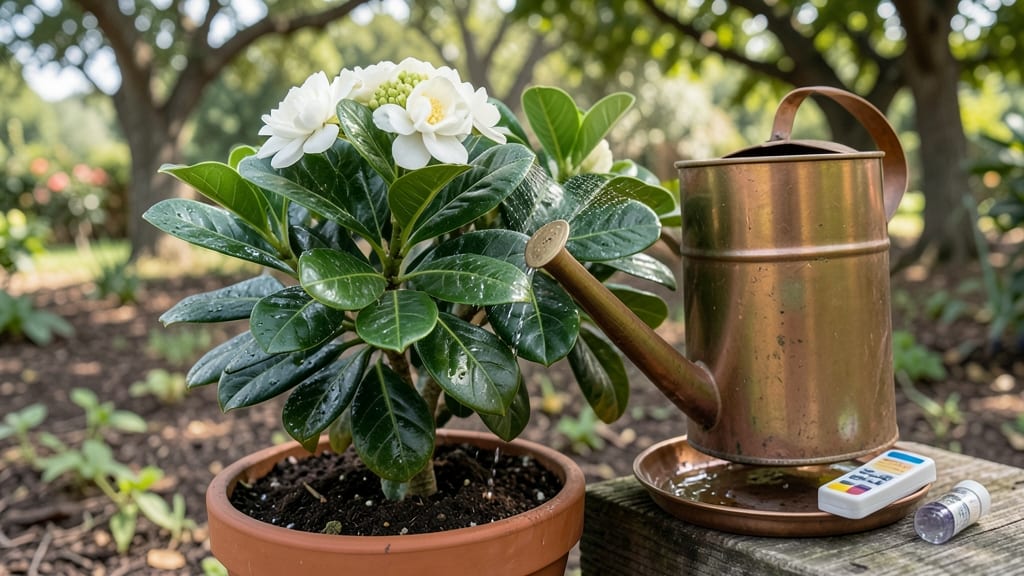
To water a gardenia plant properly, focus on deep, infrequent soakings that keep the soil evenly moist but never soggy—your key to glossy leaves and abundant blooms 🌸.
Struggling to keep your gardenia thriving? Overwatering or underwatering can cause drooping leaves and sparse blooms, but the right routine makes all the difference. Most gardeners either drown their plants or leave them thirsty, both of which lead to stress.
In this guide, I’ll walk you through the exact schedule for watering, including how to check soil moisture, adjust for seasonal changes, and spot the signs of proper hydration. No guesswork—just science-backed steps to keep your gardenia lush and flowering.
You’ll learn when to water, how deep to go, and the best times of day to avoid fungal issues or wasted moisture. By the end, your gardenia will reward you with vibrant blooms and glossy foliage all season long.
The perfect watering schedule for gardenia plants to prevent drooping leaves
Gardenia plants are prized for their fragrant white blooms and glossy dark green leaves, but they’re famously finicky about watering routines. Too much water causes root rot, while too little triggers drooping leaves and bud drop.
The key lies in consistent moisture without soggy soil—a delicate balance I’ve perfected after years of trial and error with my own gardenia collection.
These tropical shrubs thrive in USDA Zone 6-10 and need acidic, well-draining soil (pH 5.0-6.5) to absorb water efficiently. Unlike drought-tolerant plants, gardenias hate dry spells but despise waterlogged roots even more. Understanding their seasonal water needs is the secret to keeping them lush and blooming year after year.
| Season | Frequency | Water Amount | Soil Check | Signs of Stress |
|---|---|---|---|---|
| Spring | Weekly | 1-2 cups (potted) / 1 gallon (in-ground) | Top 1-2 inches dry | Drooping leaves, slow growth |
| Summer | Every 2-3 days | 1-2 cups (potted) / 1.5 gallons (in-ground) | Top 1 inch dry | Yellow leaves, bud drop |
| Fall | Every 5-7 days | 1 cup (potted) / 0.5 gallons (in-ground) | Top 2 inches dry | Wilted stems, sparse blooms |
| Winter | Bi-weekly | 0.5 cup (potted) / 0.25 gallons (in-ground) | Top 3 inches dry | Brown leaf tips, stunted growth |
During spring and fall, gardenias enter their active growth phases, demanding regular but measured watering. I’ve found that weekly deep watering in spring kickstarts root development, while reducing frequency in fall prepares them for dormancy.
The key is to water early in the morning (before 10 AM) to minimize evaporation and prevent fungal diseases like powdery mildew.
Summer is when gardenias drink the most, but overwatering is deadly. My 2-3 day watering schedule ensures roots stay hydrated without suffocating. I always check soil moisture by sticking my finger 1 inch deep—if it’s dry, it’s time to water.
For potted gardenias, I use the "soak-and-dry" method: water until it drains from the bottom, then wait until the topsoil feels dry to the touch.
Winter care is often overlooked, but gardenias need minimal but consistent moisture to survive chilly temperatures. I’ve learned that bi-weekly watering prevents desiccation while avoiding root rot from excess moisture.
If your gardenia is outdoors in Zone 6 or colder, mulch the base with 2-3 inches of pine bark to insulate roots and retain moisture.
One critical mistake I see gardeners make is watering on a schedule rather than checking soil conditions. Gardenias in containers dry out faster than in-ground plants, so I weigh my pots—a dry pot feels noticeably lighter.
For in-ground plants, I dig 2 inches deep with a trowel to check moisture levels. If the soil feels damp, wait one more day before watering.
Yellowing leaves are often a sign of overwatering
How deep and when to water gardenias for maximum blooms
Gardenia plants thrive when you water them deeply and consistently, but getting the technique right makes all the difference between lush blooms and drooping leaves. Unlike many plants, gardenias demand moisture at the root zone—not just a light sprinkle on top.
When done correctly, deep watering encourages strong root growth and triggers those fragrant white flowers you love. The key? Watering at the right depth and right time of day to mimic natural rainfall patterns.
Most gardeners make the mistake of watering too lightly or too frequently, leading to shallow roots that struggle to support the plant. Instead, aim to saturate the soil 6-8 inches deep—this ensures roots access the water they need without sitting in soggy conditions.
Pair this with watering in the early morning (before 10 AM) to reduce evaporation and fungal risks. If you’re unsure whether your gardenia is getting enough water, check the soil moisture by sticking your finger 2-3 inches down—it should feel damp but not waterlogged.
-
Step 1: Water Early in the Morning
Choose 6-8 AM to water your gardenia. This timing allows foliage to dry quickly, reducing the risk of fungal diseases like powdery mildew. Avoid evening watering, as wet leaves overnight invite pests and rot.
-
Step 2: Use a Slow, Deep Watering Technique
Apply water slowly at the base of the plant using a soaker hose or drip irrigation. For potted gardenias, water until 1-2 cups drain from the bottom. In-ground plants need 1-2 gallons of water per session to reach 6-8 inches deep.
-
Step 3: Check Soil Moisture Before Watering
Stick your finger 2-3 inches into the soil. If it feels dry, it’s time to water. If it’s still moist, wait 1-2 more days. Overwatering is just as harmful as underwatering—it causes root rot and yellowing leaves.
-
Step 4: Adjust for Seasonal Changes
In summer, water every 2-3 days due to heat and evaporation. In spring/fall, reduce to weekly deep waterings. During winter, cut back to bi-weekly light watering unless you’re in a frost-free zone.
-
Step 5: Mulch to Retain Moisture
Apply a 2-3 inch layer of mulch (like pine bark or shredded leaves) around the base. This keeps soil cool and moist longer, reducing how often you need to water. Just keep mulch away from the trunk to prevent rot.
One of the biggest misconceptions about watering gardenias is that they need constant moisture. In reality, they prefer consistently moist but well-draining soil.
If your gardenia’s leaves start to curl or drop, it’s often a sign of underwatering—but if they turn yellow and mushy, you’re likely overwatering.
To fix this, adjust your routine: water only when the top 2 inches of soil are dry, and ensure pots have drainage holes. For in-ground plants, amend heavy clay soil with sand or compost to improve drainage.
Pro tip: If you’re growing gardenias in containers, they’ll need water more frequently than in-ground plants because pots dry out faster. Monitor potted gardenias daily in hot weather and water as soon as the topsoil feels dry.
For outdoor gardenias, focus on deep, infrequent watering to encourage roots to grow deeper in search of moisture. This resilience translates to more blooms and healthier foliage over time.
Remember, gardenias are sensitive to water quality too. If your tap water is hard or alkaline, it can clog soil pores and prevent roots from absorbing moisture. To combat this, rainwater or distilled water is ideal, or use a water softener if hard water is your only option.
With the right watering technique, your gardenia will reward you with glossy leaves and an abundance of fragrant blooms all season long. 🌸