Picking
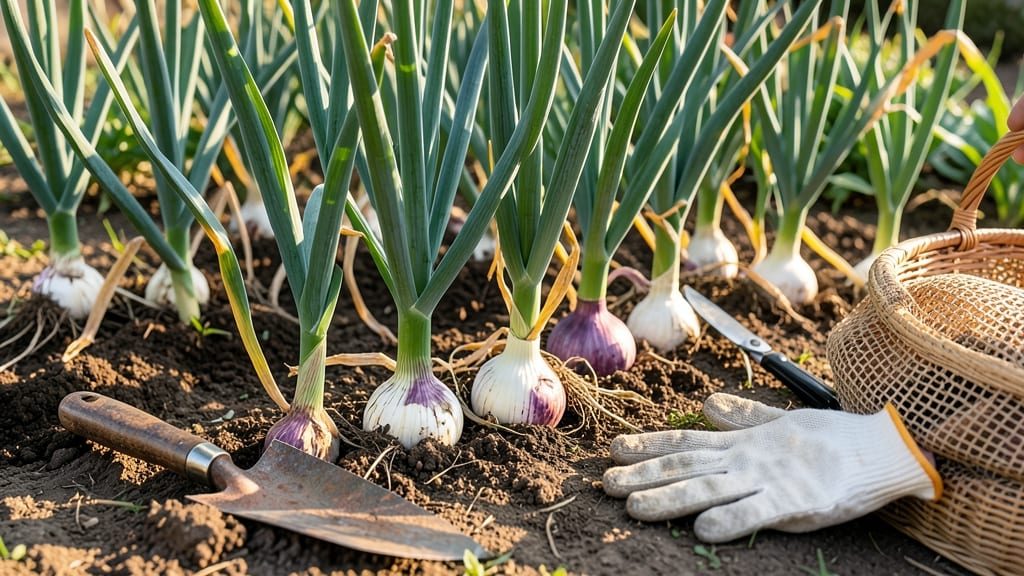
To pick onions from your garden at the perfect time, watch for yellowing tops and firm bulbs measuring 2-3 inches—harvesting too early or late ruins flavor and storage life.
I’ve pulled onions when the tops were still green, only to find tiny, pungent bulbs that wouldn’t last past Thanksgiving. Or waited too long, and the skins split, leaving me with a pile of mush.
The difference between a perfect harvest and wasted effort comes down to timing—and a few simple visual cues.
Most gardeners in Zone 6a can expect their spring-planted onions to reach maturity by June or July, though fall-planted varieties may linger until September or October. But don’t rely on the calendar alone—soil warmth, rainfall, and even your onion variety play a role in when they’re truly ready.
Below, I’ll walk you through the three key signs your onions are ready to pull, how to test them for maturity, and what to do if you miss the window. You’ll leave here knowing exactly when to harvest for the best flavor and longest storage.


3 Key visual cues that show your onions are ready to harvest
Knowing when to pick onions from your garden can be tricky, but watching for these 3 key visual cues will help you time your harvest perfectly. The difference between a sweet, flavorful onion and a bitter, pungent one often comes down to these simple signs.
Let’s break down what to look for to avoid overgrowth or spoilage.
First, pay attention to the leaf color of your onions. When the tops begin to yellow and flop over, it’s a clear signal that the bulb below is maturing.
This change happens naturally as the plant redirects energy from leaf growth to bulb development. Ignoring this cue can lead to onions that split or rot in the soil.
The bulb size is another critical indicator. Aim for onions that are 2-3 inches in diameter with firm, round shapes. Smaller bulbs (under 1 inch) are underdeveloped, while oversized ones may have tough skins or hollow centers.
Use your fingers to gently feel the bulb—it should be solid, not mushy or shriveled.
Finally, check the stem condition. The neck of the bulb should tighten and develop papery skin. If the stem is still green and flexible, the onion isn’t ready. Overripe onions will have stems that dry out completely, making them less flavorful and harder to store.
Onion Harvest Readiness Guide
| Sign | Not Ready (🟢) | Ideal (🟡) | Overripe (🟤) |
|---|---|---|---|
| Leaf Color | Green and upright | Yellowing and flopping | Brown and crispy |
| Bulb Size | Small (<1 inch) | Firm (2-3 inches) | Large but hollow |
| Stem Condition | Green and flexible | Tightens, papery skin | Dry and brittle |
| Soil Check | Bulb soft when pressed | Firm when pressed | Loose or rotting |
💡 Pro Tip: Use a finger-press test—gently squeeze the bulb. If it yields slightly, it’s ready!
Regional climate plays a role too. In cooler climates, onions may mature earlier (late spring to early summer), while warmer climates can extend the harvest window into fall. Always prioritize the visual cues over calendar dates—your onions will thank you with better flavor and storage life.
Once you spot these signs, harvest within 1-2 days to prevent overripening. Use a sharp knife or garden shears to cut the tops, leaving about 1 inch of stem attached. This helps the bulbs cure properly before storage. Avoid pulling onions by the roots, as this can damage the bulb.
After harvesting, let onions cure in a dry, shaded area for 2-3 weeks. This process toughens the skins and improves storage potential. Store cured onions in a cool, dark place with good airflow, like a mesh bag or ventilated box.
Properly timed and cured onions can last 6-8 months without spoiling.
If you miss the ideal window, don’t panic. Green onions (scallions) can be harvested earlier by cutting the tops when they’re 4-6 inches tall. For storage onions, even slightly overripe ones can still be used in cooking—just peel and use them sooner rather than later.
By mastering these 3 visual cues, you’ll never second-guess your onion harvest again. The key is acting quickly once you see the signs—your garden’s hard work will pay off with a flavorful, long-lasting crop. Happy harvesting! 🧅
How to test onion maturity before pulling: the finger-press method
Knowing exactly when to harvest your onions can be tricky—especially when visual cues like leaf color aren’t enough. The finger-press method gives you a foolproof way to test maturity without guessing.
This simple trick works for both storage onions and green onions, but the timing differs based on your climate and onion type.
For storage onions, harvest too early, and you’ll end up with small, pungent bulbs that won’t store well. Harvest too late, and they’ll sprout or rot in the ground. The finger-press method helps you strike the perfect balance, ensuring bulbs are firm, flavorful, and ready for long-term storage.
Meanwhile, green onions (or scallions) have a shorter window—you’ll want to pull them before they bulb up completely.
Climate plays a huge role in onion maturity. In hot, dry climates, onions mature faster, often ready by mid-to-late summer. In cooler regions, they may take until fall.
The finger-press test accounts for these differences, giving you a hands-on way to confirm readiness regardless of where you garden.
Step-by-Step Finger-Press Test
- Step 1: Choose a healthy plant Select an onion plant with dry, papery outer skins forming at the neck. Avoid plants with green, leafy tops still growing vigorously.
- Step 2: Gently squeeze the bulb Use your thumb and forefinger to press firmly on the top of the bulb (where the stem meets the bulb). Apply moderate pressure—not enough to bruise, but enough to feel resistance.
- Step 3: Check for give If the bulb gives slightly under pressure but doesn’t feel mushy, it’s ready to harvest. A firm bulb that doesn’t yield at all needs more time, while a soft or hollow-sounding bulb is overripe.
- Step 4: Confirm with leaf condition The tops should be yellowing and falling over (for storage onions) or tender and bright green (for green onions). If leaves are still upright and green, wait a few days.
- Step 5: Adjust for climate In hot climates, test onions 2-3 weeks earlier than in cool regions. If your area has unpredictable weather, err on the side of harvesting slightly early—storage onions can cure even if pulled a few days before peak ripeness.
For green onions, the finger-press test is simpler: harvest when the bulb is ½ to 1 inch wide and the leaves are still tender. Pressing should reveal a small, firm base—if it feels spongy, leave it in the ground.
Green onions are best harvested multiple times during the growing season for continuous yield.
Once you’ve confirmed maturity, pull onions on a dry, sunny day to allow them to cure properly. For storage onions, trim the tops to 1 inch above the bulb and let them dry in a well-ventilated, shady spot for 1-2 weeks before storing.
Green onions, on the other hand, should be harvested with 1-2 inches of root and stored in the fridge for freshness.
Mastering the finger-press method takes practice, but it’s a game-changer for avoiding wasted crops. Next time you’re unsure, skip the guesswork and give your onions the gentle squeeze—your pantry (and taste buds) will thank you! 🧅✂️