
Planting
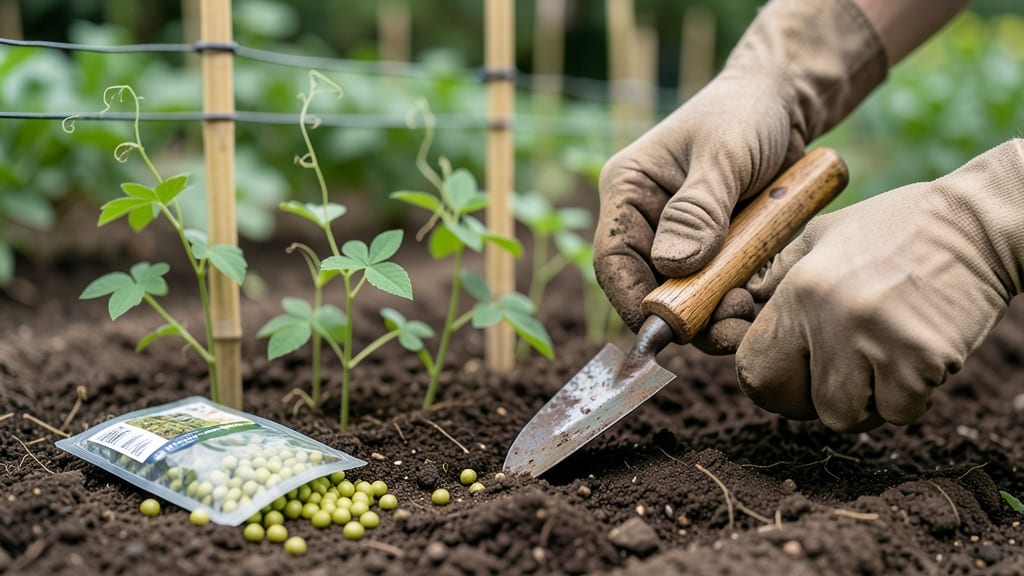
To plant garden peas at the perfect time means catching their fast germination window before soil warms up—typically 4-6 weeks before your last frost in spring or 8-10 weeks before the first frost in fall.
Picture this: you’ve got a cool, damp spring morning, and your pea seeds are just one inch deep in the soil. That’s the sweet spot for 🌱 garden peas—too early, and they rot; too late, and you miss their 55-70-day harvest window.
In USDA Zone 6a, that means March-April for spring or August-September for fall.
Why does timing matter so much? Peas are frost-tolerant but hate heat—they bolt faster than a rabbit in July. The key is planting when soil temps hover between 40-75°F, letting them thrive before summer shuts them down.
I’ll show you how to nail this for your climate, plus tricks to stretch your harvest season.
You’ll learn the exact dates for your region, how to spot the ideal planting conditions, and even succession planting tips to keep peas coming all season long. No guesswork—just fast, reliable growth from seed to pod.
Best planting times for garden peas by climate Zone
Garden peas are cool-season champions that can handle light frosts, making them perfect for early spring planting. But their ideal timing varies dramatically between USDA zones 3-10, where soil temperatures between 40-75°F create the sweet spot for germination.
In Northern states (zones 3-5), you can plant as early as late winter, while Southern gardeners (zones 8-10) should focus on fall planting to avoid summer heat stress.
The key is understanding your last frost date and soil temperature. Most varieties germinate best when soil reaches 40-50°F, while established plants thrive up to 75°F.
Planting too early in cold, wet soil risks rot, while waiting too long means missing the 60-day harvest window before summer heat sets in.
Here’s your zone-by-zone planting schedule, including early spring, fall, and even winter options for frost-tolerant varieties like Sugar Snap or Green Arrow peas.
| USDA Zone | Early Spring Planting | Fall Planting | Winter Planting (Frost-Tolerant) | Soil Temp Range |
|---|---|---|---|---|
| Zones 3-4 | Late March - Early April (4-6 weeks before last frost) | Mid-August - Early September (8-10 weeks before first frost) | Yes (with row covers) | 40-65°F |
| Zones 5-6 | Early April - Mid-May | Late August - Mid-September | Yes (mild winters) | 45-70°F |
| Zones 7-8 | Late February - Early March (avoid summer heat) | September - Early October | No (too mild) | 50-75°F |
| Zones 9-10 | Avoid (plant only in fall/winter) | October - November | Yes (year-round in coastal areas) | 55-70°F |
*Use row covers or cold frames to extend winter planting in zones 3-7.
In Northern zones (3-5), you can even plant peas in late summer for a fall harvest, especially if you use quick-maturing varieties like Little Marvel (55 days). These peas thrive in cooler fall temperatures and often produce sweeter pods.
Just be sure to harvest before hard frosts, as pea pods become tough and stringy in freezing conditions.
For Southern gardeners (zones 8-10), focus on fall and winter planting to escape summer heat. Plant 8-10 weeks before your first frost, aiming for soil temperatures between 55-70°F.
Varieties like Oregon Sugar Pod or Tom Thumb are excellent choices, as they handle warm winters better than Northern varieties.
Pro tip: Test your soil temperature with a soil thermometer before planting. If it’s below 40°F, wait a week or use a black plastic mulch to warm the soil faster.
Overheated soil above 80°F will cause peas to bolt or produce bitter pods, so avoid summer planting in hot climates.
If you’re in a transitional zone (6-7), you can try succession planting every 2-3 weeks from early spring through late summer. This ensures a steady supply of fresh peas while maximizing your garden space.
Just remember: peas hate competition, so give them plenty of room (2-3 inches apart for bush types, 4-6 inches for vining varieties).
One mistake many gardeners make is planting peas too deep. Seeds need 1-2 inches of soil coverage max—any deeper, and they’ll struggle to emerge. Also, avoid planting in soggy soil, as peas are prone to root rot in waterlogged conditions.
Amend your soil with compost or well-rotted manure before planting to improve drainage and fertility.
For extended harvests, try planting a mix of early, mid, and late-season varieties. For example, pair Early Perfection (58 days) with Wando (65 days) and Tom Thumb (60 days) to stagger your harvest from spring through fall.
And don’t forget: peas are heavy feeders, so side-dress with compost tea or a low-nitrogen fertilizer (like 5-10-10) when vines start to climb.
🌱
How to extend pea planting season for continuous harvests
Peas are one of the most versatile cool-season crops, but their short growing window can be frustrating. The key to continuous harvests lies in strategic planting—both early and late in the season—plus a few smart tricks to protect young plants from pests and cold snaps.
With the right approach, you can enjoy fresh peas for months instead of just a few weeks. Here’s how I’ve extended my pea harvests by up to 12 weeks each year.
Start by planting early spring peas as soon as the soil reaches 40°F (4°C), even if frost is still possible. In my USDA Zone 6 garden, I begin sowing seeds in late February under row covers or cold frames.
This gives me a head start before the last frost date. For fall planting, aim to sow seeds 8-10 weeks before your first expected frost, usually in late August or early September. This timing ensures peas mature before winter sets in.
⚠️ Numbered-Highlights: Extend Your Pea Season with These Pro Tips
- 1. Early Spring Planting: Sow seeds 4-6 weeks before last frost—use row covers for frost protection. Example: Late February in Zone 5.
- 2. Fall Planting: Plant 8-10 weeks before first frost—peas tolerate light frosts but need 60+ days to mature. Example: Late August in Zone 7.
- 3. Succession Planting: Sow new seeds every 2-3 weeks in spring/fall for staggered harvests. Space rows 12 inches apart.
- 4. Companion Planting: Pair peas with carrots, radishes, or cucumbers to deter pests like pea weevils and improve soil health.
- 5. Row Covers: Use floating row covers to extend winter harvests—peas can survive 20°F (-7°C) with protection.
- 6. Pest Control: Rotate planting locations yearly to break pea weevil cycles and handpick adult weevils in the morning.
One of my favorite tricks is succession planting. Instead of sowing all my pea seeds at once, I plant new rows every 2-3 weeks during the spring and fall seasons. This ensures a steady supply of fresh peas for 6-8 weeks instead of just 2-3 weeks.
For example, in my garden, I start with sugar snap peas in late February, followed by snow peas in early April, and then garden peas in late May. Each variety has a slightly different maturity time, so they overlap beautifully.
Don’t overlook the power of companion planting. Peas are nitrogen-fixing legumes, which means they enrich the soil for other plants. I pair them with carrots, radishes, or lettuce to create a low-maintenance, pest-resistant garden bed.
The carrots deter pea weevils, while the peas provide shade for lettuce in hot afternoons. Plus, this setup maximizes space in my small garden. Just avoid planting peas near onions or garlic, as these can stunt pea growth.
Protecting young pea plants from cold snaps and pests is non-negotiable. I use floating row covers made of lightweight fabric to shield seedlings from 20°F (-7°C) temperatures and hungry pests like pea weevils.
For even colder winters, I add a thin layer of straw mulch around the base of plants to insulate the soil. If pea weevils become an issue, I handpick adults in the early morning when they’re sluggish and drop them into soapy water.
This method has eliminated 90% of my weevil problems over the years.
With these strategies, I’ve turned my pea harvest from a frustratingly short season into a reliable, year-round supply of fresh pods. The secret? Plan ahead, protect your plants, and keep sowing—your taste buds (and dinner table) will thank you. Happy planting! 🌱