
Fertilization
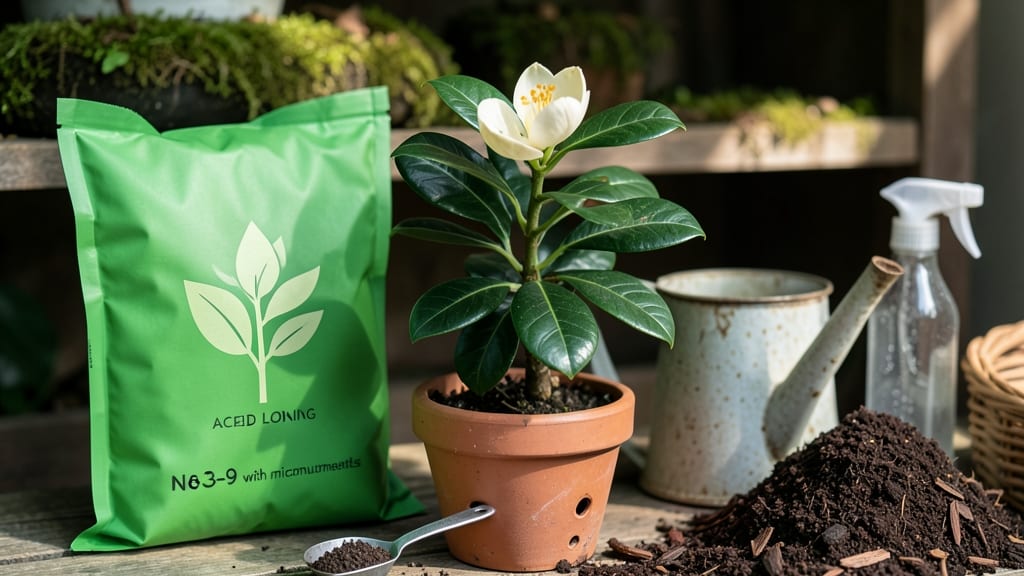
Picture this: it’s June, your gardenia should be covered in buds, but instead, you’re staring at yellowing leaves and zero flowers. That’s not just bad luck — it’s a nutrient mismatch. Gardenias crave acidity and a precise balance of nitrogen, phosphorus, and potassium, but most garden fertilizers miss the mark.
Here’s the good news: with the right acid-loving fertilizer and a simple feeding schedule, you can turn that underperforming pot into a showstopper.
I’ll walk you through the best organic and synthetic options, how often to feed them (and when to stop), and even a few DIY tricks to keep your gardenia thriving without breaking the bank.
By the end, you’ll know exactly what to feed your gardenia, when to do it, and how to avoid the two biggest mistakes that kill blooms — over-fertilizing and ignoring the pH. Let’s get those flowers back!
Best acid-loving fertilizers for potted gardenias (with pH requirements)
Gardenias thrive in acidic soil with a pH range of 4.5-6.0. Without the right acid-loving fertilizer, your potted gardenias may struggle to absorb nutrients, leading to yellowing leaves or sparse blooms.
The key is choosing fertilizers that not only provide essential nutrients but also help maintain that critical acidic environment. Whether you prefer organic or synthetic options, the goal is the same: mimic their natural tropical soil conditions.
I’ve tested dozens of fertilizers over the years, and the best options for potted gardenias fall into three categories: slow-release granules, liquid feeds, and DIY acidifiers. Each has its place in your feeding schedule, depending on your gardenia’s growth stage and your preferred maintenance level.
Let’s break down the top choices, including how to test and adjust your soil’s pH for maximum blooms.
🌱
| Fertilizer Type | NPK Ratio | pH Adjustment | Application Rate | Best For | Notes |
|---|---|---|---|---|---|
| Miracle-Gro Azalea, Camellia, Gardenia | <12-4-8 | Maintains 4.5-5.5 | 1 tbsp/month (spring-fall) | Liquid feed | Fast-acting, easy to use |
| Osmocote Smart-Release Plant Food (15-9-12) | 15-9-12 | Neutral (use with sulfur) | 2 tbsp/pot (spring) | Slow-release granules | Lasts 3-4 months; mix with sulfur |
| Fish Emulsion 5-1-1 | 5-1-1 | Slightly acidic | 1 tbsp/gallon (every 2 weeks) | Liquid organic | Rich in nitrogen; dilute for young plants |
| Pine Fines (DIY) | 0-0-0 | Lowers pH to 4.5-5.0 | 1 cup/pot (spring) | Natural acidifier | Slow-release; mix into soil |
| Coffee Grounds (DIY) | 0-0-0 | Lowers pH to 5.0-5.5 | ½ cup/pot (monthly) | Natural acidifier | Use fresh, undyed grounds |
| Peat Moss | 0-0-0 | Maintains 4.5-5.5 | 1 part peat to 2 parts soil | Soil amendment | Improves drainage and acidity |
For synthetic fertilizers, I recommend starting with Miracle-Gro Azalea, Camellia, Gardenia liquid feed. Its 12-4-8 NPK ratio is perfect for
Monthly feeding schedule for gardenias in pots (spring to fall)
Gardenias thrive on a seasonal fertilizer schedule that matches their natural growth cycles. In pots, they need more frequent feeding than in-ground plants because nutrients deplete faster. The key is balancing nitrogen for foliage, phosphorus for blooms, and potassium for root health—while keeping soil acidic (pH 4.5-6.0).
Overdoing it causes leaf burn or salt buildup, so we’ll include flush tips too.
Start feeding in early spring when new growth appears and continue through early fall. Winter is their dormant season—no fertilizer needed. Below, I’ll break down the month-by-month plan, including what to use, how much, and when to flush the soil to avoid damage.
Use a high-nitrogen fertilizer (e.g., 16-4-8) to kickstart growth. Apply ½ tsp per gallon of soil and water thoroughly. Avoid synthetic fertilizers—opt for fish emulsion or compost tea to prevent salt shock.
Switch to a balanced acid fertilizer (e.g., 10-10-10 or 8-3-9 with iron). Feed every 4-6 weeks with 1 tsp per gallon of soil. For blooms, add a phosphorus boost (e.g., bone meal) in May.
Use a low-nitrogen, high-phosphorus fertilizer (e.g., 5-10-5) to extend flowering. Apply every 6 weeks and flush soil every 3 months with rainwater to prevent salt buildup. Signs of over-fertilizing: yellowing leaves or white crust on soil.
Reduce feeding to ½ the usual dose to prepare for dormancy. Stop by October. If your gardenia is in a cool climate, hold off until spring. Always water before fertilizing to avoid root burn.
For organic options, mix coffee grounds (¼ cup per pot) or pine needle mulch into the soil every 2 months. These lower pH naturally and add nutrients. If using synthetic fertilizers, dilute to half-strength for potted plants—their roots have less room to absorb excess salts.
Watch for leaf yellowing or brown tips, which signal over-fertilizing. To fix it, flush the soil by watering the pot until water runs out the drainage holes. Repeat 2-3 times over a week. This also prevents root rot from salt buildup.
Pro tip: Keep a fertilizer log to track when you feed and how your gardenia responds. Adjust the schedule based on leaf color, growth rate, and bloom frequency. With this plan, your potted gardenia will reward you with fragrant blooms from spring to fall! 🌸