
Companion Plants
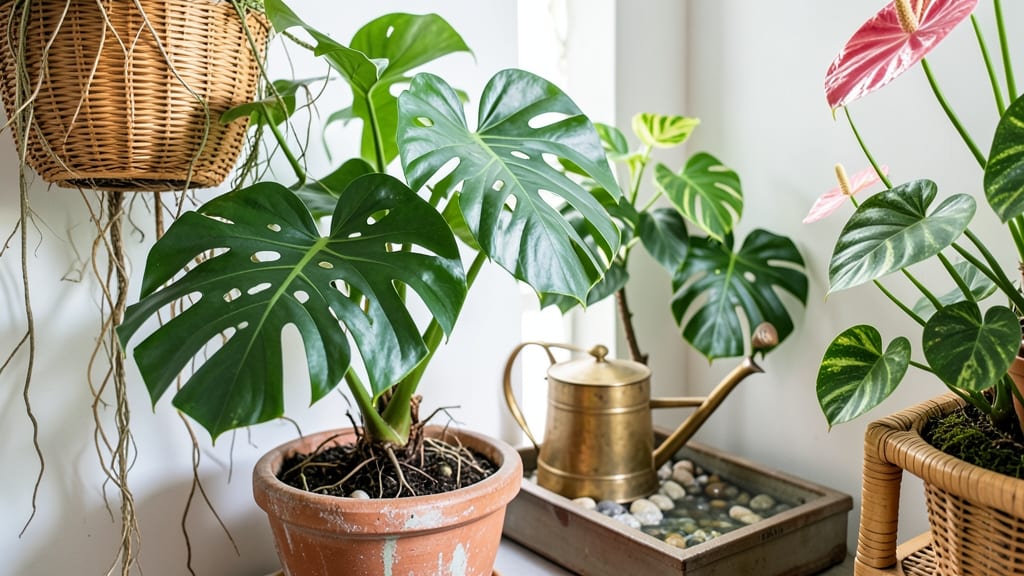
Gardening tropical plants 🌴 can transform your space into a lush, vibrant oasis—but only if you nail two critical factors: humidity and light.
Picture this: your monstera leaves curling at the edges, or your hibiscus wilting despite daily watering. These aren’t just random failures—they’re red flags that your tropical plants aren’t getting what they truly need to thrive.
Without the right balance of moisture in the air and the perfect light conditions, even the hardiest species will struggle, no matter how much you care for them.
Here’s the good news: with the right soil, lighting setup, and a few simple tricks, you can create an environment where tropical plants flourish year-round. Whether you’re dealing with dry indoor air or harsh outdoor sunlight, I’ve got the practical secrets to keep your foliage lush and your garden vibrant.
From humidity trays to the best artificial lighting for low-light spaces, you’ll learn exactly how to mimic a tropical paradise—no greenhouse required. Let’s get those 🌴 thriving!
How humidity levels directly impact tropical plant growth
Tropical plants like monstera deliciosa and bird of paradise thrive in environments with 60-80% humidity, mimicking their native rainforest homes. When humidity drops below 50%, these plants struggle to absorb moisture through their leaves, leading to stunted growth and stress.
The right humidity balance isn’t just about survival—it’s the key to vibrant foliage and lush blooms that make your garden feel like a true jungle escape.
In my own indoor jungle, I’ve learned that humidity isn’t just about watering more—it’s about creating the right microclimate around your plants.
For example, a philodendron left in a dry 50% humidity room will show brown leaf tips within weeks, while the same plant in a 75% humidity environment grows twice as fast with glossy, healthy leaves.
The difference is dramatic, and it starts with understanding how humidity affects every part of your plant’s physiology.
Low humidity causes more than just brown tips—it triggers leaf curling, stunted growth, and even pest infestations like spider mites, which thrive in dry conditions. These issues aren’t just cosmetic; they signal that your plant is struggling to photosynthesize efficiently. Without proper humidity, even the hardiest tropical species like calatheas or fern varieties will wilt or drop leaves, no matter how much you water them.
Outdoor tropical plants face different challenges. While outdoor humidity is often naturally higher, factors like wind exposure, direct sunlight, and seasonal dry spells can drop moisture levels quickly.
In my outdoor containers, I’ve noticed that orchids and ginger plants wilt faster in afternoon heat unless I provide shade or mulch to retain soil moisture. The key is balancing airflow (which tropical plants need) with moisture retention (which they also crave).
Here’s the science behind it: Tropical plants absorb water through tiny pores called stomata on their leaves. In low humidity, these stomata close to prevent water loss, but this also blocks carbon dioxide needed for photosynthesis. The result?
Your plant can’t grow or repair itself properly. Even well-draining soil won’t help if the air around your plant is too dry—think of it like trying to drink through a straw with a fan blowing on your face.
One of my favorite low-cost solutions is creating a pebble tray. Simply fill a shallow tray with pebbles and water, then place your potted tropical plants on top. As the water evaporates, it increases humidity around the plant’s leaves.
I’ve seen calatheas recover from brown tips within a week using this method alone. For larger plants, group them together—this creates a microclimate where the plants collectively raise humidity through transpiration (the process of releasing water vapor).
If you’re dealing with extreme dryness, like in winter when indoor heaters kick in, consider a DIY humidifier. Fill a spray bottle with distilled water and mist your plants’ leaves 2-3 times daily. Avoid wetting the soil directly, as this can lead to root rot.
For outdoor plants, morning misting works wonders—just be sure to water leaves before the sun hits, or you’ll risk leaf burn. I’ve also had success with bamboo fountains near my tropical containers, which add both humidity and a soothing ambiance.
Don’t overlook the power of plant placement. Bathrooms and kitchens naturally have higher humidity, making them ideal spots for tropical plants. In my kitchen, I keep a philodendron near
The best lighting strategies for tropical plants by species type
Tropical plants thrive under specific light conditions that mimic their natural rainforest habitats. Unlike sun-loving succulents, most tropical species need bright indirect light—think dappled sunlight filtering through canopy leaves.
Without the right lighting, you’ll see yellowing leaves or slow growth, even in high-humidity environments. The key is understanding each plant’s unique needs, from low-light ferns to sun-tolerant palms.
Not all tropical plants are created equal when it comes to light. Philodendrons and pothos adapt well to low-light conditions, while orchids and calatheas demand bright, filtered light to prevent leaf scorch.
Even within a single species, younger plants often tolerate less light than mature ones. This is where artificial lighting becomes a game-changer, especially in homes with limited natural light.
For indoor growers, LED grow lights are the gold standard because they mimic the full-spectrum light tropical plants need. A 20-watt LED panel (like the Samsung LM301B) covers about 2 square feet and provides the right blue and red wavelengths for photosynthesis.
Place it 12-18 inches above your plants and run it for 12-14 hours daily to compensate for weak natural light.
Fluorescent bulbs like T5 HO grow lights are budget-friendly alternatives, but they require 2-3 bulbs per plant for adequate coverage. Opt for 5,000K-6,500K color temperature bulbs to avoid stunted growth.
Remember: direct sunlight is a death sentence for most tropical plants—it causes leaf burn within hours. Always use sheer curtains or place plants 3-6 feet from windows.
Watch for these lighting red flags: crispy brown edges mean too much direct sun, while pale, yellow leaves signal insufficient light. If your calathea leaves curl or orchid blooms drop, adjust your lighting immediately. Pro tip: Rotate plants quarter-turns weekly to ensure even growth under artificial lights.
Start with a light meter (like the AcuRite 00863) to measure foot-candles in your space. Most tropical plants fall in the 1,000-3,000 foot-candle range, but orchids and palms often need 4,000+ foot-candles to thrive.
Once you’ve dialed in the perfect light, your tropical jungle will flourish year-round—no greenhouse required! 🌿