Picking
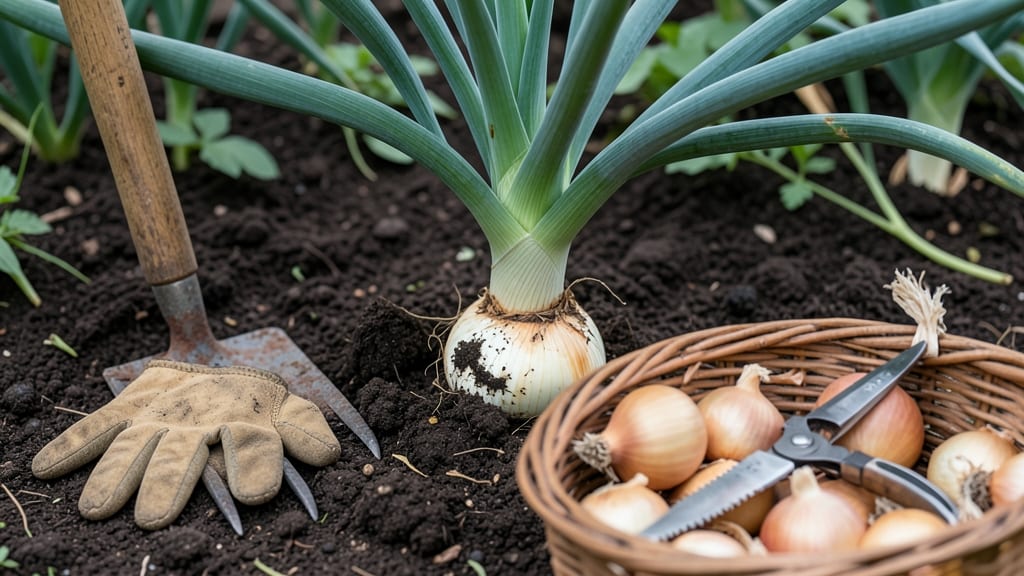
Harvesting onions from the garden at the right time ensures sweet, flavorful bulbs that store well—so knowing when to pull them makes all the difference.
Timing your onion harvest wrong can mean the difference between sweet, flavorful bulbs and tough, pungent disappointments—so knowing exactly when to pull them is crucial for gardeners. 🧅
Most gardeners wait until the tops yellow and flop over, but there are actually three key leaf tests to confirm readiness: checking the neck diameter, watching for color shifts, and even the "toppling test."
In this guide, I’ll walk you through each method, regional adjustments for your climate zone, and how to avoid common mistakes that ruin flavor or storage life.


How to identify the perfect harvest time using onion leaf tests
Harvesting onions at the right moment transforms your garden into a treasure trove of flavorful bulbs instead of tough, pungent disappointments. The key lies in your onion leaves—they hold all the clues you need to determine peak harvest readiness.
Unlike many vegetables, onions don't ripen after picking, so timing is everything. I've perfected three simple leaf tests that take just seconds each to perform, ensuring you never miss the window again.
These methods work for both green onions and yellow/brown onions, though the visual cues differ slightly. The toppling test reveals structural readiness, while the neck diameter check confirms bulb development.
Meanwhile, the color shift gives you the final green light. Together, they create a foolproof system that accounts for your local climate variations and onion varieties.
Gently push the plant sideways - if it falls over easily, it's ready!
Measure the stem where it meets the bulb - ½ inch means harvest time!
Green onions: lower leaves yellow | Yellow onions: tops turn brown
Let's start with the toppling test, my favorite because it's so visual. Simply grasp the onion plant near the base and gently push it sideways. If the entire plant (including the bulb) falls over easily, that's your signal to harvest within 24 hours.
This test works because mature onions develop a dry, papery skin that makes them structurally unstable when fully mature. For green onions, look for the lower leaves to yellow first while keeping the top green.
The neck diameter check is where precision meets practicality. Using a ruler or your thumb and forefinger, measure the stem where it connects to the bulb. For most varieties, a ½-inch diameter indicates perfect harvest timing.
This measurement ensures the bulb has developed fully but hasn't started to split or rot. I recommend checking this measurement in the morning when the stem is firmest for accurate readings.
For yellow onions, the color shift is the most dramatic indicator. Watch as the green tops gradually turn yellow, then brown as they dry out. This process typically takes 2-3 weeks. The moment the tops fall over completely is your final cue.
With green onions, you'll notice the lower leaves yellowing first while the upper leaves remain green - this is your signal to harvest before the entire plant dries out completely.
Regional climate plays a surprising role in these tests. In hot, dry climates, onions may mature faster and show these signs earlier. I've found that in Zone 9, the toppling test often works 1-2 weeks ahead of the color shift.
Conversely, in cooler, wetter regions, the color change might appear first. Always combine these tests for the most accurate results.
One common mistake I see is waiting too long for the color change. By the time your onion tops turn completely brown, the bulbs may have split or developed hollow stems. The leaf tests give you a 3-day window before quality declines.
Harvest during this window for the best flavor and storage life. For green onions, this window is even tighter - just 1-2 days after the lower leaves yellow.
Pro tip: If you're growing multiple varieties, keep a small harvest journal. Note which tests worked best for each type in your specific climate.
For example, I've found that Candy onions often pass the toppling test before showing significant color change, while Yellow Granex varieties need all three signs before they're truly ready.
Remember that these tests work best when performed in the morning. Evening harvests can leave dew on the bulbs, increasing the risk of rot during curing. After harvesting, let your onions dry in a well-ventilated, shady spot for 2-3 days before storing.
This drying process preserves their flavor and extends shelf life significantly.
Mastering these leaf tests transforms onion harvesting from guesswork to science. Soon, you'll be pulling perfectly timed onions that store beautifully and burst with flavor in your cooking. The secret lies in those leaves - they're your onion's way of telling you exactly when to pick!
Common mistakes that ruin onion flavor (and how to avoid them)
Even with perfect growing conditions, your onions can turn bitter or bland if you harvest at the wrong time. Over-maturity and under-harvesting are sneaky culprits that many gardeners overlook—yet they completely transform flavor and storage potential. The key is recognizing subtle signs before they become irreversible.
One of the most common errors is waiting too long for onions to mature. By the time you notice splitting tops or hollow stems, the bulbs have already lost their sweetness and become tough.
Meanwhile, harvesting too early results in small, weak-flavored onions that won’t store well. Climate plays a huge role here—early varieties in warm zones may need harvesting sooner than late varieties in cooler regions.
⚠️ callout-warning ⚠️
Don’t wait for yellow tops to fully collapse—this signals over-maturity. Instead, harvest when:
- Tops turn straw-colored but are still upright
- Neck thickens to 1/2 inch (feel it, don’t guess!)
- Bulbs reach 1-2 inches in diameter (no bigger than a golf ball)
Ignoring these cues leads to hollow centers and bitter taste—once ruined, flavor can’t be restored.
For green onions (scallions), the rules differ entirely. These should be harvested when they reach 6-8 inches tall but before they bolt. If you let them flower, the bulbs shrink and become woody. In my garden, I snip them every 3-4 weeks for continuous harvests—this prevents over-maturity entirely.
Climate-specific adjustments are non-negotiable. In hot, dry regions, onions mature faster and may need harvesting 2-3 weeks earlier than the standard 100-day mark. Conversely, in cooler zones, late varieties can safely stay in the ground until late fall if protected from frost.
Always check your variety’s days-to-maturity label and adjust by ±10 days based on your local heat.
Another flavor killer? Harvesting after rain or when soil is soggy. Wet conditions cause onions to rot in storage. Instead, pull them on a dry, sunny day when the soil is loose.
I’ve ruined entire harvests by ignoring this—now I mark my calendar for the first dry weekend after tops yellow.
Finally, never store freshly harvested onions in the fridge. Moisture and cold trigger sprouting and spoilage. Cure them first in a dry, shaded spot for 2-3 weeks, then store in a cool, dark place with good airflow.
Proper curing extends shelf life from weeks to months—making all the difference between a disappointing harvest and a pantry staple.