
Watering
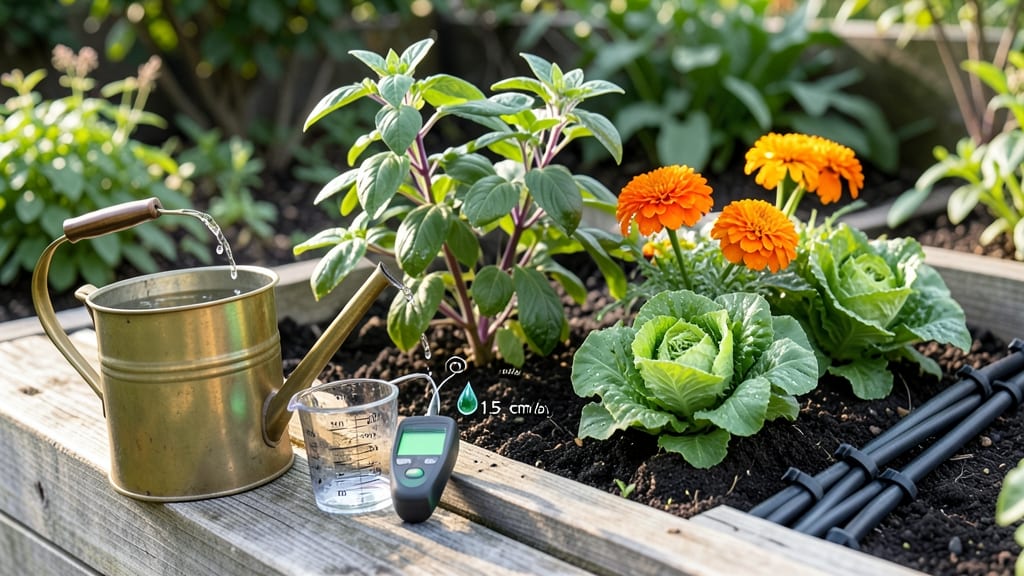
A garden needs the right amount of water per day—about 1 to 2 inches of water per week to thrive, but the real secret is timing and technique—not just how much you pour.
Picture this: you water every morning, yet your 🌱 garden still looks thirsty by afternoon. That’s because most of us overlook the soil type and plant needs—not just the watering can.
A sandy plot drains fast, while clay holds moisture like a sponge. And let’s not forget the heatwave that turns your yard into a desert overnight.
Here’s the good news: you don’t need a degree in hydrology to get it right. I’ll break down the science-backed formula for daily water needs, from leafy greens to sun-loving tomatoes, plus how to spot when you’re drowning (or starving) your plants.
By the end, you’ll know exactly how to water smarter—not harder—so your garden flourishes without wasting a drop. Ready to turn guesswork into growth?
Daily water requirements by plant type: exact measurements for thriving gardens
Watering your garden isn't about following a one-size-fits-all rule—it's about understanding each plant's unique needs. Vegetables like tomatoes and peppers crave consistent moisture, while succulents and lavender thrive on neglect. The key? Deep watering that reaches roots, not just surface-level dampness.
Without precise measurements, you risk overwatering (which causes root rot) or underwatering (which stunts growth). Let's break down the science so you can water like a pro.
Most gardeners assume a one-inch-per-week rule works universally, but that's a starting point—not a rulebook. Climate, soil type, and plant maturity drastically alter these numbers.
For example, a newly planted tomato needs daily watering to establish roots, while a mature oak tree might only require deep watering twice a week. The solution? Tailor your approach to each category: vegetables, flowers, shrubs, and trees.
🌱
Vegetables like tomatoes and peppers are the thirstiest players in your garden, often requiring 1–1.5 inches of water daily during peak summer months. The secret? Deep watering—aim for 6–12 inches down to encourage robust root systems.
Shallow watering only wets the surface, forcing roots to stay near the top where they dry out faster. For leafy greens like lettuce or spinach, maintain consistent moisture but avoid soggy soil, which leads to rot.
Flowers such as roses and petunias need 0.3–1 inch of water daily, but their tolerance varies wildly. Drought-resistant flowers like lavender or salvia can survive on half that amount. The trick is to water at the base of the plant, not overhead, to prevent fungal diseases.
For bulbs like tulips or daffodils, water sparingly once they’ve bloomed—they store energy in their roots and don’t need extra hydration.
Shrubs and small trees are often overlooked but have specific needs. Hydrangeas, for example, love 0.5–1 inch of water weekly and wilt dramatically if underwatered. Meanwhile, boxwoods and lavender thrive on neglect, needing only 0.2–0.3 inches every 3–5 days.
The golden rule? Deep watering once a week is better than frequent light sprinkles. For newly planted shrubs, water daily for the first two weeks to help roots establish.
Trees are the heavy hitters of water consumption, but their needs depend on size and maturity. A young fruit tree (under 3 years old) needs 1–2 gallons of water daily, while a mature oak might only require 10–20 gallons weekly. The key is deep, infrequent watering—think
How to calculate your garden’s unique watering schedule in 3 simple steps
Overwatering or underwatering can ruin even the healthiest garden. Instead of guessing, I’ve developed a science-backed method to calculate your garden’s exact water needs based on soil type, plant maturity, and climate. This ensures your plants thrive without wasting water or risking root rot.
Start by understanding your soil’s moisture retention. Sandy soil drains fast and needs frequent, shallow watering, while clay holds moisture longer and requires deep, infrequent watering.
Test your soil’s moisture with the finger test: stick your finger 1-2 inches deep—if it feels dry, it’s time to water.
Next, factor in plant maturity. Seedlings need light, frequent watering (every 1-2 days), while established plants can handle deep watering every 3-7 days.
For example, a tomato plant in full sun may need 1-2 inches of water per week, but a drought-resistant lavender bush might survive on half that amount.
- Use the finger test: Insert your finger 1-2 inches deep near plant roots.
- If dry, water until moisture reaches 6 inches deep for most plants.
- Adjust for sandy soil (water more often) or clay soil (water deeply but less frequently).
- Vegetables (e.g., lettuce, tomatoes): 1-2 inches per week (deep watering).
- Flowers (e.g., roses, petunias): 1 inch per week (adjust for heat).
- Drought-tolerant plants (e.g., succulents, lavender): 0.5 inches every 10-14 days.
- Hot/dry days: Increase water by 20-30% and water early morning to reduce evaporation.
- Rainy days: Skip watering if 0.5+ inches of rain falls in 24 hours.
- Humid climates: Water deeply but less often to prevent fungal diseases.
Use a rain gauge or weather app to track rainfall and adjust your schedule accordingly. For example, if your area gets 0.75 inches of rain, you might skip watering for 3-4 days for most plants. Always water slowly and deeply—this encourages strong root growth and reduces runoff.
Finally, mulch your garden beds with 2-3 inches of organic mulch (like straw or wood chips) to retain moisture and reduce evaporation. This can cut your watering needs by up to 30% while keeping weeds at bay.
Monitor your plants for wilting leaves (underwatering) or yellowing leaves (overwatering) and tweak your schedule as needed.
With this method, you’ll save water, prevent plant stress, and create a thriving garden tailored to your unique conditions. Start today—your plants (and the planet) will thank you! 🌱💧☀️