Watering
To determine how much water your garden needs, you’ll need more than a guess—it’s a mix of soil science, plant type, and even the time of day you water 🌱.
Overwatering kills more plants than underwatering—but most gardeners don’t know the exact science behind how much water their garden actually needs. Without precise measurements, you’re either wasting water or risking dead plants.
In this guide, we’ll break down the science-backed formula for watering by plant type, soil conditions, and seasonal shifts. You’ll learn how to read your soil, adjust for drought or rain, and avoid the 3 biggest watering mistakes that drain your resources.
By the end, you’ll have a custom watering schedule that keeps your garden thriving—without a single drop wasted.
Science-backed watering formula: how much water per plant type (with soil factors
Understanding your garden's water needs starts with recognizing that not all plants drink the same. A tomato plant requires 1-2 inches of water weekly, while a succulent might only need every 3-4 weeks.
The difference? Root depth, soil composition, and seasonal evaporation rates all play critical roles. Without accounting for these factors, you risk either drowning your plants or watching them wilt from thirst.
Research from the University of California Cooperative Extension shows that 60% of garden failures stem from improper watering—either too much or too little. The key lies in matching water volume to plant type and soil type.
For example, sandy soil drains quickly, requiring frequent, shallow watering, while clay soil holds moisture longer, demanding deep, infrequent soaks. Let’s break down the science so you can water like a pro.
| Plant Type | Water Needs (inches/week) | Soil Adjustments | Seasonal Variations |
|---|---|---|---|
| Vegetables (Tomatoes, Peppers, Lettuce) | 1.5–2.5 inches | Sandy: +0.5"; Clay: -0.5" | Summer: +1"; Winter: -1.5" |
| Flowers (Roses, Hydrangeas, Petunias) | 1–1.5 inches | Sandy: +0.3"; Clay: -0.3" | Summer: +0.7"; Winter: -1" |
| Herbs (Basil, Cilantro, Mint) | 0.75–1.25 inches | Sandy: +0.2"; Clay: -0.2" | Summer: +0.5"; Winter: -0.75" |
| Trees (Fruit, Shade, Ornamental) | 2–4 inches (deep root zone) | Sandy: +1"; Clay: -1" | Summer: +1.5"; Winter: -2" |
| Succulents/Cacti | 0.25–0.5 inches (every 3–4 weeks) | Sandy: +0.1"; Clay: -0.1" | Summer: +0.2"; Winter: -0.25" |
| Lawn Grasses | 0.5–1 inch (2–3x/week) | Sandy: +0.3"; Clay: -0.3" | Summer: +0.7"; Winter: -0.5" |
Let’s start with vegetables, which are often the thirstiest plants in your garden. Tomatoes, for example, need 1.5–2.5 inches of water per week to produce fruit without cracking. If your soil is sandy, you’ll need to water more frequently because water drains too quickly.
Conversely, clay soil retains moisture, so you can space waterings further apart. In summer, evaporation rates can double, so adjust your schedule accordingly.
For flowers like roses, the rule changes slightly. They thrive with 1–1.5 inches of water weekly, but hydrangeas need consistent moisture to maintain vibrant blooms. Petunias, however, are more drought-tolerant and can handle slightly less water.
Always check the top 1–2 inches of soil—if it’s dry, it’s time to water. In hot, dry climates, morning watering reduces evaporation and prevents fungal diseases like powdery mildew.
Herbs like basil and cilantro have moderate water needs, requiring 0.75–1.25 inches weekly. Overwatering basil leads to leaf yellowing, while mint can handle slightly more moisture. Rosemary and thyme, however, are drought-tolerant and prefer less frequent watering. The key is to water deeply but infrequently, encouraging roots to grow deeper in search of moisture.
When it comes to trees, watering isn’t just about the leaves—it’s about the root zone.
Young trees need 2–4 inches of water weekly, but mature trees can handle less frequent, deeper watering. Fruit trees like apples or peaches require consistent moisture during blooming and fruiting seasons.
If your soil is sandy, you may need to water twice as often as you would in clay soil. Always water at the base of the tree, not the foliage, to avoid fungal issues.
Succulents and cacti are the outliers—they thrive on neglect. These plants only need 0.25–0.5 inches of water every 3–4 weeks. Overwatering is their biggest killer, leading to root rot. If your succulent’s leaves start puffing up
How to Calculate your garden’s exact water needs (step-by-step method)
Calculating your garden’s water needs isn’t guesswork—it’s a mix of soil science, plant biology, and weather patterns. Most gardeners overwater by 30% because they rely on schedules instead of real-time data.
The key? Understanding root depth, soil moisture, and plant maturity. Start by grouping plants by their water needs (e.g., succulents vs. tomatoes) and test your soil’s moisture retention.
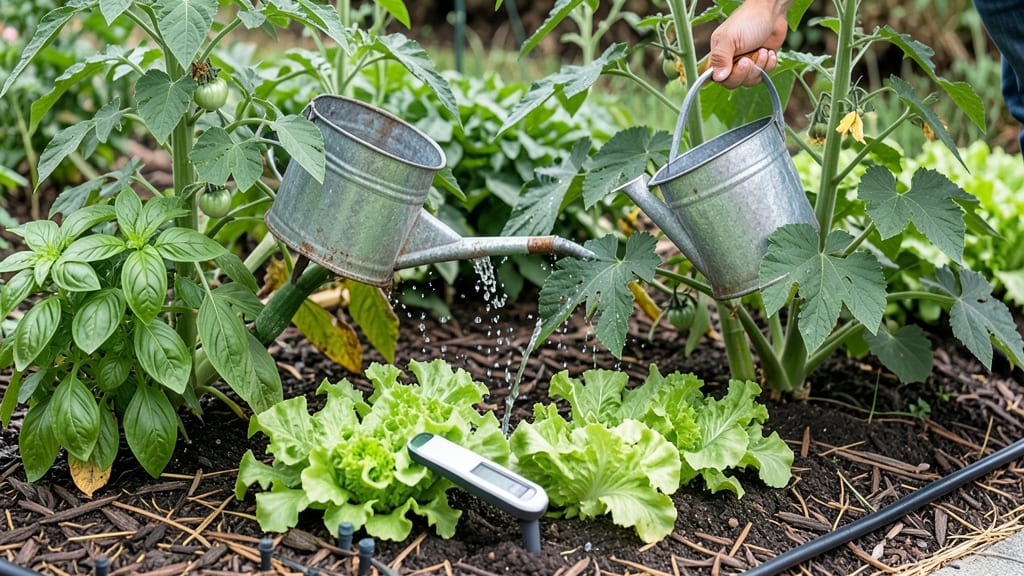
Before diving into calculations, grab a trowel and moisture meter (or your finger). The finger test is your best free tool—stick your index finger 1-2 inches into the soil. If it feels dry, it’s time to water.
For drip irrigation, time each zone for 15-30 minutes per session, adjusting based on soil type. Sandy soil drains fast, while clay holds moisture longer.
- 1 Group plants by water needs (e.g., vegetables = 1-2" per week, succulents = 1" every 2 weeks). Use a notebook to track each zone.
- 2 Test soil moisture at root depth (1-2" for herbs, 6-12" for trees). Use the finger test: dry at the knuckle = water; damp = wait. Repeat 3x/week in summer.
- 3 Calculate evapotranspiration (ET): Multiply your garden’s square footage by your local ET rate (check NOAA’s ET maps). Example: 100 sqft × 0.25" ET = 25 gallons/week in summer.
- 4 Adjust for soil type: Sandy soil = add 50% more water; clay soil = reduce by 30%. Use a rain gauge to subtract rainfall from your total.
- 5 Time your drip system: Run emitters for 15-45 minutes per zone, testing with a bucket to measure output. Aim for 1-1.5 inches/week total (including rain).
- 6 Monitor plant signals: Wilting leaves = underwatering; yellow leaves = overwatering. Adjust your schedule biweekly based on these cues and weather changes.
Don’t forget to seasonally adjust your watering. In summer, increase by 20-30% due to heat, while winter needs drop by 50%. Mulch with straw or wood chips to retain moisture—this can reduce your watering needs by up to 40%.
For container gardens, check soil daily since pots dry out faster.
Pro tip: Use a smart irrigation controller to automate adjustments based on local weather forecasts. These devices pull data from NOAA APIs to water only when needed, saving thousands of gallons/year.
Pair it with soil moisture sensors for precision. Even without tech, a simple spreadsheet tracking your garden’s response to watering will reveal patterns in just a few weeks.
Start with one test zone—like your tomato plants or herb bed—to refine your method. Once you master the science, you’ll cut waste, boost yields, and save time by watering only what’s necessary. Your plants (and your water bill) will thank you.