
Watering
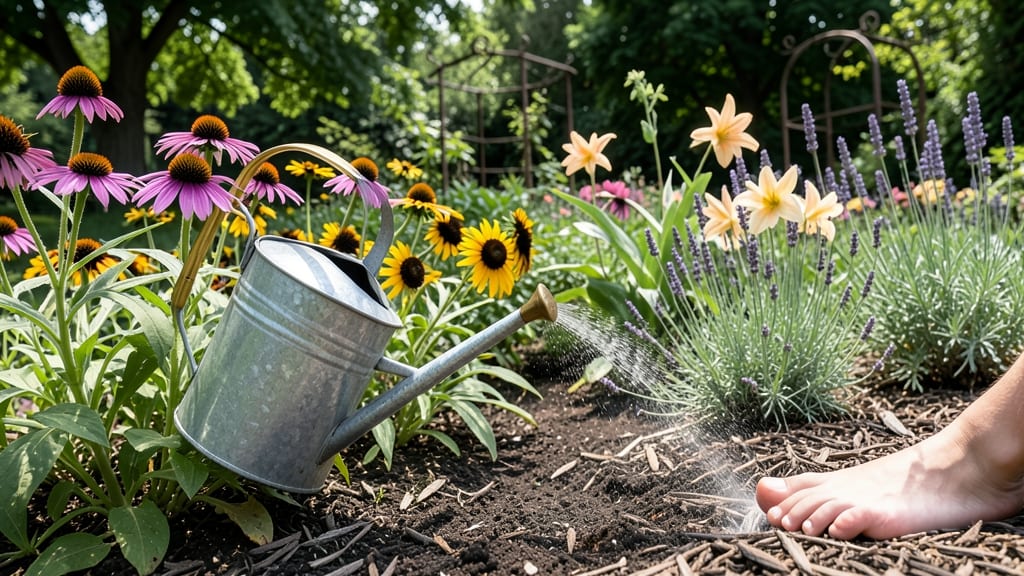
Watering your flower garden the right way means knowing how often to water it—because too much or too little can turn your blooms into a sad, wilted mess 🌸.
Overwatering or underwatering your flower garden can kill your plants faster than pests or diseases—so getting the timing right isn’t just guesswork, it’s an art.
In Zone 6a, where spring planting kicks off in April, your watering schedule should shift with the seasons: deep soaks every 3-5 days in spring, daily checks in summer, and a light touch in fall.
Below, I’ll break down the exact watering schedule for your flower garden, from sun-loving roses to drought-tolerant perennials, plus how to spot when you’re over- or underdoing it.
Seasonal watering schedule for flower gardens by plant type
Your flower garden’s health depends on a precise watering schedule that adapts to seasonal changes and plant types. Unlike vegetables, flowers often wilt visibly when thirsty but can’t handle soggy roots.
The key is understanding how annuals, perennials, bulbs, and tropicals respond differently to moisture—especially across arid, temperate, and humid climates.
For example, tropical hibiscus in Zone 10 may need daily watering during summer, while hardy lavender in Zone 5 thrives on weekly deep soaks. Even the same plant’s needs shift: roses demand 1-2 inches of water weekly in summer but barely any in winter.
Let’s break down the monthly watering rhythm for each category to keep your garden blooming effortlessly.
🌱 Pro Tip: Always water at soil level (not leaves) to prevent fungal diseases like powdery mildew. Use a moisture meter or stick your finger 1-2 inches deep—if it’s dry, it’s time to water.
Spring is all about establishing roots. Newly planted annuals and perennials need consistent moisture to prevent transplant shock. Water deeply 2-3 times weekly until you see new growth—usually within 3-4 weeks. For bulbs, only water after shoots emerge (around March-April in most zones).
Summer demands the most attention, especially in arid zones where evaporation happens 3x faster. Mulch with 2-3 inches of straw to retain moisture, and water early in the morning (before 10 AM) to avoid fungal spores spreading. Tropical flowers like hibiscus may need daily watering, while drought-tolerant lavender can survive on weekly deep soaks.
Autumn is your chance to taper watering as plants prepare for dormancy. Perennials like coneflowers only need water when the top 1 inch of soil feels dry. Bulbs stop needing water entirely after their foliage yellows and dies back—this stores energy for next year’s blooms.
In humid climates, reduce frequency to prevent root rot.
Winter care varies wildly by
5 Signs your flower garden needs water (and 3 signs you’re overdoing it)
Watering your flower garden isn’t just about keeping the soil damp—it’s about understanding your plants’ subtle signals. Wilting leaves or dry soil are obvious clues, but some flowers, like delicate petunias or succulent-like echeverias, show stress in unique ways.
Learning these signs will help you adjust your watering schedule before damage occurs. For example, morning wilting that recovers by afternoon often means thirst, while crispy leaf edges could signal underwatering or overwatering.
Don’t rely on a one-size-fits-all watering routine—factors like soil type, climate, and plant maturity change what your garden truly needs. Sandy soil drains quickly, while clay holds moisture longer. Even the same flower variety may need more water in July’s heat than in May’s mild weather.
The key is observing plant behavior and soil conditions rather than sticking to a rigid calendar.
💧 How Often to Water Flower Gardens
- 🌱 Early Morning: Water before 10 AM to reduce evaporation and fungal risks. Aim for 1-2 inches of water per week, adjusting for rain.
- 🌞 Summer Heatwaves: Increase to daily deep watering (1-2 inches) for thirsty flowers like roses or hibiscus. Mulch retains moisture.
- 🌧️ Rainy Days: Skip watering if 1 inch of rain falls in 24 hours. Use a soil moisture meter to check—topsoil should stay lightly moist.
- 🌿 Newly Planted Flowers: Water every 2-3 days for the first 2 weeks to encourage root growth. Avoid wetting foliage.
- 🌸 Dormant Season (Fall/Winter): Reduce to bi-weekly or pause if soil is frozen. Evergreens need slightly more.
🌱 Adjust for potted plants—they dry out faster!
One of the first visual cues your flowers need water is drooping leaves that don’t perk up after a few hours.
Test soil moisture by sticking your finger 1-2 inches deep—if it feels dry, it’s time to water. Succulents and lavender prefer bone-dry soil, while impatiens or coleus wilt quickly when thirsty. Pay attention to leaf color too: yellowing can mean overwatering, while grayish-green often signals underwatering.
Exposed roots are a clear emergency sign—they appear when soil dries out completely, leaving roots brown and shriveled. Gently cover them with fresh soil and water deeply to revive the plant.
For container gardens, check the weight of pots: a dry pot feels light, while a moist one feels heavier. If you’re unsure, use a wooden skewer to poke the soil—if it comes out clean, water immediately.
Overwatering is just as harmful as underwatering, and 3 common mistakes lead to it: watering on a strict schedule without checking soil, using pots without drainage holes, or ignoring mold or mildew on leaves. Yellowing leaves, blackened stems, or a sour smell from soil are red flags.
To fix, let the soil dry slightly between waterings and improve drainage with perlite or sand. Always water at the base of plants, not overhead.
Create a simple troubleshooting checklist to avoid guesswork: ✅ Check soil moisture before watering, ✅ Observe leaf color and texture daily, ✅ Adjust for weather (heat = more water; rain = less), and ✅ Rotate watering spots to prevent fungal buildup.
With these habits, your flower garden will thrive without the stress of over- or under-watering. 🌸