
Tools
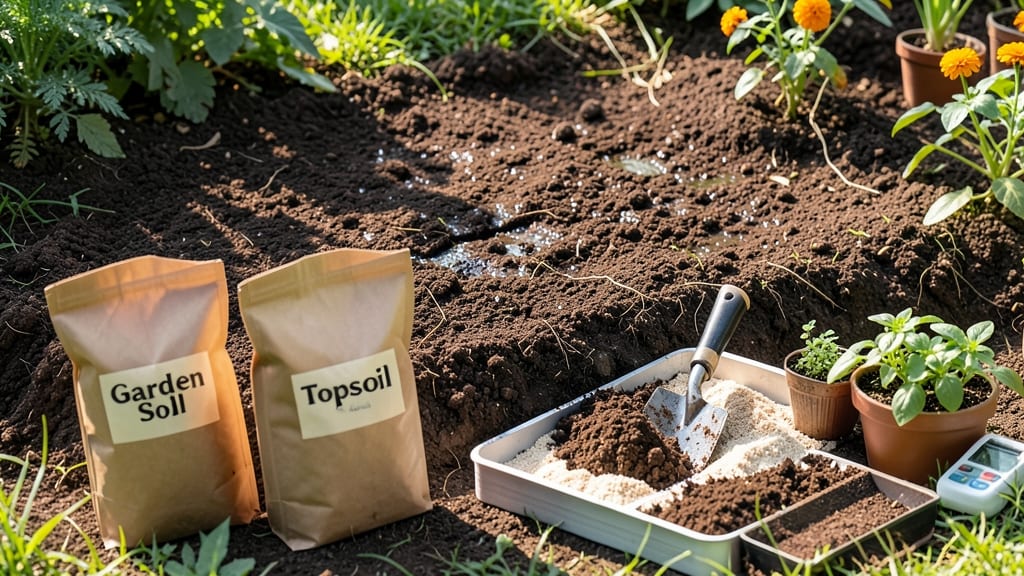
Garden soil is not the same as topsoil: while topsoil is the natural, nutrient-rich upper layer of earth, garden soil blends topsoil with compost, sand, or organic matter to create an ideal growing medium for plants.
Garden soil is essentially a customized growing medium, often enriched with compost, perlite, or vermiculite to improve drainage and fertility. 🌱 This makes it perfect for containers, seed starting, or delicate plants that need consistent moisture and nutrients.
Topsoil, on the other hand, is the raw material—nature’s foundation layer—packed with minerals and organic matter but less refined for immediate planting. Think of it as the difference between a gourmet salad mix and a bag of raw vegetables.
For example, if you're planting vegetables in raised beds, you might start with a layer of topsoil for structure, then top it with garden soil mixed with compost to ensure your plants thrive.
The key is understanding when to use each: topsoil for leveling or heavy-duty planting, garden soil for nurturing growth. Many gardeners make the mistake of using topsoil alone for potted plants, which can lead to poor drainage and nutrient deficiencies.
💡 In This Article
- Composition Breakdown: Garden Soil vs Topsoil
- Best Uses for Garden Soil and Topsoil in Gardening
Composition breakdown: garden soil vs topsoil
At their core, garden soil and topsoil differ in organic matter content and structural composition. Topsoil contains roughly 5-10% organic material by volume, consisting of decomposed plant matter, worm castings, and microbial life.
This layer naturally forms over centuries through weathering and biological activity, creating a loose, crumbly texture ideal for root penetration. Garden soil, however, is typically 30-50% organic matter, often enriched with composted materials like leaf mold or aged manure to boost fertility and improve water retention.
The texture of these soils also reveals their distinct purposes. Topsoil often has a higher clay content (20-30%) that provides structure but can compact easily when wet, while garden soil balances this with sand (20-30%) and perlite (5-10%) to create a loamy, well-aerated medium.
This structural difference explains why topsoil might feel dense and sticky when moist, while garden soil remains light and fluffy—almost like comparing wet sand to potting mix.
The pH levels also vary: topsoil typically ranges from 6.0-7.5, while garden soil is often adjusted to 6.2-6.8 for optimal plant uptake of nutrients.
Microbial activity is another critical distinction. Topsoil contains a diverse ecosystem of bacteria, fungi, and protozoa that break down organic matter, but garden soil's higher organic content supports 10-100 times more microbial biomass per gram of soil.
These microbes accelerate nutrient cycling, converting complex organic compounds into plant-available forms like nitrates and phosphates. For example, a single teaspoon of garden soil can contain billions of bacteria, while topsoil might have only millions—this explains why plants grow faster in garden soil despite similar mineral content.
Consider the case of vegetable gardening: tomatoes planted in topsoil alone may struggle to access sufficient nutrients, while the same plants in garden soil thrive due to the enhanced microbial activity and balanced texture.
The organic matter in garden soil also holds water more efficiently, reducing the need for frequent irrigation. This is why professional growers often blend topsoil with compost to create their own garden soil mixes, tailoring the composition to specific plant needs.
One often-overlooked factor is the presence of mycorrhizal fungi—a beneficial network that forms symbiotic relationships with plant roots. Garden soil typically contains higher concentrations of these fungi, which can increase a plant's nutrient absorption by up to 80%.
In contrast, topsoil may have fewer mycorrhizal connections unless it's from an undisturbed natural area. This biological enhancement is one reason why garden soil often produces better yields in container gardening scenarios.
The visual difference between the two soils is striking when examined closely. Topsoil appears darker brown with visible mineral particles, while garden soil has a richer, almost black hue from the decomposed organic matter.
When you squeeze a handful of each, topsoil will feel more gritty and compact, while garden soil crumbles easily between your fingers—a tactile difference that directly impacts plant root development. 🌱