
Watering
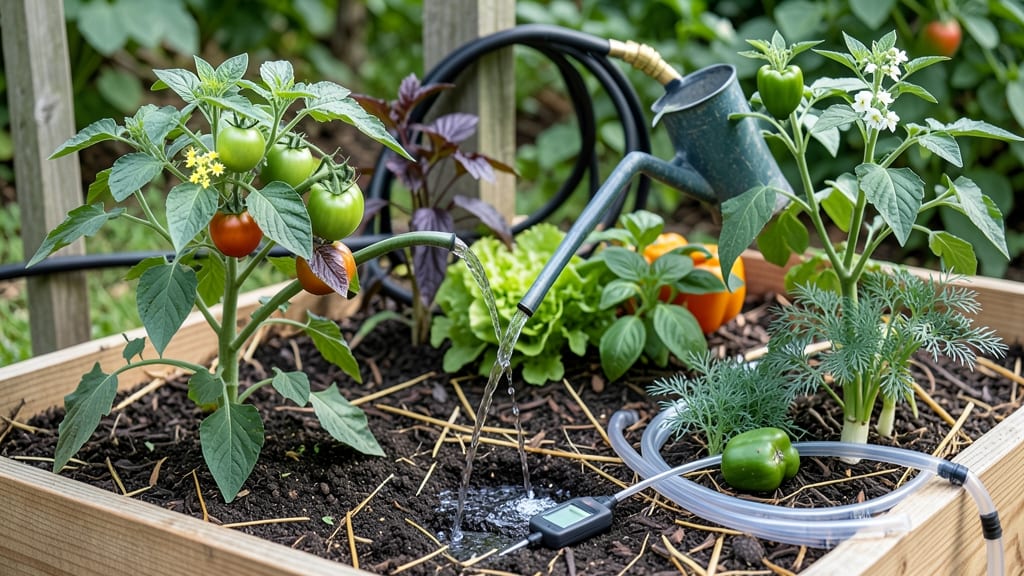
Watering your vegetable garden the right way determines whether your 🥕 thrives or wilts—because frequency isn’t one-size-fits-all.
You’ve probably guessed it wrong before: overwatering drowns roots, while skipping days leaves plants parched. The truth? Leafy greens like lettuce need frequent, shallow drinks, while tomatoes and peppers demand deep, infrequent soaks to build strong roots.
Climate, soil, and season throw even more variables into the mix. A sandy plot drains fast, while clay holds moisture for days. Summer heat might mean daily watering, but spring’s gentle rains could stretch your schedule to once a week.
Below, I break down the exact watering schedule for 20+ common vegetables, plus how to tweak your routine for containers, droughts, and downpours—so you never guess again.
How often to water vegetables: a plant-by-plant watering schedule
Watering your vegetable garden feels like walking a tightrope—too little and your plants wilt, too much and you risk root rot. The key is understanding each plant's unique needs, especially their root depth and growth stage.
For example, shallow-rooted lettuce needs frequent, light watering, while deep-rooted carrots thrive with infrequent deep soaks. Let's break down the ideal watering schedule for your most common garden stars.
Most vegetables need about 1-2 inches of water per week, but timing matters just as much as quantity. Watering in the early morning (before 10 AM) reduces evaporation and fungal diseases like powdery mildew. Avoid evening watering, as wet foliage overnight invites pests and diseases.
Pay attention to your soil—sandy soil drains quickly and needs more frequent watering, while clay soil holds moisture longer and may only need watering every 5-7 days.
🌱
Let's start with tomatoes, one of the most water-intensive vegetables in your garden. They need 1-2 inches of water per week, delivered through deep watering sessions every 2-3 days. Shallow watering encourages weak roots and increases the risk of blossom end rot.
To check if your tomatoes need water, stick your finger 2 inches into the soil—if it feels dry, it's time to water. During peak summer heat, you may need to water daily, especially in container gardens, where soil dries out faster.
For leafy greens like lettuce and spinach, the rule is different: frequent, light watering. These shallow-rooted plants prefer consistent moisture in the top 1-2 inches of soil. Water them every
Factors that change your vegetable garden watering needs
Your vegetable garden's watering needs aren't one-size-fits-all. What works for leafy greens in clay soil during spring might drown root vegetables in sandy containers under summer sun.
The key is understanding how these four major factors influence your watering routine: soil composition, container vs. in-ground planting, current weather patterns, and seasonal temperature shifts. Each requires a different approach to keep your plants thriving without wasting water.
Let's break down how each factor demands adjustments to your watering schedule. For example, sandy soil drains quickly, requiring daily watering in summer, while clay soil holds moisture longer, allowing weekly deep watering.
Containers dry out faster than in-ground beds, and a sudden heatwave can double your watering needs overnight. Knowing these variables helps you avoid both underwatered wilting and overwatered root rot.
- 1
- 2
- 3
- 4
Adjusting for seasonal changes is crucial. In spring and fall, when temperatures are moderate, most vegetables thrive on 3-5 days between waterings. But during summer heatwaves, even drought-tolerant plants like zucchini or peppers may need daily watering in containers.
I’ve seen tomato plants wilt dramatically in 24 hours during a 90°F+ day if not watered deeply at the base.
Don’t overlook the type of container you’re using. Terracotta pots dry out faster than plastic or fabric grow bags, while raised beds with mulch retain moisture longer. If you’re growing herbs like basil or shallow-rooted lettuce in pots, check moisture every 2-3 days—even in cooler months.
For in-ground gardens, a simple soil probe can tell you if water penetrates 6 inches deep, which is ideal for most vegetables.
Weather plays a sneaky role, too. A sudden heatwave or dry wind can turn your usual weekly watering into an emergency daily task. I once had my cucumber vines collapse overnight during a 100°F day because I assumed my clay soil would hold enough moisture.
Always monitor leaf turgor—if leaves feel limp or crispy, it’s time to water, regardless of your schedule.
Finally, mulching is your best friend for stabilizing moisture. A 2-3 inch layer of straw or wood chips reduces evaporation by up to 50%, meaning you can water less frequently without stressing your plants.
I’ve cut my summer watering routine in half since adding mulch, and my carrots and radishes stay consistently moist without the risk of bolting from stress.
Pro tip: Keep a watering journal to track what works for your garden. Note the soil type, container size, weather conditions, and watering frequency that keeps your plants thriving.
Over time, you’ll spot patterns—like how your peppers always need extra water during July’s humidity drops or your spinach bolts when watered inconsistently in spring. 💧