
Picking
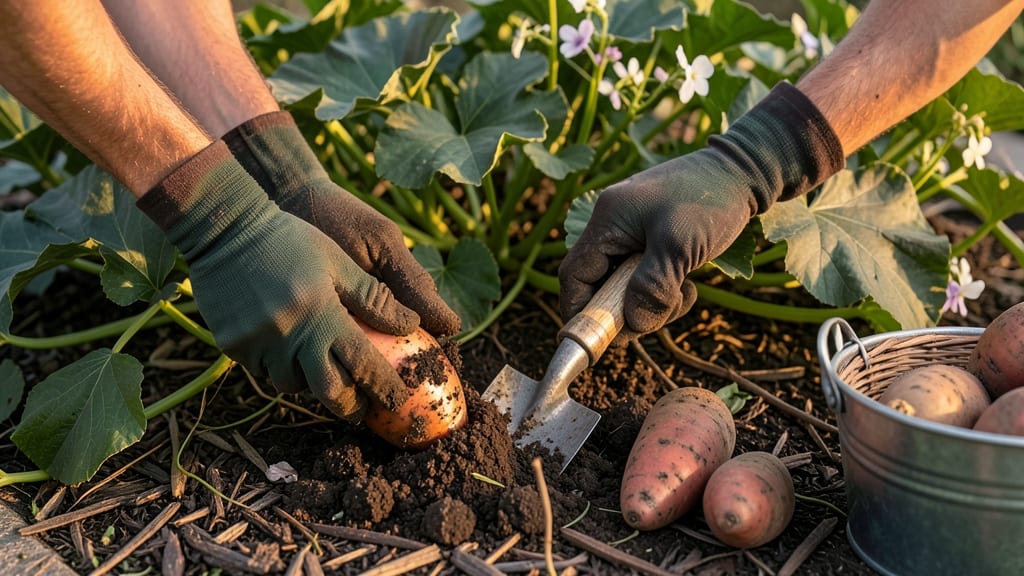
To pick sweet potatoes from the garden at their peak sweetness and texture, wait until the vines yellow and die back naturally—usually 90-140 days after planting in Zone 6.
Sweet potatoes left too long in the ground lose their sweetness and texture—or worse, rot—but harvesting them too early means tough, underdeveloped tubers. Timing is everything, and these subtle clues from the plant itself will tell you exactly when to dig.
Look for brown, hardened stems and skin that resists a gentle slip when you try to peel it back. If frost threatens before these signs appear, harvest anyway—they’ll still store well, just with slightly less sweetness.
In this guide, I’ll walk you through the skin slip test, vine yellowing cues, and how to adjust for your region—whether you’re in a long summer or a short growing season.


The skin slip test: how to check sweet potato readiness
The skin slip test is the most reliable way to determine if your sweet potatoes are ready for harvest. This simple method involves gently pressing your thumbnail into the skin of the tuber—if it resists and doesn’t puncture easily, your sweet potatoes are nearly ready.
This test works because the skin thickens as the tubers mature, signaling they’ve reached peak sweetness and texture.
To perform the test, locate a mature-looking tuber near the plant’s base. Use your thumbnail to apply gentle pressure—if the skin gives way slightly, wait a few more days.
If it feels firm and resists, it’s time to harvest. This method is especially useful in warmer climates where sweet potatoes grow more aggressively and may overmature quickly.
Why timing matters: Harvesting too early results in small, starchy tubers with poor flavor, while waiting too long can lead to skin cracks or even rot. The skin slip test helps strike the perfect balance, ensuring you enjoy sweet, tender sweet potatoes at their best.
🌱
If your sweet potato skin isn’t slipping yet but the vines are yellowing, check for soil moisture—drought stress can delay skin hardening. Water deeply if the soil is dry, then retest in 3-5 days. Consistent moisture (1-2 inches per week) helps tubers develop properly without stress.
What if the skin is already peeling or cracking? This means your sweet potatoes have overmatured and are past their prime. While they’re still edible, their flavor and texture won’t be as good as when harvested at the right time.
If this happens, harvest immediately, cure them properly, and store in a cool, dark place to preserve what’s left.
For short-season climates (like Zone 5 or colder), prioritize the skin slip test over vine color since frost risk can force an early harvest. If frost is forecast within 2 weeks, dig up a few tubers to test—even if the skin isn’t fully hardened—then cure them indoors to improve flavor.
Pro tip: Dig around the plant’s base in a spiral motion to avoid damaging tubers. Start with the outer edges where the largest sweet potatoes typically form. Use a hand fork or garden trowel to gently loosen the soil before pulling them free by hand.
🪴
Once you’ve confirmed readiness with the skin slip test, harvest on a dry day to let the soil firm up slightly. This makes it easier to spot and handle the tubers without breaking them.
After harvesting, let them cure in a warm (80-85°F), humid environment for 5-10 days to develop their sweetness and skin toughness.
Vine yellowing and other visual cues for perfect harvest timing
Don't rely solely on days since planting—your sweet potato vines send clear signals when it's time to harvest. The first visual cue is vine yellowing, where the leaves turn from deep green to golden-yellow and eventually crisp.
This natural leaf senescence indicates the plant is redirecting energy to the tubers, ensuring maximum sweetness and storage potential.
Pay attention to the stem end of the vines too. When it turns brown and woody, it's a strong sign the tubers are fully developed. This change happens gradually, so check weekly once the vines start yellowing.
In cooler climates, this process speeds up as frost risk approaches—sweet potatoes can't tolerate freezing soil, so harvest before temperatures dip below 50°F (10°C) at night.
Here’s what to watch for beyond just leaf color:
- 🌿 Leaf yellowing and drying: Begins at the edges and spreads inward—this means the plant is entering dormancy.
- 🍠 Tuber size: Aim for 3-6 inches in length; smaller tubers are underdeveloped and starchy.
- 🌡️ Soil temperature drop: Below 60°F (15°C) slows tuber growth—harvest before this happens.
- 🌬️ Frost warning: If your first frost is October 15, start checking for readiness by early September.
- 💧 Reduced watering: Taper off irrigation 2 weeks before harvest to concentrate sweetness in the tubers.
In short-season climates (Zone 6 or cooler), prioritize leaf yellowing and frost risk over tuber size—smaller but sweeter potatoes are better than none. For longer growing seasons (Zones 8-10), wait until the vines are completely brown and crispy before digging, as tubers will continue maturing longer.
One common mistake is waiting until the vines are completely dead, which can lead to rot if tubers stay in soggy soil. Instead, harvest when 50-70% of the foliage has yellowed—this gives you a 2-3 week window to dig before the risk of frost or rot increases.
Use a fork to gently loosen soil around the base of the plant to avoid damaging tubers.
Pro tip: If you're unsure, do a partial harvest—dig up one tuber to check its size and sweetness. If it’s ready, the rest will be too within a week.
Store harvested sweet potatoes in a cool, dark place (55-60°F) with high humidity to preserve their sweetness and texture for months.
🌱 Remember, the key to perfect sweet potatoes is balancing these visual cues with your local climate. Start checking for readiness 2 weeks before your average first frost date, and you’ll always harvest at peak sweetness.