
Watering
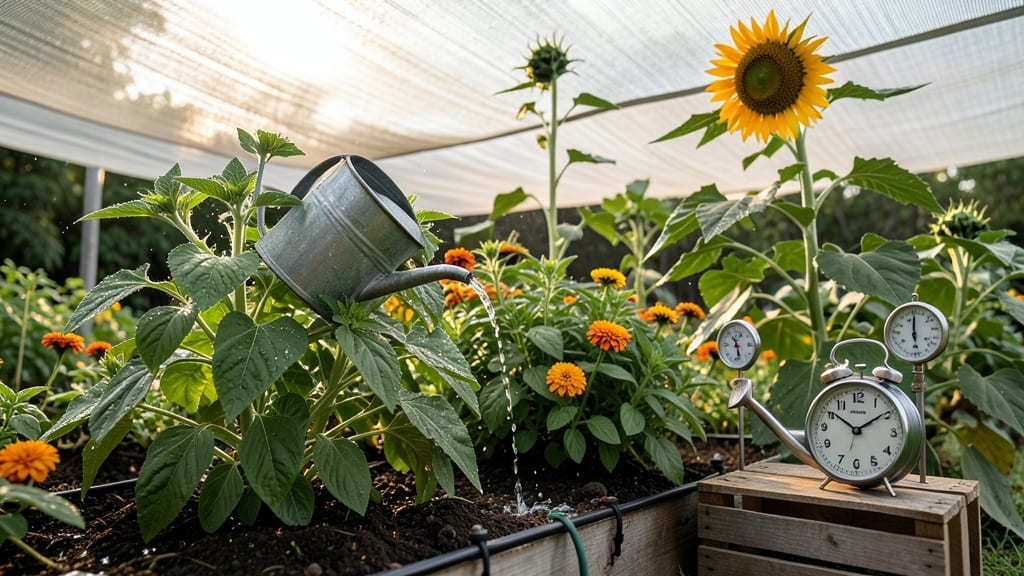
Watering your garden in summer at the wrong time can turn your hard work into wilted dreams — but the right timing keeps your 🌱 thriving even when temperatures soar.
Summer heat can turn your thriving garden into a crispy disaster if you water at the wrong time—but timing your watering correctly can save your plants and your water bill.
Most gardeners assume evening watering is best, but science says otherwise. Morning watering gives roots a full day to soak up moisture before the sun evaporates it, while evening sessions invite fungal problems and wasted water.
Below, I’ll break down the best times to water by climate, how to spot over- or under-watering, and the one mulching trick that cuts your watering needs by 30%.


Best times to water your garden in summer: morning vs. evening science
Summer heat can stress your plants, but the right watering schedule makes all the difference. Morning watering (before 10 AM) is often considered best because it allows roots to absorb moisture before evaporation peaks.
Studies show 30-40% less water loss compared to afternoon watering. However, evening watering has its place too—especially in dry climates where nighttime humidity helps reduce evaporation.
Your garden's health depends on root absorption efficiency and fungal risk prevention. Watering at night can trap moisture on leaves, creating ideal conditions for powdery mildew and blight.
Meanwhile, midday watering wastes water through rapid evaporation and can scorch leaves. Let’s break down the science behind each approach to help you decide what works best for your garden.
⚠️ NON-NEGOTIABLE: comparison table element below
| Factor | Morning Watering (6-9 AM) | Evening Watering (6-8 PM) |
|---|---|---|
| Evaporation Rate | Low (30-40% less loss) | Moderate (higher in humid climates) |
| Root Absorption | Optimal (roots active) | Good (roots still active) |
| Fungal Risk | Low (leaves dry quickly) | High (moisture lingers) |
| Water Waste | Minimal (efficient use) | Moderate (depends on climate) |
| Best For | Most plants, drought-prone areas | Humid climates, sandy soil |
In arid climates like the Southwest U.S., morning watering is non-negotiable. A study from the University of Arizona found that evening watering increased fungal diseases by 40% in vegetable gardens.
Meanwhile, in humid regions like the Southeast, evening watering can be beneficial because higher nighttime humidity reduces evaporation, allowing water to penetrate deeper into the soil.
Your soil type also plays a critical role. Sandy soils drain quickly, so morning watering ensures moisture reaches roots before it evaporates. Clay soils retain water longer, making evening watering safer. Always check soil moisture by sticking your finger 2 inches deep—if it’s dry, water deeply regardless of time.
For container gardens, morning watering is ideal because pots dry out faster. However, if you’re using self-watering containers, evening watering can work because excess moisture drains away overnight. Always ensure pots have drainage holes to prevent root rot from standing water.
Don’t forget about mulching—it’s your secret weapon for summer watering. A 2-3 inch layer of mulch (straw, wood chips, or shredded leaves) can reduce evaporation by up to 50% and keep soil temperatures stable. Apply mulch after watering in the morning to maximize its effectiveness.
If you must water in the evening, aim for 6-8 PM to give leaves time to dry before nightfall. Avoid watering late at night, as prolonged moisture can lead to bacterial infections.
For tropical plants like hibiscus or bird of paradise, evening watering is often preferred because their thick leaves handle moisture better.
Pro tip: Use a soaker hose or drip irrigation system for precise watering. These deliver water directly to the roots, reducing waste and fungal risks. Set your system to run in the early morning (before 8 AM) for the best results.
If you’re using a sprinkler, water in the morning to avoid wetting foliage for long periods.
Pay attention to your plants’ signs of stress. Wilting in the late afternoon suggests underwatering, while yellowing leaves or mold spots indicate overwatering or fungal issues. Adjust your schedule based on these cues—your garden will thank you with lush, healthy growth all summer long. 🌱
How to adjust your watering schedule by plant type and climate Zone
Not all plants have the same thirst—especially in summer. Drought-tolerant succulents like lavender and rosemary need far less water than tropical ferns or tomatoes.
Your climate zone also plays a huge role: Mediterranean summers demand deep, infrequent watering, while humid subtropical zones need frequent light watering to prevent fungal diseases. Let’s break down how to tailor your schedule to keep every plant thriving without wasting water.
First, identify your USDA hardiness zone—this determines your baseline watering needs. For example, Zone 9 (Mediterranean climates) plants like olive trees and bougainvillea thrive on weekly deep watering, while Zone 7 (humid climates) plants like hydrangeas prefer daily light misting in peak heat.
Always check soil moisture before watering: stick your finger 2 inches deep—if it’s dry, it’s time to water.
Drought-tolerant plants (e.g., agave, yarrow, sedum) should get water every 7–10 days in summer, while tropical plants (e.g., caladiums, ginger, hibiscus) need daily watering in high heat. Potted plants dry out faster—check their soil every 2–3 days and water until water runs out the drainage hole. Mulch heavily (3–4 inches) to lock in moisture and regulate soil temperature.
| Plant Type | Climate Zone | Water Frequency | Best Time | Notes |
|---|---|---|---|---|
| Drought-Tolerant (Succulents, Lavender) | Zones 7–10 (Mediterranean) | Every 7–10 days | Early morning | Deep soak; avoid wetting foliage |
| Tropical (Hibiscus, Caladiums) | Zones 8–11 (Humid) | Daily (light watering) | Evening (avoid sunburn) | Mulch to prevent evaporation |
| Vegetables (Tomatoes, Peppers) | Zones 5–9 (Varies) | Every 2–3 days | Morning (6–9 AM) | Drip irrigation preferred |
| Potted Plants (Herbs, Annuals) | All Zones | Every 2–3 days | Early morning | Water until drainage |
In arid climates (e.g., Zone 9–10), water deeply but infrequently to encourage deep root growth. For example, olive trees and rosemary bushes should get 1–2 inches of water per week, delivered in one long session rather than frequent sprinkles.
In contrast, humid climates (e.g., Zone 7–8) require light, frequent watering to prevent powdery mildew—water in the early morning to let foliage dry before nightfall.
For container gardens, switch to self-watering pots or wicking beds if you travel often. These systems maintain consistent moisture without overwatering. Always use well-draining soil and terracotta pots to reduce fungal risks.
If you notice yellowing leaves or wilting despite moist soil, your plant may be suffering from root rot—cut back on watering and improve drainage immediately.
Pro tip: Install a rain gauge to track natural rainfall—this helps adjust your watering schedule dynamically. In drought-prone areas, group plants with similar needs together (e.g., succulents in one bed, herbs in another) to streamline watering.
With the right schedule, your garden will stay lush, your plants will thrive, and your water bill will thank you.