
Plants
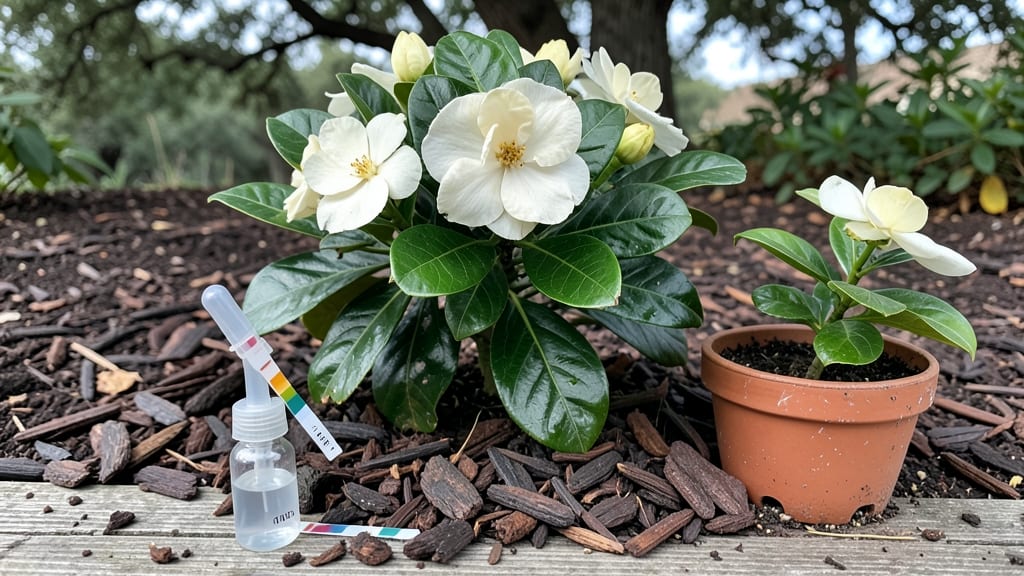
Gardenias are acid-loving plants that thrive in soil with a pH range of 5.0 to 6.5, mimicking their natural tropical habitat. Acidic conditions enhance nutrient absorption, particularly iron, which prevents yellowing leaves and promotes vibrant blooms.
Gardenias love acidic soil because their roots can't efficiently absorb key nutrients like iron and manganese in alkaline conditions. 🌿 When soil pH rises above 6.5, these plants often develop yellow leaves (chlorosis) even when iron is present in the soil.
This happens because alkaline environments bind nutrients, making them unavailable to the plant. I've seen gardenias in my own backyard struggle when planted in neutral or alkaline soil—adding sulfur and peat moss helped restore their health within weeks.
You'll notice the difference in blooming too. Acidic soil supports the metabolic processes that lead to those fragrant white flowers, while alkaline soil can stunt growth and reduce flower production.
For container gardeners, using a specially formulated acid-loving plant mix makes maintenance easier, as it's pre-amended with the right nutrients and pH balance.
💡 In This Article
- How Soil pH Affects Gardenia Growth and Blooming
- Testing and Adjusting Soil pH for Gardenias
How soil pH affects gardenia growth and blooming
Gardenias evolved in the acidic, nutrient-rich soils of tropical regions like Southeast Asia, where rainfall naturally maintains a pH between 5.0 and 6.5. This acidity range is crucial because it directly impacts how their roots absorb essential nutrients.
At these pH levels, iron—a vital micronutrient—exists in its soluble ferrous (Fe²⁺) form, which gardenia roots can easily uptake. When soil becomes alkaline (pH above 7.0), iron binds into insoluble ferric oxides (Fe³⁺), rendering it unavailable even if present in the soil.
The consequences of incorrect pH are visible almost immediately. In alkaline conditions, gardenias develop interveinal chlorosis—yellowing between leaf veins—because the plant can't access iron despite its presence.
I've seen this firsthand with gardenias planted in garden soil with a pH of 7.2: the leaves turned yellow within 3-4 weeks, while nearby azaleas (also acid-loving) showed similar symptoms. The roots simply can't function properly when nutrients are chemically locked away.
Manganese and phosphorus availability also suffer in alkaline soil. These nutrients become less soluble as pH rises, leading to stunted growth and reduced flowering.
The metabolic processes that produce those iconic white, fragrant blooms require optimal nutrient uptake, which only happens in acidic conditions. 🌸 What's fascinating is how quickly gardenias respond when pH is corrected—within 6-8 weeks, you'll often see new growth and bud formation as the plant regains access to essential nutrients.
Another critical factor is root respiration. Gardenia roots prefer slightly acidic environments because they maintain better oxygen exchange in the soil. Alkaline conditions can lead to compaction around roots, reducing their ability to breathe and absorb water efficiently.
This is why container-grown gardenias often thrive better—their potting mix can be precisely formulated to maintain the ideal 5.0-6.5 range, while in-ground plants may struggle with soil variability.
For comparison, consider how other acid-loving plants like blueberries or rhododendrons react to pH changes. They all share similar nutrient uptake challenges in alkaline soil, but gardenias are particularly sensitive due to their delicate foliage and high nutrient demands for blooming.
The key difference is that gardenias show visible distress more quickly—often within 2-3 weeks—making them excellent indicators of soil health in acidic plant ecosystems.
What most gardeners don't realize is that even slight pH fluctuations can impact blooming cycles. Gardenias typically flower in late spring to summer, but if soil pH drifts above 6.5 during bud formation, you may see reduced flower numbers or smaller blooms.
This happens because phosphorus, crucial for energy transfer in plant cells, becomes less available, directly affecting floral development.