
Watering
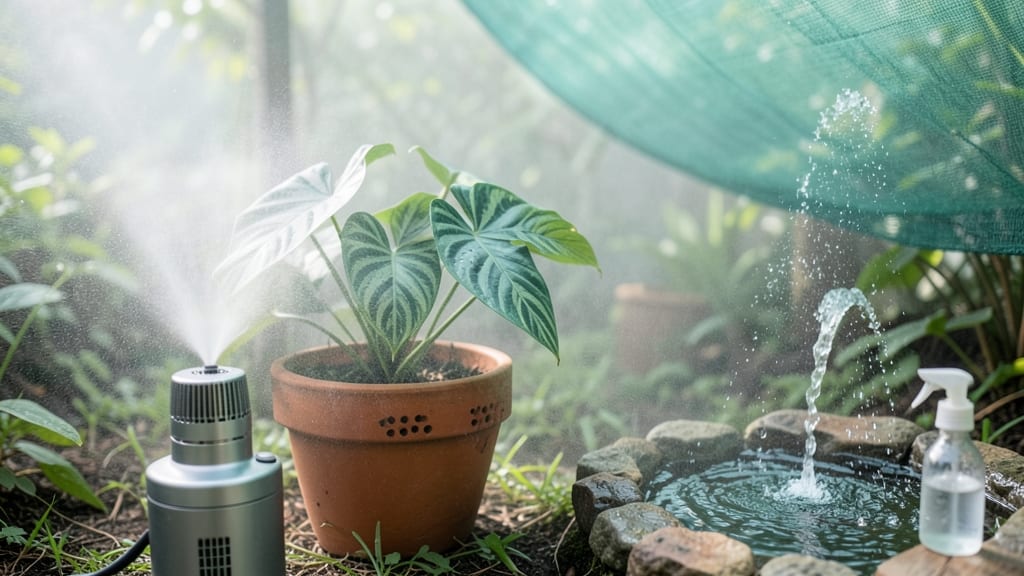
A cool mist garden maintains optimal humidity for tropical plants using fine misting systems that keep moisture levels steady around leaves, preventing dehydration while supporting vibrant growth without oversaturating the soil.
A cool mist garden essentially mimics the natural environment of tropical plants by delivering a fine, even spray that raises ambient humidity without creating soggy conditions. 🌿 This method is particularly effective for species like ferns, calatheas, and orchids that thrive in environments with 50-70% humidity—levels most indoor spaces struggle to maintain naturally.
The key advantage is that misting targets the foliage directly, where plants lose most moisture through transpiration, rather than relying solely on soil moisture.
The best part? You can customize misting frequency based on plant needs—daily light mists for delicate bromeliads versus deeper cycles for hardier philodendrons. This precision prevents common issues like root rot while keeping leaves crisp and preventing browning tips.
For best results, pair your system with a hygrometer to monitor humidity levels and adjust settings accordingly.
💡 In This Article
- How Cool Mist Systems Enhance Plant Health
- Top 10 Humidity-Loving Plants for Cool Mist Gardens
How cool mist systems enhance plant health
Cool mist systems work by creating a fine, even spray that increases ambient humidity around plants, replicating the natural conditions of tropical rainforests. These systems typically use ultrafine nozzles that produce droplets as small as 20-50 microns—about the width of a human hair—which evaporate quickly without leaving residue.
This rapid evaporation prevents water from pooling on leaves or soil, creating a consistent 50-70% humidity environment that tropical plants crave.
The science behind this lies in how plants lose moisture through transpiration, a process where water vapor escapes through leaf stomata. In dry indoor air, plants must work harder to maintain hydration, leading to stressed foliage, brown tips, and stunted growth.
Cool misting increases atmospheric moisture, reducing this stress by up to 40% while allowing roots to absorb water at their own pace. For example, a calathea plant in a 60% humidity environment will show vibrant, unfurling leaves compared to one struggling in 30% humidity with crispy edges.
Another key benefit is how misting supports photosynthesis efficiency. Plants in humid environments can open their stomata longer to absorb CO2 without losing excessive water, leading to 15-25% faster growth in ideal conditions.
The cool mist also helps regulate leaf temperature, preventing heat stress that occurs when dry air causes rapid water loss. This is especially critical for delicate plants like orchids, whose roots and leaves are sensitive to temperature fluctuations.
Most systems include adjustable timers and mist intensity settings, allowing you to tailor cycles to specific plant needs. For instance, ferns benefit from light mists every 2-3 hours during daylight, while philodendrons thrive with 30-minute cycles every 4 hours.
The key is avoiding oversaturation—excessive misting can lead to fungal issues like powdery mildew, so always pair your system with proper airflow and occasional leaf drying.
Consider the spray pattern as well: wider coverage systems work best for larger collections, while targeted misters are ideal for individual plants. Some advanced models even include humidity sensors that automatically adjust output based on real-time readings, taking the guesswork out of plant care.
This precision is what makes cool mist gardens so effective compared to traditional watering methods.
For best results, position your misting system 12-18 inches above plants to ensure even distribution. The fine droplets should create a visible but brief mist that dissipates within 30-60 seconds, leaving foliage damp rather than wet.
This approach maintains that perfect balance between hydration and airflow that tropical plants need to thrive indoors.