
Light Requirements
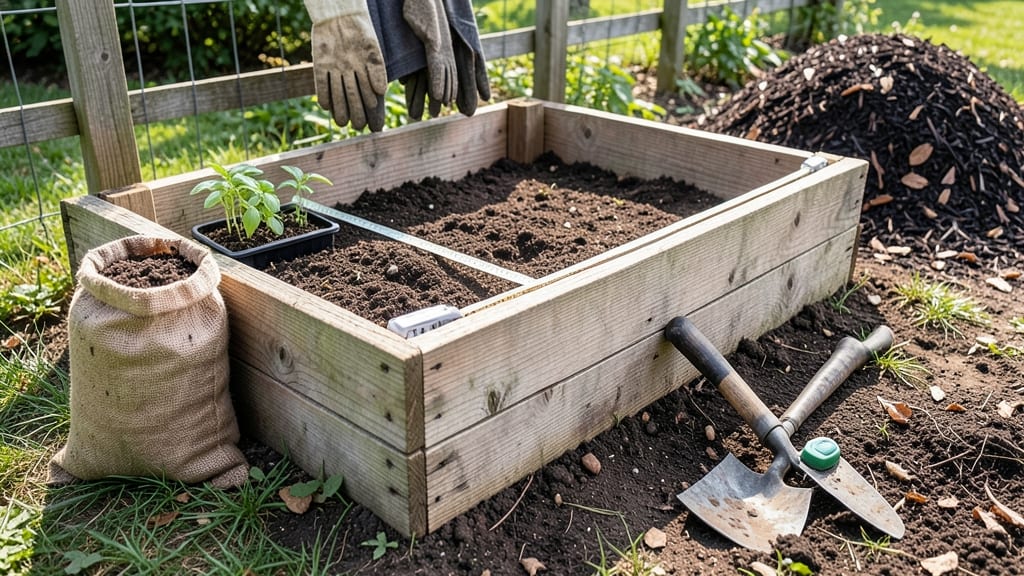
Filling a raised garden bed with the right amount of soil means calculating depth, plant needs, and soil quality to avoid wasted money or stunted plants.
Picture this: You’ve spent hours building the perfect raised bed, only to realize halfway through filling it that you’ve either bought too much soil or—worse—too little. The last thing you want is to scramble for more bags or end up with a shallow root zone that leaves your plants struggling.
The good news? With a few simple measurements and a little planning, you can nail the soil depth every time.
Most gardeners aim for 6 to 12 inches of soil, but the exact amount depends on what you’re growing. Deep-rooted veggies like tomatoes need that full 12-inch depth, while shallow crops like lettuce thrive in just 6 inches.
And here’s the kicker: soil settles over time, so you’ll need 10-20% more than your bed’s final height to account for compaction.
In this guide, I’ll walk you through calculating soil volume by bed size, the best soil mix for your plants, and how to avoid common mistakes that lead to wasted soil—or worse, unhappy plants. Let’s get your raised bed ready for a bumper harvest!
Ideal raised garden bed soil depth by plant type: root space requirements explained
When setting up a raised garden bed, soil depth isn’t one-size-fits-all. Different plants have unique root space requirements, and getting this wrong can mean the difference between a thriving harvest and struggling seedlings.
For example, lettuce thrives in just 6-8 inches of soil, while tomatoes need 18-24 inches to support their sprawling roots. Understanding these needs helps you avoid wasted soil and ensures every plant gets the perfect home.
Most standard raised beds range from 6 to 12 inches deep, but this often falls short for deep-rooted crops like asparagus, carrots, or fruit trees. If you’re growing these, you’ll need to extend your bed’s depth—or opt for containers—to prevent root binding.
Even herbs like rosemary and lavender prefer deeper soil to establish strong root systems. Let’s break down the ideal soil depths for your favorite plants.
| Plant Type | Minimum Soil Depth | Notes |
|---|---|---|
| Shallow-Rooted Vegetables | 6-8 inches | Lettuce, spinach, radishes, green onions |
| Medium-Rooted Vegetables | 12-18 inches | Peppers, bush beans, zucchini, basil |
| Deep-Rooted Vegetables | 18-24 inches | Tomatoes, potatoes, carrots, asparagus |
| Herbs | 8-12 inches | Rosemary, lavender, thyme, parsley |
| Flowers | 6-12 inches | Marigolds, pansies, snapdragons, sunflowers |
| Fruit Trees/Shrubs | 24-36 inches | Blueberries, strawberries, dwarf fruit trees |
For shallow-rooted plants like leafy greens or radishes, a 6-inch soil depth is plenty. These plants focus their energy above ground, so deeper soil is unnecessary—and can even lead to waterlogging if not managed properly.
However, if you’re growing deep-rooted crops, like tomatoes or carrots, you’ll need to go deeper. A 12-inch bed is the minimum for these, but 18-24 inches is ideal to prevent root competition and ensure robust growth.
One common mistake is assuming all plants fit into a standard 12-inch bed. While this works for many vegetables and herbs, it’s often insufficient for fruit-bearing plants or perennials.
For instance, asparagus needs at least 12 inches of soil to establish, but it benefits from 18 inches for long-term productivity. If you’re unsure, err on the side of deeper soil—it’s better to have extra room than to cramp your plants’ roots.
If your raised bed isn’t deep enough for your chosen plants, don’t despair. You can extend the depth by adding layers of compost or well-rotted manure at the bottom, followed by a mix of topsoil and organic matter. This not only increases depth but also improves soil fertility.
For example, adding a 6-inch layer of compost to a 12-inch bed gives you the equivalent of a 18-inch deep growing space for heavy feeders like tomatoes or peppers.
Another tip: Layer your soil strategically. Place the most nutrient-rich soil at the bottom, where roots will access it first, and top it with a lighter, well-draining mix. This mimics natural soil profiles and helps prevent compaction over time.
For container gardening or small raised beds, consider using fabric pots or deep planters to give deep-rooted plants the space they need without expanding your bed’s footprint.
For flowers and ornamental plants, soil depth is less critical, but don’t skimp entirely. Most annuals and perennials thrive in 8-12 inches of soil, while bulbs like tulips need at least 6 inches of coverage.
If you’re growing shrubs or small trees, like blueberries or dwarf fruit trees, aim for 24-36 inches of soil depth. These plants benefit from a deep, loose soil profile to support their extensive root systems and ensure stability.
Remember, soil depth isn’t the only factor—soil quality matters just as much. Use a mix of topsoil, compost, and perlite or vermiculite for optimal drainage and aeration.
Avoid filling your bed with cheap, low-quality soil, as it can compact over time and limit root growth. Instead, invest in a high-quality soil blend
How to calculate soil volume for your raised bed: a step-by-step formula
Calculating the exact amount of soil needed for your raised bed can feel overwhelming, but it’s a simple math problem once you know the key factors. Most gardeners make the mistake of eyeballing it, leading to either wasted money or plants struggling in shallow soil.
Let’s break it down so you can order the perfect amount—no guesswork required!
First, measure your raised bed’s length, width, and desired depth. Standard vegetable beds need 6-12 inches of soil depth, but deep-rooted plants like tomatoes or carrots may require 12-18 inches.
Multiply these dimensions to get the total volume in cubic feet, then account for 10-20% soil settling—new soil always compacts slightly after watering.
Step 1: Measure Your Bed
Use a tape measure to find your bed’s length × width × depth (in feet). For example, a 4’ x 8’ bed with 10” depth = 2.5 ft³ per layer (since 10” = 0.83 ft).
Step 2: Calculate Volume
Multiply length × width × depth. Example: 4’ × 8’ × 1’ = 32 ft³ (for a 12” deep bed). Add 20% extra for settling: 32 × 1.2 = 38.4 ft³.
Step 3: Convert to Cubic Yards
Soil is sold by the cubic yard. Divide cubic feet by 27 (since 1 yard³ = 27 ft³). Example: 38.4 ÷ 27 ≈ 1.42 yards. Round up to 1.5 yards for bulk purchases.
Step 4: Check Bag Sizes
Most bags are 1-2 ft³. For 38.4 ft³, you’d need 20 × 2 ft³ bags or 10 × 4 ft³ bags. Pro tip: Buy 10% extra to account for spills or adjustments.
Step 5: Account for Frame Thickness
If your bed has thick wooden sides (e.g., 2”), subtract that from your depth measurement. For example, a 12” bed with 2” sides only gives 8” usable soil depth—adjust your volume calculation accordingly.
Step 6: Test Soil Mix
For best results, use a 60% topsoil, 30% compost, 10% perlite mix. This blend reduces settling and improves drainage. Pre-mixed raised bed soil often includes these ratios for convenience.
One common mistake is ignoring the bed frame’s thickness. A 12” deep bed with 2” thick wood sides only leaves 8” of usable soil, which may not support deep-rooted plants. Always measure the interior dimensions of your bed, not the exterior.
For cost savings, consider buying soil in bulk from local suppliers or mixing your own. A 1-yard bag covers about 100 sq ft at 3” depth, so factor this into your budget. If your bed is larger than 4’ x 8’, split the order to avoid hauling heavy bags.
After filling your bed, water it thoroughly to settle the soil naturally. This final step ensures your plants have the optimal root space from day one—no surprises when you plant your first seeds! 🌱