
Light Requirements
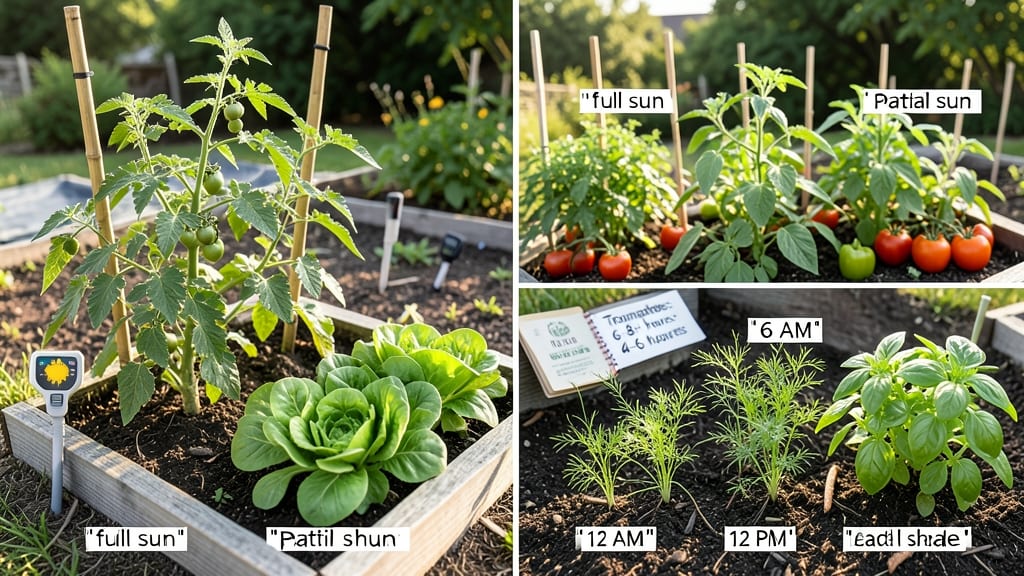
A vegetable garden needs how much sun does a vegetable garden need—typically 6 to 8 hours of sunlight daily—to thrive, though some crops handle less with creative placement.
Struggling to decide where to plant your tomatoes or lettuce? Sunlight is the single most critical factor for a thriving vegetable garden—and getting it wrong can mean the difference between a bountiful harvest and wilted disappointment. Too little sun stunts growth, while too much can scorch delicate leaves.
Most sun-loving vegetables like tomatoes, peppers, and cucumbers demand full sun, while shade-tolerant greens like spinach or kale can stretch toward 4 to 6 hours in partial shade. The key is matching your garden’s light to each plant’s needs.
Below, I’ll break down the exact sunlight thresholds by crop, how to measure your garden’s light, and smart ways to adjust for different climates—so you can grow what you love without guesswork.

Daily sunlight requirements for vegetable gardens: full sun vs partial shade
Sunlight isn't just light—it's the lifeblood of your vegetable garden. Without enough, your tomatoes won't ripen, your peppers won't produce, and your leafy greens will bolt prematurely. But how do you know if your garden gets full sun, partial shade, or something in between?
The answer lies in understanding sunlight thresholds and how they impact plant health.
Most vegetable gardeners assume "full sun" means all day, but the reality is more nuanced. 6-8 hours of direct sunlight is the sweet spot for most crops, but some thrive with less.
The key is matching your garden's sunlight conditions to your vegetable varieties. Let's break down the categories so you can optimize your planting strategy.
Full sun (6+ hours of direct sunlight) is ideal for high-yield crops like tomatoes, peppers, and cucumbers. Partial shade (3-6 hours) suits leafy greens and herbs, while full shade (less than 3 hours) is rare for vegetables but can work for specific varieties in hot climates. Understanding these thresholds helps prevent underperforming plants or wasted space.
| Sunlight Category | Daily Sunlight Hours | Best For | Growth Impact | Yield Impact |
|---|---|---|---|---|
| Full Sun | 6+ hours | Tomatoes, Peppers, Cucumbers, Squash | Vigorous, healthy foliage | Highest fruit/vegetable production |
| Partial Shade | 3-6 hours | Leafy Greens, Herbs, Lettuce, Spinach | Slower growth, tender leaves | Moderate yield, bolting risk |
| Partial Shade (Morning Sun) | 3-6 hours (AM only) | Basil, Swiss Chard, Kale | Balanced growth, fewer pests | Good production, less stress |
| Partial Shade (Afternoon Sun) | 3-6 hours (PM only) | Radishes, Beets, Carrots | Slower but steady growth | Smaller roots, lower yield |
| Full Shade | <3 hours | Spinach (cool climates), Lettuce (shade cloth) | Leggy, weak stems | Poor yield, bolting likely |
If your garden gets 6+ hours of direct sunlight, you're in the full sun zone—perfect for heat-loving vegetables. These plants thrive with maximum exposure, producing larger fruits and higher yields.
However, too much sun in hot climates can stress plants, leading to blossom drop in tomatoes or bitter flavors in cucumbers. Providing afternoon shade cloth (30-50% shade) can help.
For 3-6 hours of sunlight, you're in the partial shade category, ideal for leafy greens and herbs. These plants prioritize leaf production over fruit, making them perfect for cooler climates or shaded garden beds.
However, too little light causes bolting (premature flowering) in lettuce or weak stems in spinach. Use reflective mulch or light-colored containers to maximize available light.
Understanding your garden's sunlight patterns is key. Observe your space for a week to track how sunlight shifts with seasonal changes.
A south-facing bed gets more sun in summer, while a north-facing area may struggle in winter. Adjust plant placement accordingly—move sun-loving crops to sunnier spots in spring and shade-tolerant varieties to cooler areas in summer.
One common mistake is overestimating shade. What seems like partial shade in winter might become full sun in summer. Use a sun gauge (a simple DIY tool with a stick and marked hours) to track sunlight accurately.
This helps you plan succession plantings correctly, ensuring your basil gets morning sun while your peppers bask in afternoon rays.
Climate plays a huge role in sunlight needs. In hot, dry regions, plants may need less direct sun to prevent stress, while cool, cloudy climates can extend the partial shade window.
For example, Swiss chard thrives in partial shade in Arizona but may need full sun in Seattle. Always check seed packet guidelines for regional adjustments.
Even with the right sunlight, soil health and watering habits matter. Full-sun plants need well-draining soil to prevent root rot, while shade-loving crops benefit from moist, fertile soil
Best vegetables by sunlight needs: full sun lovers vs shade-tolerant crops
Not all vegetables thrive under the same sunlight conditions. Full sun lovers like tomatoes and peppers need 6-8+ hours of direct sun to produce their best yields, while shade-tolerant crops such as lettuce and spinach can actually bolt or wilt in intense heat.
Understanding these preferences helps you maximize your garden's potential and avoid common pitfalls like poor fruit set or stunted growth.
If your garden has limited sunlight, focus on shade-tolerant varieties that still deliver nutrient-packed harvests. Conversely, if you have a sun-drenched space, prioritize high-yield crops that reward you with abundant produce.
Let’s break down the best options for each category, along with practical planting tips to set you up for success.
🌱 Full Sun Lovers (6-8+ Hours of Direct Sun)
- Tomatoes – Need full sun daily for maximum fruit production. Choose determinate varieties for smaller spaces.
- Peppers (Bell, Jalapeño) – Require intense sunlight to prevent blossom drop. Use black plastic mulch to warm soil.
- Cucumbers – Thrive in full sun with trellising to improve air circulation and reduce disease risk.
- Squash (Zucchini, Butternut) – Grow best in hot, sunny spots. Use row covers for early-season protection.
- Corn – Needs 6+ hours of sun for ear development. Plant in blocks, not rows, for better pollination.
🌿 Partial Shade Tolerant (3-6 Hours of Sun)
- Leafy Greens (Spinach, Kale) – Prefer morning sun and afternoon shade to avoid bolting in heat.
- Green Onions/Scallions – Grow well in partial shade and re-grow from cuttings for continuous harvests.
- Bush Beans – Tolerate partial shade but yield best with 4-6 hours of sun. Avoid soggy soil.
- Radishes – Fast-growing and shade-tolerant. Ideal for early spring or fall plantings.
- Herbs (Cilantro, Parsley) – Thrive in dappled shade and cooler microclimates. Avoid intense afternoon sun.
🌳 Shade-Tolerant (Under 3 Hours of Sun)
- Lettuce (Butterhead, Romaine) – Grows best in cool, shady spots. Use shade cloth in summer to prevent bolting.
- Arugula – Peppy flavor in partial to full shade. Harvest leaves to encourage regrowth.
- Swiss Chard – Tolerates low light and produces well in containers. Harvest outer leaves first.
- < Microgreens – Fast-growing and ideal for indoor windowsills with indirect light.
- Mushrooms (Oyster, Shiitake) – Grow best in dark, humid conditions. Use grow kits for beginners.
For full sun lovers, ensure your soil is well-draining and rich in organic matter. These crops often need regular watering to prevent stress, especially during hot summer months. If you’re growing shade-tolerant crops, focus on moisture retention and mulching to keep roots cool.
Pro tip: Use reflective mulches like white plastic or aluminum foil to bounce extra light onto shade-loving plants. This trick can boost growth even in low-light areas. Always observe your garden’s microclimates—some spots may get more sun than others due to nearby structures or trees.
Experiment with intercropping by pairing full sun and shade-tolerant crops. For example, plant tomatoes (full sun) near bush beans (partial shade) to optimize space and maximize your harvest. With the right placement, even a small garden can yield a diverse and abundant crop.