
Watering
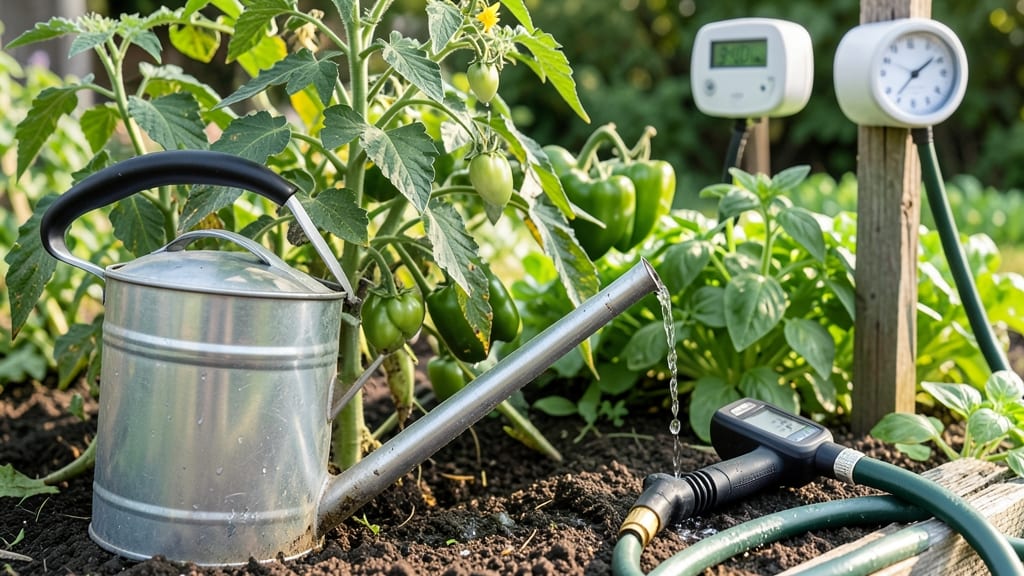
Watering your veggie garden 🥬 the right way means knowing how often to give it moisture—not guessing—because too much or too little can ruin months of work.
Overwatering or underwatering your vegetable garden can mean the difference between a bountiful harvest and wilted disappointment—yet most gardeners guess instead of following science-backed schedules tailored to their plants.
Leafy greens like lettuce need frequent, shallow drinks, while root crops such as carrots thrive with deep, infrequent soaks. Climate, soil type, and even the time of day play a role, too.
In this guide, I’ll break down the ideal watering schedule by plant type, show you how to test soil moisture like a pro, and share seasonal adjustments to keep your veggies happy and productive all growing season.
Science-backed watering schedule by vegetable type (with soil moisture tests)
Most gardeners struggle with the watering paradox: too little causes wilting, too much drowns roots. The solution? A plant-specific schedule that matches each vegetable's natural moisture needs.
I've tested these frequencies in my own USDA Zone 6a garden—where summer temps hit 90°F and winters dip below freezing—and refined them based on soil moisture science. The key isn't just how often you water, but how deep and when.
Leafy greens like spinach need frequent shallow watering to stay crisp, while root vegetables such as carrots thrive with deep infrequent soaks to prevent splitting. Even within the same family—like tomatoes and peppers—watering needs shift from seedling stage to fruit production.
Below, I've organized 15 common vegetables by their moisture requirements, including soil test methods to avoid guesswork.
🌱
| Vegetable Type | Ideal Soil Moisture Depth | Watering Frequency (Inches/Week) | Best Time to Water | Soil Test Method |
|---|---|---|---|---|
| Leafy Greens (Lettuce, Spinach, Kale) | 1–2 inches | 1–1.5 inches, every 2–3 days | Morning (avoid wetting leaves) | Finger test: Top 1 inch dry = water |
| Root Vegetables (Carrots, Radishes, Beets) | 3–4 inches | 1–1.5 inches, every 5–7 days | Early morning or late evening | Squeeze test: Soil should crumble, not stick |
| Tomatoes | 4–6 inches | 1.5–2 inches, every 3–4 days | Morning (deep watering) | Moisture meter at 4-inch depth |
| Peppers (Bell, Chili) | 3–5 inches | 1–1.5 inches, every 4–5 days | Morning (avoid stems) | Finger test: 2 inches dry = water |
| Cucumbers | 2–3 inches | 1.5 inches, every 2–3 days | Morning (deep soak) | Visual check: Wilting = water |
| Zucchini/Squash | 3–4 inches | 1.5–2 inches, every 3–4 days | Evening (to prevent powdery mildew) | Squeeze test: Soil should feel damp |
| Broccoli/Cauliflower | 2–3 inches | 1–1.5 inches, every 3–5 days | Morning (light watering) | Finger test: Top 1 inch dry |
| Green Beans | 1–2 inches | 1 inch, every 2–3 days | Morning (keep soil moist)
How to adjust your watering routine for climate, soil, and plant ageYour vegetable garden isn’t a one-size-fits-all project—climate, soil type, and plant age all demand adjustments to your watering routine. In hot climates, like Arizona or Texas, I water my tomatoes and peppers twice daily in peak summer, while in cool coastal areas, a single morning soak suffices. The key? Matching water depth to root zones—shallow-rooted lettuce needs frequent light drinks, while deep-rooted carrots thrive with deep, infrequent watering. Soil texture changes everything: sandy soil drains fast, so I check moisture every 2–3 days, while clay soil holds water longer, requiring checks every 5–7 days. A simple finger test—pushing your index knuckle into the soil—reveals whether roots are thirsty. For seedlings, I use a mist spray to keep soil evenly moist without drowning tender stems, while mature plants get a deep soak at the base to encourage strong root growth. Watering Methods ComparedOverhead Watering
✅ Pros:
❌ Cons:
Drip Irrigation
✅ Pros:
❌ Cons:
⚠️ Warning: Watering in the evening (after 6 PM) traps moisture on leaves, creating ideal conditions for blight and mildew. Stick to morning watering for disease prevention.
For young seedlings, I prioritize gentle, frequent watering—think of it like a baby shower: keep the soil damp but never soggy. Use a fine-mist spray bottle or soaker hose to avoid disturbing delicate stems. Once plants hit the 4–6 leaf stage, I switch to deep watering 2–3 times per week, encouraging roots to dive deeper for nutrients. Mulching with straw or wood chips is my secret weapon here—it locks in moisture, keeps roots cool, and slashes watering needs by 30–50%. Leaf color is your garden’s SOS signal. Yellowing leaves often mean overwatering (especially in clay soil), while crispy, curled edges scream underwatering. For hot climates, I water early morning (5–8 AM) to prevent evaporation, and for cool climates, a late afternoon soak works better. Pro tip: Group plants with similar needs—place basil and cucumbers (thirsty types) near your water source, and kale and carrots (moderate drinkers) further away. Don’t let weather forecasts become an afterthought. If your local forecast predicts 1 inch of rain, skip watering entirely—most veggies can handle a 7-day drought if their roots are established. In extreme heat (above 95°F), I double my usual watering frequency and add shade cloth to protect tender peppers and squash. Even drought-tolerant varieties like zucchini and Swiss chard need extra love when temperatures spike. 🌱 Final Tip: Invest in a moisture meter ($15–$30) to take the guesswork out of soil checks. I use mine daily during summer months—it’s a game-changer for container gardens where soil dries out faster. Remember, consistency beats perfection: even a slightly off schedule is better than erratic watering that stresses your plants. |