
Picking
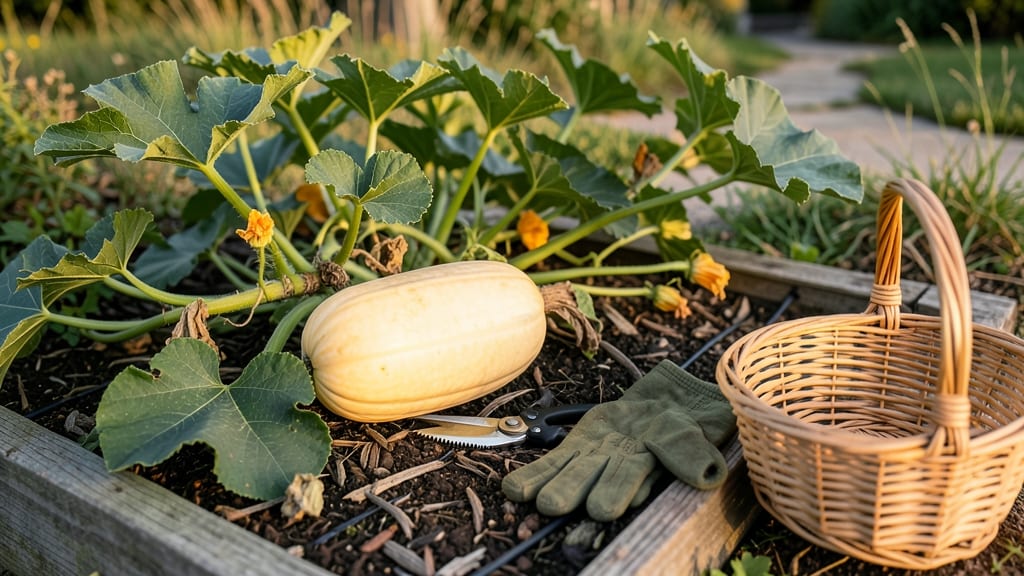
Harvesting when to harvest spaghetti squash from the garden at the right time transforms tough, stringy flesh into tender, restaurant-quality strands 🎃.
Picking too early means you’re left with bland, underdeveloped squash, while waiting too long turns the strands into a chewy mess. The difference between success and disappointment comes down to three simple tests—color, stem firmness, and rind pressure—that most gardeners overlook.
Here’s how to nail the harvest window: when the skin shifts from bright green to a dull tan, the stem snaps cleanly, and the rind resists gentle pressure, your spaghetti squash is primed for peak flavor.
Miss these cues, and you’ll end up with squash that’s either too immature or past its prime.
In this guide, I’ll walk you through the exact visual and tactile clues to harvest at the perfect moment, plus how to adjust for your local climate and avoid common mistakes that ruin the texture. Ready to turn your garden into a spaghetti squash success story?
3 Reliable tests to determine when spaghetti squash is ready for harvest
Timing is everything when harvesting spaghetti squash. A squash picked too early delivers tough, rubbery strands, while overripe ones turn woody and flavorless. Mastering these three science-backed tests ensures you harvest at peak tenderness—when the flesh separates into those coveted, silky strands.
First, let’s debunk the myth that size alone determines readiness. Some varieties grow massive but stay underripe inside, while others mature perfectly small. Instead, focus on visual cues, texture, and stem behavior—the real indicators of perfect harvest timing.
Here’s my step-by-step guide to testing spaghetti squash for harvest readiness, complete with visual and tactile checks to avoid common mistakes. These methods work for both home gardeners and commercial growers, ensuring consistent results every season.
Pro tip: Combine these tests for accuracy. For example, a squash with a dull tan skin but a soft stem needs 2–3 more days. Conversely, a hard stem and wrinkled rind mean it’s past its prime—best used immediately or stored briefly.
Environmental factors also play a role. In hot, dry climates, spaghetti squash may mature faster, so check daily. In cooler regions, extend your timeline by up to 10–14 days. Always harvest before the first frost warning, as cold temperatures turn the flesh mushy and inedible.
Once you’ve confirmed readiness, use a sharp pruning shears to cut the squash from the vine, leaving a 1-inch stem stub. Avoid dragging squash across the soil to prevent scratches and rot.
Cure them in a warm, dry place (80–85°F) for 5–7 days to thicken the skin and improve storage life.
For long-term storage, keep cured squash in a cool (50–55°F), dark place for up to 2–3 months. If you’re unsure about timing, harvest slightly early—underripe squash tastes better than overripe, and you can always cook it longer to soften the strands.
Mastering these tests transforms guesswork into foolproof harvesting. Next time you’re eyeing those squash vines, grab your fingernail and give them a twist—your taste buds will thank you for the perfectly tender strands! 🎃
Optimal harvest window: days to maturity and seasonal timing
Spaghetti squash typically reaches harvest maturity in 80–120 days, but the ideal window is 100 days for peak texture and flavor. Understanding this days-to-maturity range helps you plan your planting schedule to align with your local climate and frost dates.
In warmer regions like USDA Zone 8–10, you can often harvest as early as late summer, while cooler zones like Zone 6 may need to wait until early fall to avoid frost damage.
Your planting season (spring vs. fall) dramatically impacts harvest timing. Spring-planted squash in most regions will mature between mid-September and early October, while fall plantings—if started early enough—can produce a second harvest in late October or November before the first frost.
Always check your last frost date and count backward from your first frost date to determine the safest harvest window.
For northern climates (Zones 3–5), focus on spring planting to maximize your harvest window. In these areas, spaghetti squash may not have enough time to mature if planted in the fall, so prioritize early spring starts and use row covers to extend the season.
Conversely, southern gardeners (Zones 9–11) can experiment with fall plantings for a late-season harvest, but be mindful of humidity and fungal risks that come with warmer, wetter conditions.
Adjust your harvest timing based on soil temperatures and daylength. Spaghetti squash grows best when soil temperatures stay above 60°F (15°C). If your summer is unusually hot, your squash may mature 10–15 days faster than expected.
Conversely, cool summers can stretch the days to maturity closer to 120 days, so monitor your plants closely and use the stem-snap test as your final cue.
Pro tip: If you’re unsure about your local frost dates, consult your cooperative extension service for precise data. They can provide hyper-local planting calendars tailored to your microclimate, ensuring you don’t miss the optimal harvest window.
Even a 1–2 week delay can mean the difference between tender, stringy perfection and woody, inedible squash.
Once you’ve nailed down your harvest timing, the next step is testing for doneness—but that’s a topic for our next section! For now, mark your calendar and set reminders for 100 days post-planting to avoid the heartbreak of overripe squash or the disappointment of underripe harvests. 🎃