
Picking
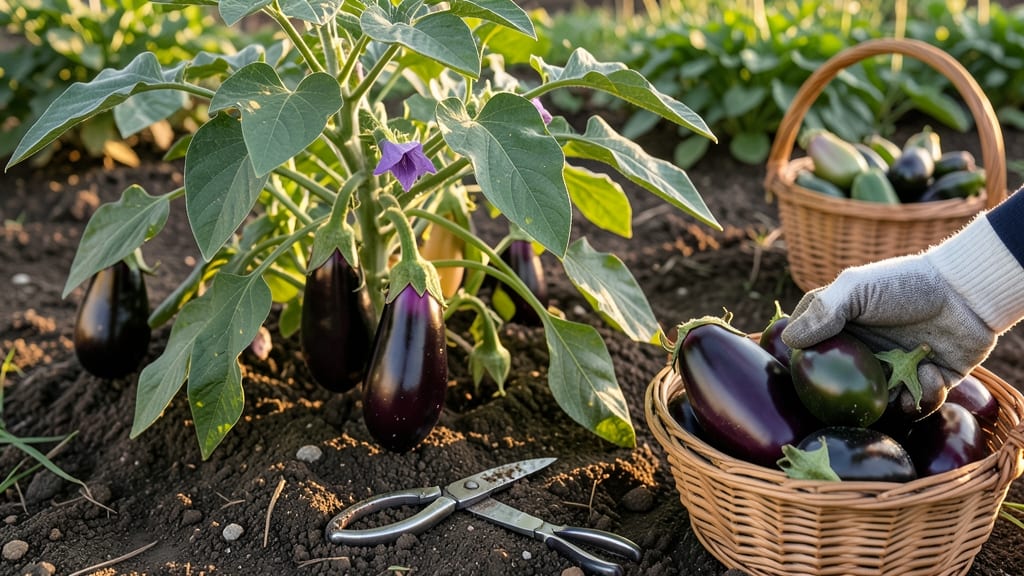
Picking eggplant from your garden at the right time ensures the best flavor, texture, and yield—so knowing when to pick eggplant makes all the difference.
Harvesting too early means bitter, seedy fruit, while waiting too long can turn your glossy 🍆 into a mealy mess. The key? Watching for three telltale signs: deep, vibrant color, a firm yet slightly yielding skin, and a clean snap at the stem.
Most gardeners in Zone 6a can expect their plants to produce ready-to-harvest eggplant between July and September, but timing depends on your variety and local weather. A morning pick after a cool night preserves flavor and firmness, while a hot afternoon can stress the fruit.
In this guide, I’ll walk you through the exact ripeness cues, the best time of day to harvest, and how to avoid common mistakes—so you never miss the perfect moment to bring those glossy beauties to the table.
How to check eggplant ripeness: the 3 key signs (color, size & firmness)
Eggplants are finicky about timing—pick too early, and you’ll end up with small, bitter fruit. Wait too long, and they turn seedy or mealy. The secret lies in mastering three key indicators: color depth, ideal size, and stem firmness.
These visual and tactile cues ensure you harvest at peak flavor and texture.
Most gardeners focus on color changes first, but size and firmness are equally critical. For example, a deep purple eggplant might still be underripe if it’s too small, while a white or striped variety needs the same firmness test.
Let’s break down each sign so you never miss the perfect moment.
| Sign | Ready Stage | Not Ready Stage | Pro Tip |
|---|---|---|---|
| 🌿 Color | Deep, glossy purple/white/striped | Dull, matte, or pale | Check stem end—it should yellow slightly. |
| 📏 Size | 6–9 inches long (varies by variety) | Small or still growing | Measure against a ruler—consistency matters more than exact inches. |
| ✂️ Firmness | Firm but yields slightly when pressed | Hard as a rock or mushy | Twist the stem—it should snap cleanly at the base. |
| 🌡️ Weight | Feels heavy for size | Light or hollow-sounding | Lift one—ripe eggplants surprise with weight. |
Start with color, as it’s the most obvious clue. A ripe eggplant’s skin should be deep and glossy, not dull or streaked. For purple varieties, think "eggplant-colored"—no pale patches. White or striped types should be uniformly bright, not yellowing.
Pro tip: Check the stem end—it often turns a faint yellow when the fruit is ready.
Next, verify size. Most standard eggplants hit their prime at 6–9 inches long, but dwarf varieties like ‘Fairy Tale’ stop at 4–5 inches.
Measure a few fruits—if they’re all consistently sized, it’s time to harvest. Skipping this step can leave you with oversized, seedy eggplants that lack flavor.
Finally, test firmness with your thumb. A ripe eggplant should feel firm but slightly yielding, like a ripe avocado. Press gently—if it leaves a faint thumbprint, it’s ready.
Avoid fruits that feel rock-hard (underripe) or mushy (overripe). Twist the stem near the base: it should snap cleanly without resistance.
One common mistake? Harvesting based on one sign alone. For example, a deep purple eggplant might still be small or soft. Always check all three indicators to avoid disappointment. If you’re unsure, err on the side of early harvesting—eggplants won’t ripen further once picked.
Regional factors can tweak timing too. In hot climates, eggplants mature faster (as early as 60 days), while cooler zones may need up to 90 days.
Watch your local last frost date—eggplants thrive in warm soil (70°F+), so plan accordingly. If frost looms, harvest even slightly underripe fruit to salvage your crop.
For heirloom or specialty varieties, consult seed packets for specific size guidelines. Some, like ‘Rosa Bianca,’ stay small and round, while others like ‘Ichiban’ grow long and torpedo-shaped.
Always tailor your checks to the variety you’re growing. Over time, you’ll develop a feel for what “ripe” means for your garden’s conditions.
Once you’ve confirmed ripeness, harvest with a sharp knife or pruners, leaving a 1-inch stem attached. This prevents rot and extends shelf life. Store eggplants in a cool, dark place (like a pantry) for up to 5 days.
For longer storage, refrigerate—but they’ll soften faster. Now you’re ready to enjoy that perfectly timed harvest! 🌱
Best time of day to harvest eggplant for maximum flavor & shelf life
Timing your eggplant harvest isn’t just about ripeness—it’s also about when you pick it during the day. Harvesting at the wrong time can cause bruising, moisture loss, or even accelerated spoilage.
For peak flavor and texture, aim to harvest your eggplant in the morning after the dew has evaporated but before the midday heat sets in. This window ensures the fruit is cool, firm, and packed with natural sugars.
The morning hours (6-9 AM) are ideal because the fruit hasn’t been exposed to prolonged sunlight, which can dehydrate the skin and reduce shelf life. If you must harvest later in the day, do so in the late afternoon (4-6 PM) to avoid the hottest part of the day.
Never harvest after sunset, as nighttime moisture can promote fungal growth and soften the fruit too quickly.
After harvesting, handle your eggplant with care to extend its shelf life. Use a sharp, clean pair of pruning shears or a knife to cut the stem, leaving a small portion attached.
This helps preserve the fruit’s moisture and prevents it from drying out. Avoid twisting or pulling the fruit, as this can cause internal damage and speed up spoilage.
Once picked, store your eggplant in a cool, dark place (like a pantry or refrigerator) for up to one week. If you notice any soft spots or wrinkling, use the fruit immediately—these are signs of overripeness.
For longer storage, wrap individual eggplants in paper towels to absorb excess moisture and place them in a perforated plastic bag.
Pro tip: If you’re harvesting multiple eggplants, prioritize the ones that are deepest in color and heaviest for their size. These are the ripest and will yield the best flavor.
Regular harvesting also encourages your plants to produce more fruit, so don’t wait too long between picks—especially during peak season (July-September).
By following these timing and handling tips, you’ll ensure your homegrown eggplants stay fresh, flavorful, and ready for your favorite recipes—without any of the common pitfalls of poor harvesting practices. Happy harvesting! 🍆