
Planting
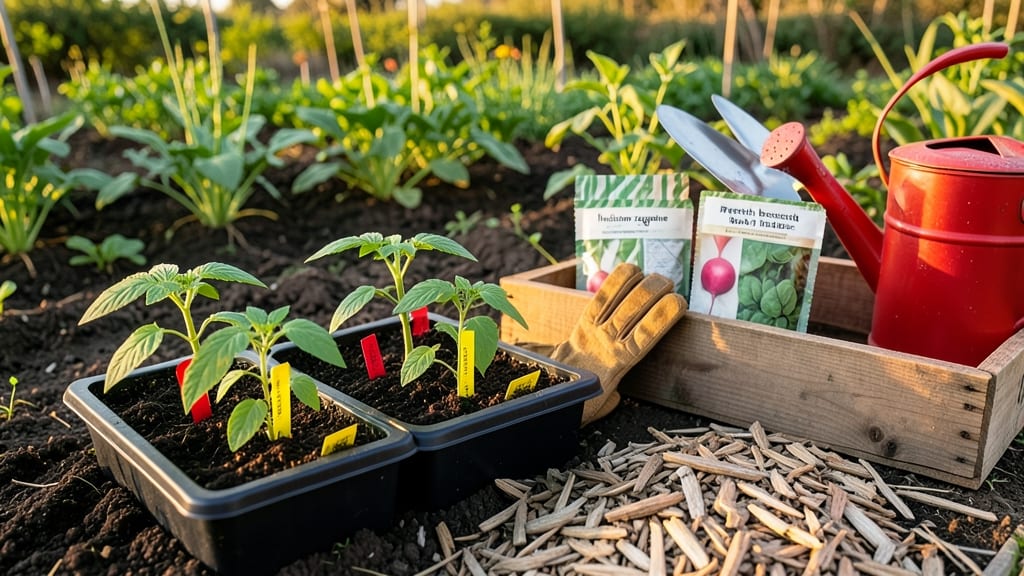
To plant a vegetable garden in Iowa, time your crops between mid-April and early June after the last frost—or late July for fall harvests.
Iowa’s unpredictable spring weather can turn a gardener’s excitement into frustration—plant too early, and frost will wipe out your seedlings; too late, and summer harvests shrink. But timing your 🥕 vegetable garden just right in USDA Zone 5b ensures bumper crops from spring greens to fall squash.
Cool-season crops like spinach and peas thrive when planted 4-6 weeks before the last frost, while tomatoes and peppers need warm soil and wait until 2-3 weeks after the danger has passed. Miss these windows, and you’ll end up with stunted plants or wasted seeds.
Below, I break down the exact planting schedule for Iowa’s climate, plus pro tips to stretch your growing season—so you can enjoy fresh harvests from May through October.
Iowa’s vegetable planting calendar: exact dates for cold-hardy vs. warm-season crops
Mastering Iowa’s planting calendar means knowing your last frost dates—typically April 15–May 1 in northern Iowa (Zone 5a) and April 1–April 15 in southern Iowa (Zone 5b).
These dates separate cold-hardy crops like peas and spinach from warm-season plants such as tomatoes and peppers, which need soil temperatures above 50°F to thrive. Iowa State University’s data shows that northern regions have a 10–14-day later planting window than southern areas, so adjust accordingly.
For cool-season vegetables, start seeds indoors 4–6 weeks before your average last frost date. In southern Iowa, that’s mid-March for hardy greens like kale and lettuce, while northern gardeners should wait until late March.
Direct-sow peas and radishes as soon as soil is workable (40°F), often by early April in southern Iowa and mid-April in the north.
Warm-season crops like tomatoes, peppers, and beans demand patience—wait until 2–3 weeks after your last frost date to transplant seedlings. In southern Iowa, this lands on May 15–20, while northern gardeners should hold off until May 25–June 1.
Soil temperature is critical: use a soil thermometer to confirm it’s consistently above 60°F before planting.
Fall planting is just as critical, with broccoli, carrots, and spinach thriving when sown 8–10 weeks before your first frost (typically October 15–November 1). Southern Iowa gardeners can push this to mid-November with row covers, while northern areas should aim for late September to avoid winter kill.
| Crop Type | Planting Window (Southern Iowa) | Planting Window (Northern Iowa) | Key Notes |
|---|---|---|---|
| Cold-Hardy Crops | Mid-March (indoors) / Early April (direct sow) | Late March (indoors) / Mid-April (direct sow) | Tolerates frost; sow every 2 weeks for succession. |
| Peas & Spinach | Early April (direct sow) | Mid-April (direct sow) | Harvest before bolting; mulch for moisture. |
| Warm-Season Crops | May 15–20 (after last frost) | May 25–June 1 (after last frost) | Soil must be 60°F+; use black plastic to warm soil. |
| Tomatoes & Peppers | Late May (transplant) | Early June (transplant) | Stake plants early; protect from late frosts. |
| Fall Crops | Late July–August (for harvest before frost) | Late June–July (earlier start) | Use row covers to extend season; harvest before hard frost. |
Don’t overlook succession planting—sow lettuce and radishes every 2 weeks from spring to fall to ensure a continuous harvest. For warm-season crops, stagger plantings of beans and cucumbers every 10–14 days to spread out the harvest and reduce pest pressure.
In Iowa’s shorter growing season, this tactic maximizes yield and minimizes waste.
Use row covers or cold frames to push your spring planting window 2–3 weeks earlier for crops like onions and carrots. These tools also shield late-summer seedlings from early fall frosts, letting you enjoy kale and swiss chard well into November.
Monitor local forecasts and adjust planting dates if unseasonable warmth or late frosts threaten your garden.
Iowa’s soil temperature fluctuates wildly in spring, so invest in a soil thermometer ($15–$20) to avoid planting warm-season crops too soon. For example, squash and melons won’t germinate below 65°F, so wait until late May in northern Iowa or mid-May in the south.
Patience here prevents seed rot and stunted growth.
Pro tip:
How to adjust planting times for Iowa’s microclimates and soil conditions
Iowa’s diverse landscapes—from urban heat islands in Des Moines to cooler river valleys along the Mississippi—create microclimates that can shift planting windows by 2–3 weeks. Even within USDA Zone 5b, your backyard’s soil type (sandy vs. loamy) and sunlight exposure demand strategic adjustments to maximize yields.
For example, sandy soils warm faster in spring but dry out quicker, while river valleys stay cooler longer, delaying planting by 10–14 days compared to upland areas.
To extend Iowa’s 165-day frost-free season, I rely on three game-changing tools: row covers (which add 2–4°F warmth), cold frames (extending spring planting by 4–6 weeks), and succession planting (staggering seeds every 2 weeks for continuous harvests).
These methods let me grow spinach in March and kale well into November—even in Zone 5b’s shorter growing windows.
For succession planting, I’ve found that sowing bush beans every 10 days from late May through July gives me harvests from July to September—doubling my yield. Similarly, lettuce seeded every 2 weeks from April to August ensures fresh greens until a hard frost.
This works best in loamy soils, which hold moisture longer for young seedlings.
One of my biggest season-extending wins? Using cold frames to plant broccoli and cabbage in early April. The frame adds 10–15°F warmth and lets me harvest 6–8 weeks earlier than outdoor plantings. Just be sure to vent the frame on 60°F+ days to avoid overheating seedlings.
Don’t overlook soil temperature—it’s the #1 factor I adjust for. For tomatoes and peppers, wait until soil hits 60°F (use a soil thermometer at 4-inch depth). In sandy soils, this happens by late April; in river valleys, it’s often mid-May.
Pro tip: Black plastic mulch can warm sandy soil 10°F faster than bare ground.
By combining these microclimate tweaks with succession planting, I’ve stretched Iowa’s growing season from 165 days to nearly 220 days—enough time for three full harvests of lettuce, spinach, and kale! The key? Observe your specific microclimate for 2–3 years, then adjust planting dates accordingly.