
Planting
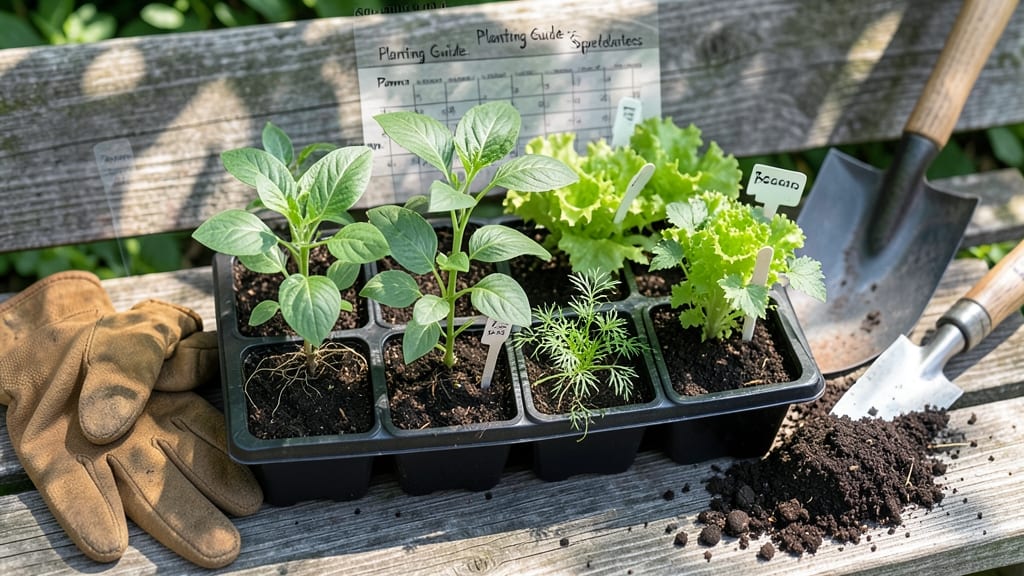
To plant a vegetable garden in NJ, aim for late April to early May for most warm-season crops 🌱 — but the exact timing depends on your microclimate, since coastal areas thaw weeks earlier than inland zones.
New Jersey’s unpredictable frost dates can make or break your vegetable garden—plant too early, and you risk losing crops to late frosts; too late, and you miss peak harvests. But with the right timing, you can grow a thriving garden year-round in NJ’s climate zones.
Whether you’re in Zone 6b or 7a, the key is tracking your local frost dates and adjusting for soil warmth. Cool-season vegetables like spinach and kale can handle early spring plantings, while tomatoes and peppers need warmer soil to thrive.
Below, I’ll break down the perfect planting windows for NJ’s most popular vegetables, plus how to extend your growing season with simple tricks that work even in unpredictable weather.
NJ frost dates by region: when to start planting for maximum yields
New Jersey’s diverse climate zones mean your frost dates can vary dramatically from Northern to Southern regions—sometimes by weeks. Understanding these differences is key to planting warm-season crops like tomatoes or cool-season greens at the perfect time.
The NJAES frost calculator (New Jersey Agricultural Experiment Station) is your best tool for pinpointing local frost dates, but here’s a region-by-region breakdown to get you started.
In Northern NJ (USDA Zones 6a-6b), like Bergen County, expect your last spring frost around April 15–May 1, while Southern NJ (Zones 7a-7b), such as Cape May, typically sees frost-free conditions by March 20–April 5.
These differences can mean the difference between a bountiful harvest and a wasted seed packet.
Use this comparison table to compare frost dates, ideal planting windows for warm-season and cool-season crops, and how to adjust your schedule based on your region. For example, tomatoes in Central NJ should wait until May 15, while spinach can often handle early April plantings.
| Region | Last Spring Frost | First Fall Frost | Warm-Season Start | Cool-Season Start |
|---|---|---|---|---|
| Northern NJ (e.g., Sussex, Passaic) | April 15–May 1 | October 10–15 | May 15–June 1 | March 20–April 10 |
| Central NJ (e.g., Mercer, Middlesex) | April 1–April 15 | October 15–20 | May 1–May 15 | March 25–April 5 |
| Southern NJ (e.g., Cape May, Atlantic) | March 20–April 5 | November 1–10 | April 15–May 1 | February 20–March 15 |
For warm-season crops, like peppers and eggplants, wait until the soil reaches at least 60°F and nighttime temperatures stay above 50°F. In Northern NJ, this usually means holding off until late May, while Southern NJ gardeners can start as early as mid-April.
Cool-season crops, such as lettuce and spinach, are far more forgiving. You can often plant them 4–6 weeks before your last frost date. For example, in Central NJ, that means sowing seeds by mid-March for an early spring harvest. Use row covers to extend these windows even further.
The NJAES frost calculator (available at njaes.rutgers.edu) lets you input your exact location for hyper-local frost date predictions. Simply enter your ZIP code, and it’ll generate 10-year averages for your area, including probability maps showing where late frosts are most likely.
This is especially useful for high-value crops like tomatoes, where a single late frost can wipe out your entire season.
Pro tip: If you’re in a microclimate (like a valley or coastal area), frost dates can shift even more. For example, coastal Southern NJ often enjoys 2–3 weeks longer growing seasons than inland areas due to moderating ocean breezes.
Observe your garden’s behavior for a few years to fine-tune these dates.
For fall planting, focus on cool-season crops like kale and radishes, which can handle light frosts. In Northern NJ, aim to plant by August 1 for a harvest before the first frost, while Southern NJ gardeners can push it to September 15.
Use cold-hardy varieties and mulch to protect tender plants.
Remember, these dates are averages, not guarantees. Always have a backup plan, like frost cloth or a greenhouse, for those unpredictable NJ spring nights. With the right timing, you’ll be enjoying homegrown tomatoes by July and fresh spinach well into November.
Best vegetables to plant in NJ by season: a month-by-month guide
New Jersey’s growing season spans from late winter to early fall, but the key to success lies in knowing exactly when to plant each vegetable. Cool-season crops like spinach and kale thrive in early spring and fall, while heat-lovers such as tomatoes and peppers need warm soil to germinate.
Below, I’ll break down the best planting times by month, including indoor starts and outdoor sowing for optimal yields.
For gardeners in USDA Zones 6b-7a, timing is critical. Coastal areas (like Cape May) may have earlier last frosts (mid-April), while inland regions (like Sussex County) often see frost until mid-May. Always check the NJAES frost date calculator for your exact location before planting warm-season crops outdoors.
| Month | Vegetable | Planting Method | Notes |
|---|---|---|---|
| March | Spinach, Kale, Peas | Direct sow outdoors | Use row covers for frost protection |
| April | Lettuce, Radishes, Carrots | Direct sow outdoors | Wait until soil reaches 50°F |
| May | Tomatoes, Peppers, Eggplant | Transplant seedlings outdoors | Use black plastic mulch to warm soil |
| June | Green Beans, Cucumbers, Squash | Direct sow outdoors | Succession plant every 2 weeks |
| July-August | Broccoli, Cabbage, Beets | Direct sow outdoors | Use shade cloth for summer heat |
| September | Spinach, Arugula, Turnips | Direct sow outdoors | Extend season with cold frames |
Start warm-season crops like tomatoes and peppers indoors in March for transplanting after the last frost. For cool-season crops, direct sow in early spring (March-April) or late summer (August-September) for fall harvests. Use succession planting for fast-growing crops like lettuce and radishes—sow every 2-3 weeks for continuous harvests.
Extend your growing season with row covers or cold frames to protect tender crops. For example, plant spinach in September and cover it with frost cloth to harvest into December. Similarly, kale and carrots sweeten after frost, making them perfect for fall/winter planting.
Heat-tolerant varieties are a must for NJ’s summers. Choose heat-set tomatoes like 'Solar Fire' or 'Heatmaster' that produce even when temps exceed 90°F. For peppers, opt for long, slender varieties like 'NuMex Sandia' that handle humidity better than bush types.
Always mulch heavily to retain moisture and cool roots during heatwaves.
Don’t forget to plan for fall harvests! Plant broccoli and cabbage in July-August for fall harvests before hard frosts. Use black plastic mulch to warm soil early in the season and straw mulch to protect crops from late-season rains.
With these strategies, you can enjoy fresh vegetables from spring to frost in your NJ garden! 🌱