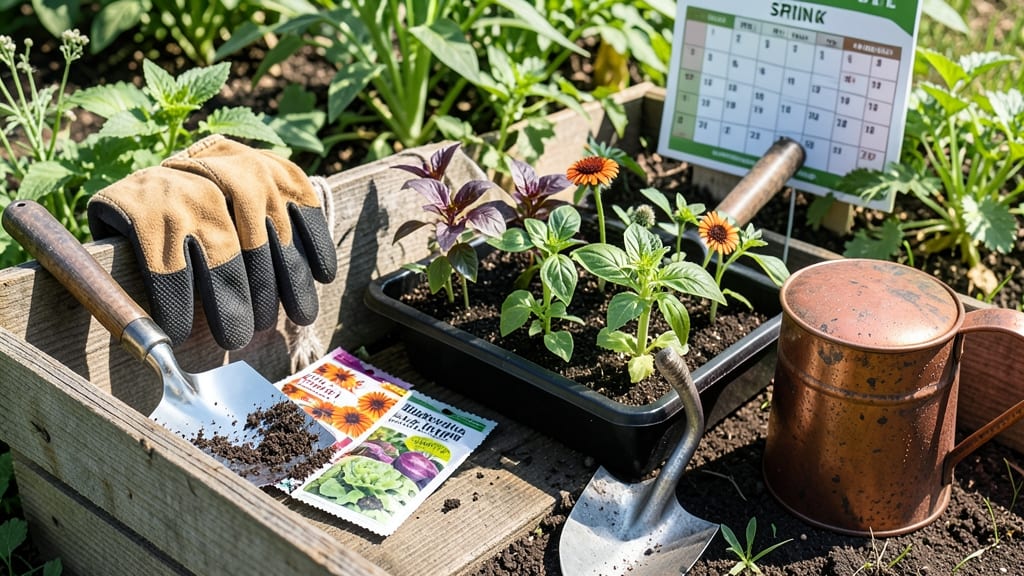
Planting a garden in Missouri at the right time means the difference between a bountiful harvest and a sad pile of frost-nipped seedlings.
Missouri gardeners know timing is everything—plant too early and frost will ruin your hard work, but wait too long and you’ll miss peak harvest season. With last-frost dates varying by county, how do you guarantee a zero-risk planting schedule?
From the cooler USDA Zone 5b of northern Missouri to the warmer Zone 7a in the south, the ideal window shifts dramatically. In St. Louis, you might plant tomatoes by April 15, while Kansas City gardeners should wait until May 1.
This guide breaks down the exact dates by region, plus how to adjust for microclimates and unexpected frost.
You’ll learn when to start seeds indoors, which crops thrive in Missouri’s short growing season, and how to extend your harvest with fall planting. No more guessing—just data-backed timing for your General Missouri Garden 🌱 to flourish.
🌱
When to Plant General Missouri Garden Missouri Garden
Jan
❄️
Feb
🌱
Mar
🌱
Apr
🌱
May
🌱
Jun
🌱
Jul
☀️
Aug
☀️
Sep
🍂
Oct
🍂
Nov
🍂
Dec
❄️
Missouri last-frost dates by county: exact planting windows for zero risk
Missouri’s last-frost dates can shift by weeks between northern and southern counties, making precise planting timing critical for success. Whether you're in St. Louis (USDA Zone 6b) or Kansas City (Zone 5b), knowing your county’s exact frost window ensures your cool-season crops survive and your warm-season plants thrive.
Below, I’ve compiled historical frost data from the Missouri State Climate Office to give you a zero-risk planting schedule tailored to your location.
For warm-season crops like tomatoes and peppers, wait until 2-3 weeks after your county’s last frost date. Cool-season crops, such as lettuce and spinach, can often handle light frosts, so planting 4-6 weeks before the last frost is ideal.
The table below breaks down average last-frost dates by county, along with first-frost dates for fall planting. Use these as your planting benchmarks to avoid frost damage and maximize yields.
🌱 Pro Tip: Bookmark the Missouri Climate Center’s frost map for real-time updates. Even a single night below 32°F can devastate tender seedlings, so always verify with local data before planting.
| County |
USDA Zone |
Avg. Last Frost (Spring) |
Avg. First Frost (Fall) |
Frost-Free Days |
Plant Warm Crops After |
Plant Cool Crops Before |
| St. Louis City |
6b |
April 10 |
October 25 |
195 days |
April 24 |
March 1 |
| Kansas City |
5b |
April 15 |
October 15 |
185 days |
May 1 |
March 10 |
| Sedalia |
6a |
April 5 |
October 20 |
200 days |
April 19 |
February 28 |
| Springfield |
6b |
April 8 |
October 22 |
198 days |
April 22 |
March 5 |
| Columbia |
6a |
April 3 |
October 18 |
202 days |
April 17 |
February 25 |
| Joplin |
7a |
March 25 |
November 5 |
225 days |
April 8 |
February 15 |
| Cape Girardeau |
6b |
April 12 |
October 28 |
200 days |
April 26 |
March 3 |
| St. Joseph |
5b |
April 18
How to adjust planting dates for Missouri’s microclimates and frost exceptions
Missouri’s diverse geography creates microclimates that can shift planting windows by 2-3 weeks. Urban heat islands in St. Louis can be 5-10°F warmer than rural areas, while river valleys like the Missouri Bootheel experience earlier frost.
These variations mean a one-size-fits-all approach won’t work—your neighbor’s perfect timing might spell disaster for your garden.
Even within counties, elevation changes of just 100 feet can delay frost by 5-7 days. High-elevation areas like the Ozarks often see frost 10 days later than lowland regions.
Without adjustments, you risk frost damage or stunted growth from planting too early—or missing the ideal harvest window by waiting too long.
⚠️ Missouri Microclimate Mistakes to Avoid
- Urban Areas: Planting warm-season crops before May 15 risks late frost—wait for soil temps above 60°F.
- River Valleys: Frost can linger 3-5 days longer—use row covers for early plantings.
- High Elevations: Adjust planting dates 7-10 days later than lowland guides suggest.
Pro Tip: Check NOAA frost alerts 2 weeks before planting to avoid surprises.
The 3-5-7 rule is your best tool for microclimate adjustments. For every 100 feet of elevation gain, delay planting by 3 days. Urban areas may need 5-day adjustments later than rural guides, while river valleys could require 7-day delays.
Start with cold-hardy crops like kale or spinach—they tolerate 28°F—to test your local microclimate before committing to heat-loving tomatoes or peppers.
Cold-hardy crops are your secret weapon for early planting. Varieties like peas (32°F tolerance) and broccoli (25°F tolerance) can go in 4-6 weeks before your average last frost.
Use the 50°F soil temperature as your guide—most seeds won’t germinate below this. For high-risk areas, try starter plants under row covers to extend your growing season by 2-3 weeks.
NOAA’s Frost/Freeze Forecast (available at weather.gov) is your real-time planting insurance. Set alerts for your ZIP code and adjust planting dates dynamically. For example, if NOAA predicts 32°F temps 5 days after your planned tomato transplanting, delay by 10 days or use frost cloth.
Pair this with a garden thermometer to track soil temps—60°F+ is ideal for warm-season crops.
Don’t let microclimates frustrate you—turn them into advantages. South-facing slopes warm up faster, while north-facing gardens stay cooler. Plant heat-loving crops like okra or sweet potatoes on sunny slopes and cool-season greens in shaded areas.
With these adjustments, you’ll maximize your harvest and minimize frost risks across Missouri’s diverse growing zones.
★★★★★4.8(5 reviews)
|