
Planting
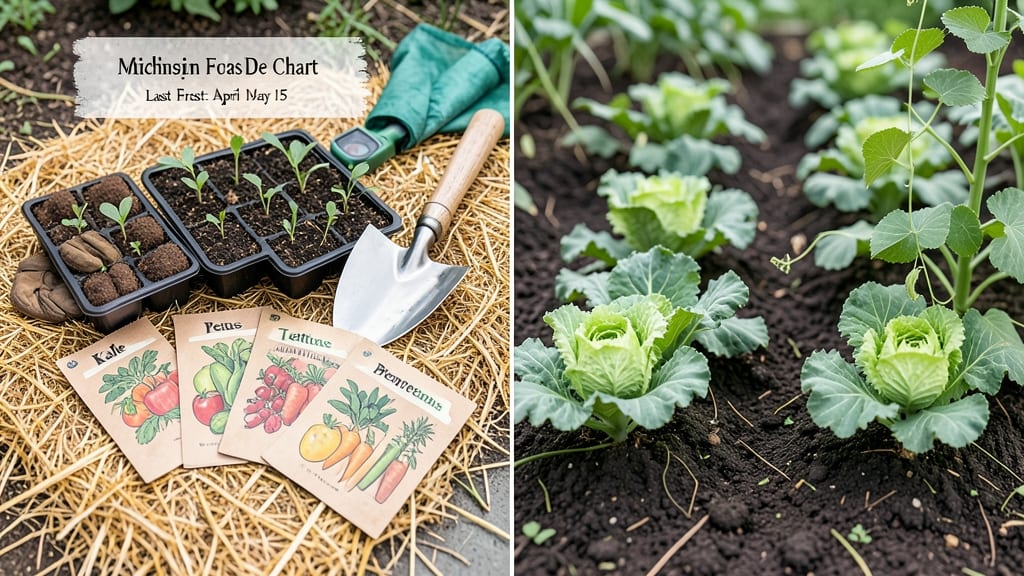
Planting your garden in Michigan at the right time means the difference between a thriving harvest and wasted effort—so timing is everything for USDA zones 5b-6b.
Michigan’s short growing season means timing your garden planting can mean the difference between a bountiful harvest and a disappointing flop—so don’t guess, plan strategically!
With last frosts lingering into mid-April in Northern Michigan and first frosts creeping in by mid-October, you’ve got just 165 frost-free days to work with.
That’s why knowing when to start seeds indoors, when to transplant outdoors, and which crops thrive in early spring versus late summer is the key to maximizing your yield.
In this guide, I’ll walk you through the exact planting windows for cool-season crops like spinach and peas, warm-season favorites like tomatoes and peppers, and even how to stretch your season with row covers and cold frames—so you can grow more, waste less, and enjoy fresh produce straight from your garden.
Michigan’s planting timeline by USDA zone 4B/5A: when to start seeds indoors and outdoors
Michigan’s USDA Zones 4B/5A give us a short but productive growing season, where precise timing separates a thriving garden from a failed one. Northern regions like Traverse City and Detroit (Zone 4B) face earlier frosts, while Southern areas like Ann Arbor and Kalamazoo (Zone 5A) enjoy slightly longer windows.
Planning starts indoors in February-March for frost-sensitive crops, while cool-season veggies can go straight into the soil as soon as the ground thaws.
Your last-frost dates are critical: Northern Michigan averages May 10-20, while Southern Michigan typically sees April 25-May 10. First frosts arrive October 10-20 in the north and October 20-30 in the south.
Use these dates to calculate when to start seeds indoors, transplant seedlings, and direct-sow outdoors for maximum success.
🌱 Cool-season crops like spinach, peas, and lettuce thrive when planted 4-6 weeks before your last frost. Warm-season favorites such as tomatoes, peppers, and cucumbers need soil temperatures above 60°F—wait until May 20-June 1 in Northern Michigan and May 1-June 1 in Southern Michigan. Frost-sensitive plants like eggplants and basil must wait until June 15 or later.
| Month | Indoor Start (Weeks Before Last Frost) | Outdoor Planting (After Last Frost) | Crops to Plant | Notes |
|---|---|---|---|---|
| February | 8-10 | N/A | Tomatoes, Peppers, Eggplants | Start indoors under grow lights |
| March | 6-8 | N/A | Basil, Cucumbers, Squash | Hardening off begins mid-March |
| April | 4-6 | Early April (cool crops) | Spinach, Peas, Lettuce, Kale | Direct sow after soil reaches 40°F |
| May | 2-4 | After May 10 (Zone 4B) / May 1 (Zone 5A) | Tomatoes, Peppers, Beans, Carrots | Wait for soil >60°F for warm crops |
| June | N/A | June 15+ (frost-sensitive) | Eggplants, Basil, Melons | Use row covers for early starts |
| July-August | N/A | 4-6 weeks before first frost | Spinach, Radishes, Lettuce | Fall crops need cool nights |
For Northern Michigan, prioritize early starts indoors in February for tomatoes and peppers, as your shorter season demands a head start. In Southern Michigan, you can afford to wait until late March for indoor starts, giving you more flexibility.
Always use row covers or cold frames to extend your season by 2-3 weeks if late frosts threaten.
My top tip
How to adjust planting dates for Michigan’s unpredictable weather: frost risks and soil temperature tips
Michigan’s unpredictable spring weather can turn your planting plans upside down in a flash. One day it’s warm enough for tomatoes, the next you’re scrambling to cover seedlings with frost cloth. The key? Flexible planning based on soil temperature and 10-day forecasts—not just the calendar.
Even experienced gardeners in USDA Zones 4B-5A adjust their schedules yearly. Northern Michigan’s Traverse City often sees frost until May 15, while Detroit’s last frost averages April 20.
Southern regions like Kalamazoo might be frost-free by April 10, but don’t bet on it—late frosts happen every 3-5 years.
Michigan’s average last frost varies by 2-3 weeks regionally. Never plant warm-season crops (tomatoes, peppers, cucumbers) until soil stays above 60°F for 5+ days. Use row covers or cold frames to extend your window by 2-4 weeks—but remove them before temps hit 85°F to avoid overheating.
Start by testing your soil temperature with a soil thermometer ($10 at garden centers).
For warm-season crops, wait until readings hit 60°F at 4 inches deep—tomatoes and peppers need 70°F to thrive. Cool-season crops like kale or spinach can handle 40-50°F soils, but they’ll grow slower in cold dirt.
Use the 10-day forecast rule to time your planting: If the forecast shows consistent 50°F+ nights for 10 days, it’s safe to plant frost-sensitive transplants.
For direct-sown seeds (like beans or squash), wait until the minimum nighttime temp is 55°F—check the National Weather Service for your local frost advisory dates.
Extend your season with season-extending tools: Cold frames (unheated glass boxes) can add 4-6 weeks of growing time in spring/fall, while floating row covers protect against light frosts (28-32°F).
For early starts, try hoop houses or low tunnels—they can push spinach harvests into June instead of May.
Prepare a weather-contingency checklist: ☑️ Keep frost cloth and row covers ready by April 15 ☑️ Have seedling heat mats for slow starts in cold soil ☑️ Monitor MSU Extension’s frost maps (updated weekly) ☑️ Plant succession crops (like bush beans) every 2 weeks to hedge bets ☑️ Mark planting dates on a garden journal to track yearly adjustments