
Pests
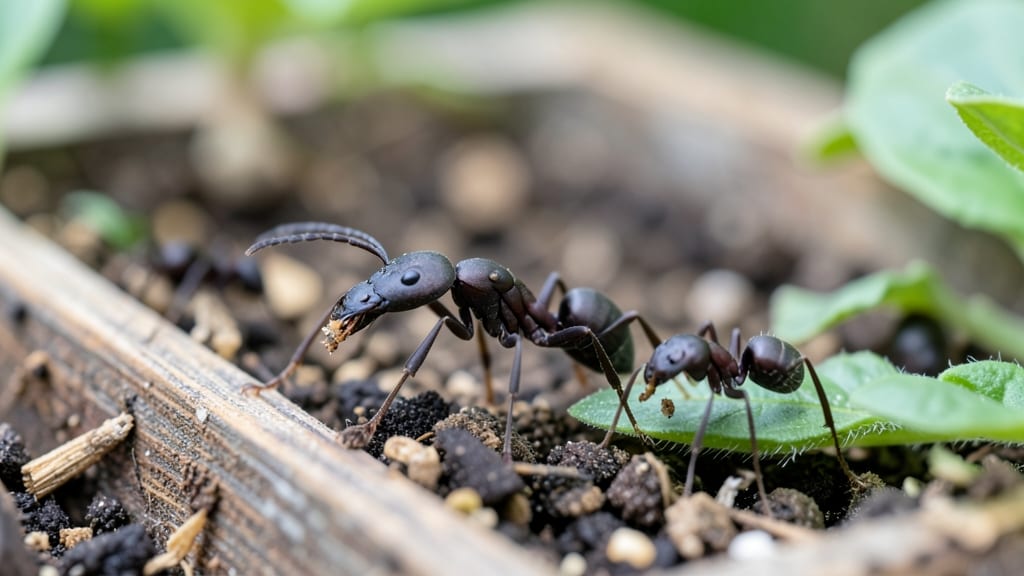
Ants in raised garden beds are usually harmless as they farm aphids and collect seeds, but they can become a nuisance. The best approach is using natural repellents like diatomaceous earth, citrus peels, or cinnamon, combined with trail-blocking methods such as sticky barriers or soapy water sprays for lasting control.
These tiny workers actually play an important role in your garden's ecosystem by controlling pests like aphids and dispersing seeds. 🌱 However, their presence can still be frustrating when they create visible trails or disturb your plants.
I've found that the key to managing them lies in disrupting their foraging patterns without harming the environment.
For example, spreading crushed citrus peels around the bed creates a natural scent barrier that ants avoid, while a mixture of dish soap and water sprayed along their trails can break their chemical communication lines.
Another effective strategy is to place bait stations away from the garden—ants will carry toxic substances back to the colony, reducing their numbers over time. The goal isn't elimination but creating an environment where ants choose to forage elsewhere.
This balanced approach protects both your plants and the garden's natural balance.
💡 In This Article
- Why Ants Invade Raised Garden Beds
- Effective Natural Ant Control Methods for Gardens
Why ants invade raised garden beds
Ants target raised garden beds because these environments offer ideal conditions for their survival.
The elevated structure provides natural shelter from ground predators and creates microclimates with consistent moisture levels—especially important for species like pavement ants or sugar ants that thrive in slightly damp conditions. 🌱 The porous soil in raised beds also allows ants to establish tunnels more easily than in compacted ground soil, making it simpler for them to farm aphids (their primary food source) and harvest seeds.
Here's how they locate food: Ants use pheromone trails that create invisible chemical highways. When they discover a food source like aphids (which they "farm" for honeydew) or spilled seeds, they release scent markers that guide thousands of workers to that spot within minutes.
This is why you'll often see sudden ant invasions after planting new seeds or noticing aphid colonies—it's not random, it's a coordinated response to a food bonanza.
The ecological role of ants in gardens is fascinating. They act as natural pest controllers by preying on aphids, which many gardeners consider harmful. However, their presence can become problematic when they create visible trails on your produce or disturb seedlings.
The key difference between ground-level soil and raised beds is that elevated beds offer better drainage and aeration, which ants prefer for their colonies. This is why you might notice more ant activity in raised beds compared to in-ground plots.
Moisture plays a critical role too. Raised beds tend to retain moisture differently than ground soil, creating pockets that ants find attractive. For example, after watering, the edges of raised beds often stay damp longer, providing perfect conditions for ant colonies to thrive.
This is why you'll often see ant trails appearing after irrigation or rainfall—it's not just coincidence, it's their response to ideal moisture levels.
Another factor is the presence of aphids, which ants actively "farm" for their honeydew secretion. In a raised bed, aphids have easier access to tender new growth, making them more abundant.
This creates a positive feedback loop: more aphids attract more ants, which then protect the aphids from predators like ladybugs. Understanding this relationship helps explain why ant populations can explode seemingly overnight in your garden.
What most gardeners don't realize is that ants actually improve soil quality through their tunneling activities. Their burrows aerate the soil and mix organic matter, creating a more fertile environment. However, their presence can become a nuisance when they create trails on your vegetables or disturb young plants.
The solution lies in managing their activity without eliminating them completely—after all, they're performing valuable ecosystem services in your garden.