
Tools
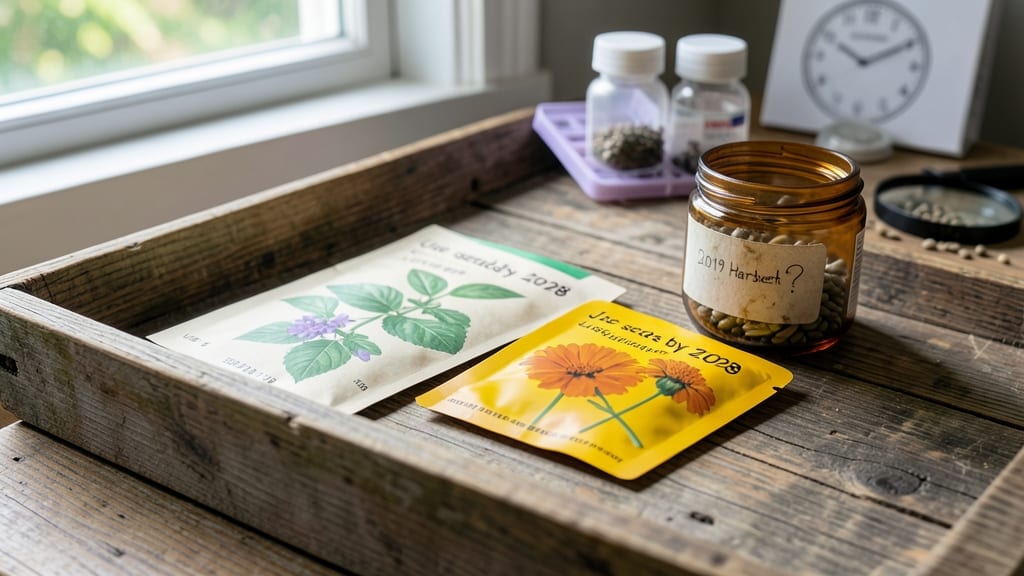
Yes, garden seeds do expire, with their viability typically lasting between 1-5 years depending on the seed type, how they're stored, and moisture levels. Over time, seeds lose their ability to sprout, particularly when exposed to heat or humidity, though proper storage can dramatically preserve their freshness.
Seed expiration isn't just about age—it's a battle against moisture, oxygen, and temperature. 🔥 For example, delicate seeds like lettuce or onions may only stay viable for 1-2 years, while hardy varieties like beans or peas can last 5 years or more.
The key is keeping them in a cool, dry place, ideally in airtight containers with desiccant packets to absorb any lingering dampness. Even a small increase in humidity can trigger metabolic activity that ages seeds faster.
What's interesting is how seeds "age" differently based on their natural dormancy. Some, like tomatoes, have built-in mechanisms to resist degradation longer, while others, such as carrots, show rapid decline if not stored properly.
I always recommend testing old seeds before planting—it's the only way to know for sure if they'll still germinate successfully.
💡 In This Article
- Seed Viability Factors: How Storage Affects Longevity
- Testing Old Garden Seeds: Simple Germination Checks
Seed viability factors: how storage affects longevity
Seed degradation starts at the cellular level, where moisture triggers metabolic activity that depletes stored nutrients. Even seeds in perfect dormancy have a tiny amount of water—around 5-10%—but when humidity rises above 30%, enzymes activate and accelerate aging.
This is why seeds stored in damp basements or unsealed containers lose viability faster. For example, onion seeds (which naturally contain 50% moisture when fresh) can drop to 0% germination in just 1 year if not dried properly, while bean seeds (typically 10-12% moisture) may last 5+ years.
Temperature fluctuations create another major threat. Seeds stored above 75°F experience a 2-3x faster degradation rate due to increased enzyme activity, while freezing temperatures (32°F or below) can actually preserve them by slowing metabolism.
The ideal range is 32-40°F—this is why refrigerators or root cellars work better than attics. Seed coatings also play a role: untreated seeds lose viability 20-30% faster than those with protective polymer layers, which block oxygen and moisture.
Oxygen exposure is the silent killer—seeds "breathe" through microscopic pores, and prolonged air contact causes oxidative damage to cell membranes. That's why airtight containers with desiccant packets (like silica gel) can extend shelf life by 30-50%.
For instance, a packet of tomato seeds stored in a sealed jar with a desiccant might last 4 years, while identical seeds in a cardboard box degrade in 2 years. Even "vacuum-sealed" packets aren't perfect—they still allow trace oxygen, so adding a small desiccant improves results.
Seed dormancy mechanisms vary wildly between species. Some, like peas and beans, have hard seed coats that resist moisture absorption, while others (lettuce or basil) lack this protection.
The hardiness zone of a plant also hints at seed longevity—northern-adapted seeds (e.g., kale or spinach) often outlast tropical varieties (okra or sweet potatoes) by 1-2 years. This is because cold-adapted seeds evolved to survive longer in harsh conditions.
Light exposure, though often overlooked, matters too. Photoperiod-sensitive seeds (like sunflowers) degrade faster when exposed to light, as it triggers premature germination hormones. That's why seed packets recommend storing them in opaque containers. Even 10 minutes of direct sunlight daily can reduce viability by 15% over a year.
The combination of poor storage (heat + humidity + light) creates a "triple threat" that explains why some old seeds look fine but refuse to sprout.
What most gardeners don't realize is that seed age isn't linear. The first 6 months see minimal viability loss, but after 1 year, degradation accelerates exponentially. This is why seed companies often print "best by" dates—it's not a hard cutoff, but a 50% viability benchmark.
For example, a 2-year-old carrot seed packet might still germinate at 60%, but by 3 years, that drops to 20%. Understanding this curve helps explain why some "old" seeds still work while others fail completely.