
Picking
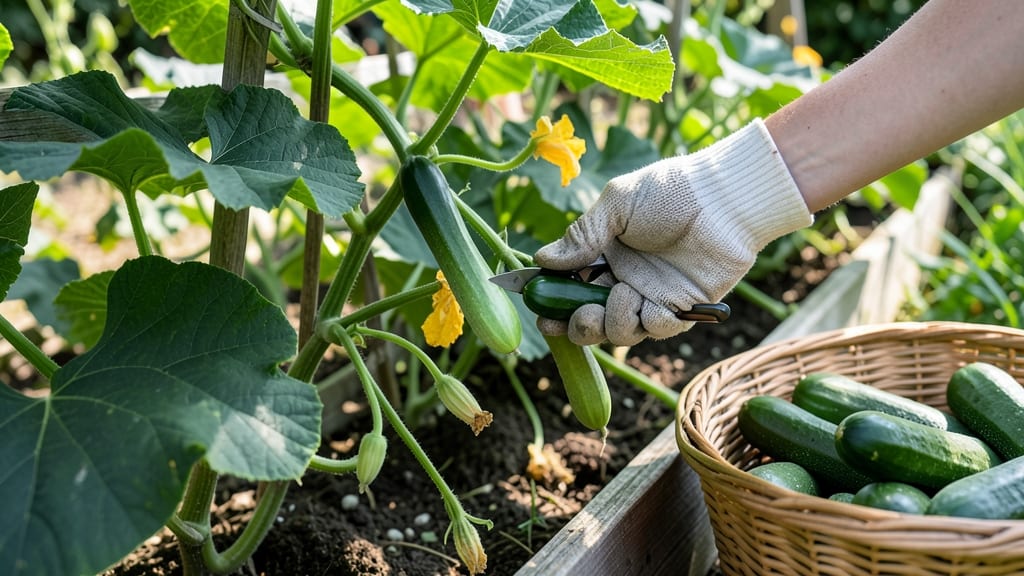
Harvest cucumbers from your garden when they reach 6 to 8 inches—that’s the sweet spot for crisp, flavorful slices straight from the vine 🥒.
Picture this: you’ve waited months for your cucumbers to grow, only to pick one that’s bitter, seedy, or rock-hard. Or worse, you miss the window and end up with overripe, mushy cucumbers that taste like water.
The difference between a perfect harvest and a disappointing one often comes down to timing—and knowing exactly when to pluck them.
Cucumbers don’t ripen after picking, so size, color, and texture are your best clues. A firm, deep-green cucumber with a slight give when gently squeezed is ready to go.
But here’s the kicker: slicing types and pickling varieties have different ideal sizes, and harvesting at the right time keeps your plants producing more instead of burning energy on overgrown fruit.
In this guide, I’ll walk you through the exact visual cues to watch for, how to adjust for your climate, and why picking at the right moment means fewer pests, better flavor, and a garden that just keeps giving all season long.


How to identify the perfect harvest time for cucumbers
Knowing when to harvest cucumbers from your garden transforms a guessing game into a rewarding routine. The difference between a crisp, sweet cucumber and a bitter, seedy one often comes down to timing—just a few days can change everything.
Whether you're growing slicing varieties like 'Straight Eight' or pickling types like 'Boston Pickling,' mastering these visual cues ensures you never miss peak harvest season.
Start by checking the cucumber's size, which varies by type. Most slicing cucumbers are ready at 6–8 inches, while pickling varieties often mature at 2–4 inches. But size isn’t the only clue—pay attention to the stem end and skin texture, too.
These details reveal whether your cucumber is at its prime or past its peak.
A yellow or brown stem end is your first signal that a cucumber is ready. This "blossom end" changes color as the fruit matures, signaling it’s time to pick. For slicing cucumbers, aim for a deep green color and a firm but slightly yielding skin.
Gently press your thumbnail into the cucumber—if it leaves a slight dent but doesn’t puncture the skin, it’s perfect. Overripe cucumbers become soft, wrinkled, and seedy, while underripe ones stay hard and pale.
Harvesting at the right time isn’t just about taste—it’s about encouraging your plant to produce more. Cucumbers left on the vine too long divert energy into seed development, reducing future yields. I’ve found that picking every 2–3 days keeps my plants productive all season.
Use a sharp knife or pruners to avoid damaging the vine, and always cut just above a leaf node to promote new growth.
Seasonal timing matters too. In USDA Zone 6a, cucumbers typically reach harvest time between June and September, but this varies by variety and climate. Early-season varieties like 'Early Green Tendril' mature faster (50–55 days), while heirloom types like 'Lemon Cucumber' take 70–75 days.
Check your seed packet for specific days-to-maturity guidelines, then adjust your harvest schedule accordingly.
Don’t overlook the morning harvest habit—this is when cucumbers are coolest and crispest. Heat during the day can make them softer and less flavorful. I always grab my basket first thing in the morning, shaking off any dew before storing them in the fridge.
Pro tip: Place a damp paper towel in your harvest container to keep cucumbers fresh longer, reducing moisture loss.
If you’re growing vertical cucumbers on a trellis, check the undersides of leaves for hidden gems. Some varieties, like 'Marketmore 76,' produce cucumbers that curl upward, making them easy to miss.
A quick glance at the vine’s growth pattern can reveal where new cucumbers are forming—harvesting these promptly ensures you don’t miss a single one.
For pickling cucumbers, timing is even more critical. These tiny cucumbers should be harvested when they’re 1–2 inches long and still firm. If you wait too long, they’ll grow too large for pickling jars.
I like to harvest pickling cucumbers every other day to ensure a steady supply for fermenting. Store them in a cool, dark place until ready to use, as they won’t keep as long as slicing types.
One common mistake? Ignoring the plant’s signals. If your cucumber vine stops producing flowers or leaves
Why harvesting at the right time maximizes yield and flavor
Harvesting cucumbers at the wrong stage can turn your garden's bounty into disappointment. When you leave them too long on the vine, they become seedy, bitter, and watery, while picking too early means underdeveloped, bland flavors.
The key lies in understanding how cucumbers grow and how your actions influence their taste, texture, and future production. Let's explore why timing matters and how to keep your plants producing all season.
Cucumbers are rapidly growing fruits that develop best when harvested at their peak. When you pick them at the right time, you're not just getting the best flavor—you're also encouraging the plant to produce more.
This is because cucumber plants respond to regular harvesting by redirecting energy from seed development back into new fruit growth. The science behind this is simple: hormonal signals trigger the plant to focus on producing additional cucumbers when existing ones are removed.
Leaving cucumbers on the vine too long leads to overripe conditions that affect both taste and plant health. Overripe cucumbers develop hard, seedy centers and a bitter flavor due to increased cucurbitacin content—a natural compound that becomes more concentrated as the fruit matures.
Additionally, overripe cucumbers compete for nutrients, weakening the plant and reducing overall yield. This is why frequent harvesting is essential for maintaining a steady supply of fresh, crisp cucumbers.
⚠️ callout warning ⚠️
⚠️ Warning: Overripe Cucumbers Harm Your Plant
Leaving cucumbers on the vine past their prime causes:
- ✖️ Bitter taste from excess cucurbitacin
- ✖️ Reduced yield as plant focuses on seed development
- ✖️ Disease risk from overloaded vines and poor air circulation
Pro Tip: Check cucumbers every 2-3 days during peak season to avoid missing the perfect harvest window.
Underripe cucumbers, on the other hand, lack the full development of sugars and cell structure that create that satisfying crunch. They often have thin skins and pale colors, indicating they haven't reached their optimal flavor profile.
When you harvest too early, you miss out on the peak sweetness and crispness that makes homegrown cucumbers so rewarding. Additionally, underripe cucumbers may continue growing on the vine, leading to uneven sizes and shapes, which can be less appealing for both fresh eating and preserving.
Regular harvesting plays a crucial role in maximizing your cucumber yield. When you remove ripe cucumbers consistently, you send a signal to the plant to produce more flowers and fruits. This continuous cycle keeps your cucumber plants in peak production mode throughout the growing season.
Many gardeners report 2-3 times more cucumbers when they harvest frequently compared to those who wait until the cucumbers are fully mature. This approach also helps prevent disease pressure by reducing humidity around the vines and improving air circulation.
To maintain optimal flavor and texture, always harvest cucumbers in the early morning when they're cool and crisp. Use a sharp pair of pruning shears or a knife to cut the cucumber from the vine, leaving a small portion of the stem attached.
This method reduces damage to the plant and encourages faster regrowth. By following these simple steps, you'll enjoy a steady supply of delicious cucumbers all season long, with minimal waste and maximum satisfaction.