
Planting
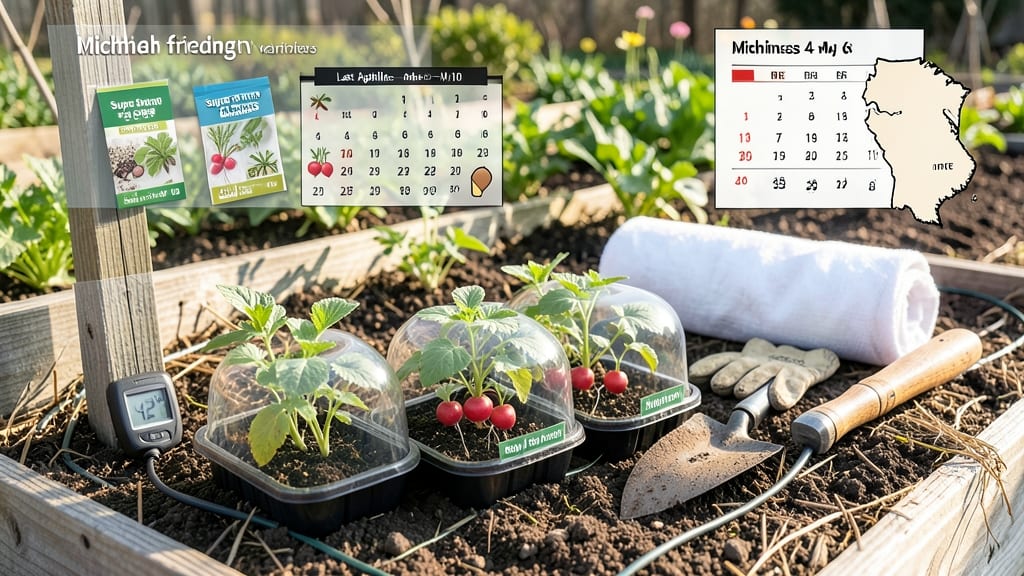
Planting a garden in Michigan at the right time means catching the narrow window between frost and summer heat — a balance that separates thriving plants from wasted effort.
Michigan’s unpredictable spring weather can turn a gardener’s excitement into frustration—planting too early risks frost damage, while waiting too long shortens the growing season. Timing your garden correctly means the difference between a bountiful harvest and wasted seeds.
Cool-season crops like lettuce and peas can handle Michigan’s late April chill, while tomatoes and peppers need soil temperatures above 55°F to thrive. The key is knowing your USDA zone and adjusting for early or late years.
Below, I break down the exact planting windows by crop, how to prep your soil for spring, and the three biggest mistakes Michigan gardeners make when timing their plantings.
Michigan’s frost-free dates by USDA Hardiness Zone (2024 guide)
Michigan spans USDA Hardiness Zones 4a through 6b, meaning frost dates vary dramatically from the Upper Peninsula to southern counties.
Knowing your last average frost date is critical—planting warm-season crops like tomatoes too early in Zone 4a risks frost damage, while waiting too long in Zone 6b shortens your growing season. Historical data shows these dates can shift by 2-3 weeks year to year, so flexibility is key.
For cool-season crops (spinach, peas, lettuce), you can start seeds indoors 6-8 weeks before your last frost or direct-sow as early as 4 weeks before in warmer zones. Warm-season crops (peppers, cucumbers, squash) must wait until 2 weeks after your last frost, when soil temperatures consistently reach 60°F+.
Michigan’s first fall frost also varies—typically late September in the north to mid-October in the south.
Use this summary table to find your zone’s average frost dates, then adjust based on 5-year trends in your area. For example, Traverse City (Zone 5b) averages its last frost on May 15, but 2023 saw it delayed until May 28.
Always check local weather forecasts and consider microclimates (urban areas warm faster than rural ones).
| Zone | Avg Last Frost | Avg First Frost | Growing Season | Cool-Season Start | Warm-Season Start |
|---|---|---|---|---|---|
| 4a (UP, Northern MI) | May 20 | Sep 20 | 120 days | Apr 15 (indoors) | Jun 5 |
| 5a (Northeast MI) | May 10 | Sep 25 | 138 days | Apr 1 (outdoors) | May 25 |
| 5b (Central MI) | May 15 | Oct 1 | 140 days | Apr 10 (outdoors) | May 20 |
| 6a (Southwest MI) | May 5 | Oct 10 | 158 days | Mar 25 (outdoors) | May 10 |
| 6b (Southern MI) | Apr 25 | Oct 20 | 178 days | Mar 15 (outdoors) | Apr 20 |
*Dates based on 30-year averages (1991-2020). Adjust ±2 weeks for early/late years.
If you’re in Zone 4a or 5a, prioritize fast-maturing varieties (e.g., ‘Early Girl’ tomatoes or ‘Sugar Snap’ peas) to maximize your short season. In Zone 6a/b, you can experiment with longer-season crops like butternut squash or bell peppers, but use row covers for early starts.
Always test your soil temperature—warm-season plants need soil at 60°F+, while cool-season crops tolerate 40°F+.
For historical trends, check Michigan State University Extension’s Michigan Weather and Climate reports. For example
Best planting times for Michigan’s top 10 vegetables (by month)
Michigan gardeners know timing is everything—especially when spring frost can strike until mid-May in most regions. The key to a productive garden lies in matching each vegetable’s needs with Michigan’s monthly planting windows.
Whether you’re growing heat-loving tomatoes or cool-season lettuce, knowing when to plant ensures your hard work pays off with a continuous harvest.
I’ve broken down the ideal planting months for Michigan’s top 10 vegetables, including succession planting tips to stretch your harvest. These schedules work for USDA Zones 4b-6a, but always check your local last frost date (typically May 10-20) for adjustments.
For example, peppers need warm soil, so I wait until late May in northern Michigan, while spinach thrives in early spring before bolting.
For tomatoes and peppers, I swear by starting seeds indoors in March—they need a longer growing season (90+ days) to ripen fully. Plant them outdoors after Memorial Day (around May 25) when nighttime temps stay above 50°F.
If you’re in northern Michigan (Zone 4b), opt for early-maturing varieties like ‘Early Girl’ tomatoes or ‘Jalapeño M’ peppers.
Don’t overlook succession planting—it’s the secret to a nonstop harvest. For example, sow bush beans every 2 weeks from late May through July to avoid a single glut of pods.
The same goes for leafy greens: plant spinach in early spring and again in late summer for a fall crop before frost hits.
Pro tip: Use row covers to extend spring planting by 2-3 weeks for crops like cabbage and broccoli. And always keep a planting journal to track what works in your microclimateJune is safer than May for warm-season plants! 🌱