
Planting
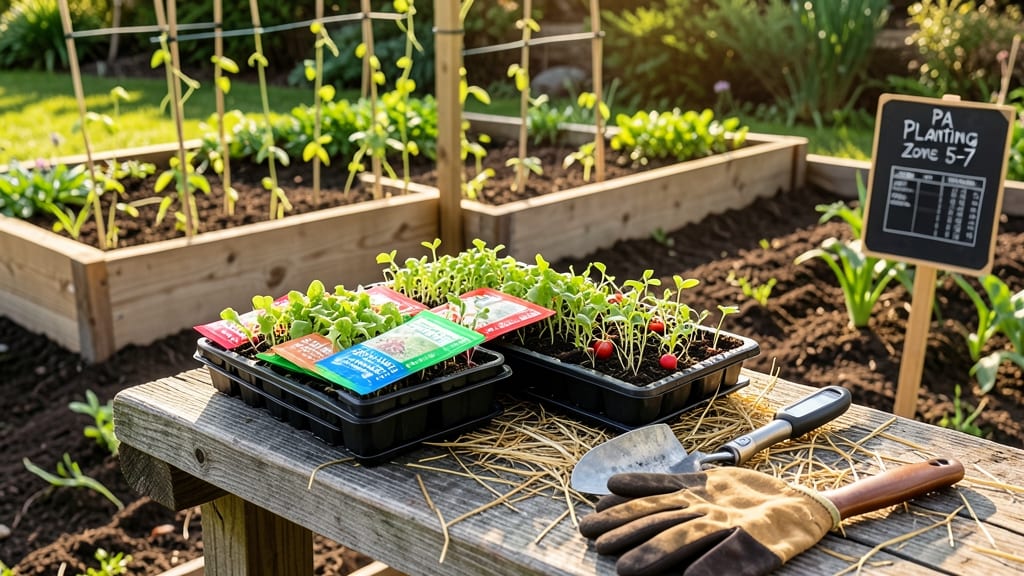
To plant a vegetable garden in Pennsylvania at the perfect time means timing it after the last frost—usually mid-April in most regions, but earlier in the south and later in the north.
Pennsylvania’s diverse climate means your vegetable garden’s success hinges on timing—plant too early and risk frost damage, too late and miss peak harvests. Here’s your county-by-county guide to mastering the perfect planting windows for tomatoes, peppers, lettuce, and more.
Cool-season crops like spinach and peas can go in as early as March in southern PA, while warm-season favorites like tomatoes and peppers need to wait until two weeks after your last frost date—often late April or early May.
Below, I’ll break down the best planting windows by region, soil prep tips, and how to stretch your growing season for bigger harvests—no matter where you are in the Keystone State.
Pennsylvania’s last frost dates by county: critical planting windows for vegetables
Pennsylvania’s last frost dates vary dramatically from southern Chester County to northern Erie County, creating a 100-day difference in planting windows. Understanding these county-specific averages helps you time tomatoes, peppers, and lettuce perfectly for maximum harvests.
The USDA Zones 5b-7a across PA mean mountainous regions like Lackawanna County often face later springs than valleys like Berks County.
For warm-season crops like tomatoes and cucumbers, wait until 2-3 weeks after your county’s last frost date. Cool-season crops such as spinach and peas can handle light frosts and should be planted 4-6 weeks before the last frost.
My Pittsburgh garden (Zone 6a) thrives when I plant tomato seedlings around May 15, while my friend in Philadelphia starts hers two weeks earlier.
Here’s your county-by-county guide to last frost dates and ideal planting windows for 10 key Pennsylvania regions, including adjustments for mountain vs. valley microclimates.
| County | USDA Zone | Avg. Last Frost | Warm-Season Planting Window | Cool-Season Planting Window | Notes | |||||||||||||||
|---|---|---|---|---|---|---|---|---|---|---|---|---|---|---|---|---|---|---|---|---|
| Philadelphia/Chester | 7a | March 20 | April 15–May 15 | Feb 15–March 15 | Urban heat island effect; plant 1 week earlier. | |||||||||||||||
| Pittsburgh/Allegheny | 6b | April 10 | May 1–May 20 | March 1–March 15 | Valley region; soil warms faster. | |||||||||||||||
| Harrisburg/Lebanon | 6a | April 5 | April 25–May 10 | Feb 28–March 10 | Moderate elevation; use row covers for early crops. | |||||||||||||||
| Scranton/Lackawanna | 5b | May 5 | May 25–June 5 | March 15–March 30 | Mountain region; plant cold-hardy varieties. | |||||||||||||||
| Erie | 6a | May 10 | June 1–June 10 | March 20–March 31 | Lake-effect delays; wait for soil temps above 50°F. | |||||||||||||||
| State College/Centre | 6b | April 20 | May 10–May 25 | March 5–March 20 | Hilly terrain; south-facing beds warm first. | |||||||||||||||
| Reading/Berks | 7a | March 25 | April 10–April 30 | Feb 1–Feb 15 | Early spring; extend season with tunnels. | |||||||||||||||
| Wilkes-Barre/Luzerne | 5b | May 1 | May 20–June 1 | March 10–March 25 | Poconos influence; frost risk until late May. | |||||||||||||||
Lancaster
How to adjust planting dates for Pennsylvania’s microclimates: mountain vs. valley strategiesPennsylvania’s dramatic elevation shifts—from the Pocono Mountains to the Allegheny Valley—create microclimates that can shift planting windows by 2-4 weeks. In high-elevation areas like Lackawanna County, last frosts average May 15, while Pittsburgh’s lowland valleys see them by April 15. These differences mean your tomato seeds might need row covers in the mountains but can go direct-sown in valleys. For warm-season crops like peppers and cucumbers, mountain gardeners should wait until May 20—after soil warms to 60°F—while valley gardeners can plant by April 25. Cool-season crops like spinach thrive in mountain gardens by March 15 but may bolt in valley heat if planted before April 10. The key? Adjust your planting calendar by 1,000 feet of elevation—every 1,000 ft up delays planting by about 1 week.
To bridge the gap in mountain gardens, I swear by black plastic mulch to warm soil 5-10°F faster than bare earth. Lay it down 2 weeks before planting to jumpstart tomatoes and peppers. In valleys, focus on succession planting: Sow lettuce every 2 weeks from April to July to avoid bolting. For both regions, hardening off seedlings takes 10-14 days longer in the mountains due to cooler nights. Don’t overlook fall planting—mountain areas can extend harvests until October 15 with floating row covers, while valleys may push to November 1. Try ‘Winterbor’ kale or ‘Teton’ carrots, both of which tolerate light frosts. Pro tip: In valleys, shade cloth (30%) helps leafy greens survive summer heat, while mountain gardeners can skip it entirely. For soil warming, I mix compost into beds 4-6 weeks before planting—it raises temperatures by 2-3°F. In valleys, add straw mulch to retain moisture during 90°F+ days. Test soil temps with a soil thermometer; warm-season crops need 70°F+ for 7 consecutive days to thrive. Mountain gardeners, don’t rush—wait for 60°F+ soil to avoid stunted growth. Remember: microclimates aren’t just about elevation. Urban heat islands in Philadelphia can add 2-3 weeks to growing seasons compared to rural areas just 20 miles away. Always check your local weather station for 3-year averages—they’re more accurate than USDA zones alone. With these adjustments, you’ll double your harvests by matching crops to your unique climate niche. 🌱 |