
Container Gardens
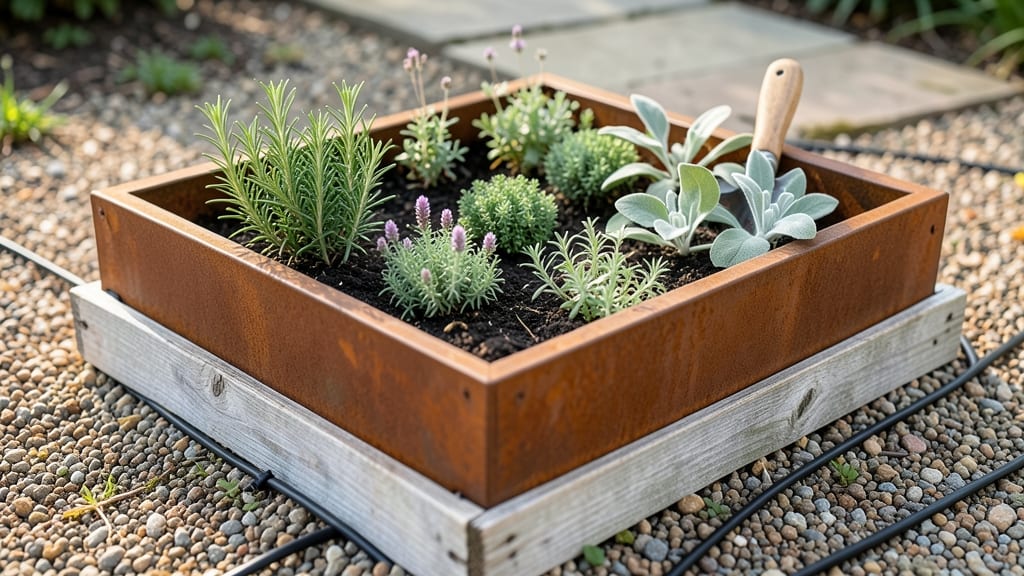
Corten steel raised garden beds provide exceptional longevity and weatherproofing, thanks to their self-protecting patina that forms naturally over time, making them perfect for outdoor gardens requiring minimal upkeep.
This weather-resistant material contains copper, chromium, and phosphorus that react with oxygen to create a stable rust-like layer. 🔥 Unlike regular steel, this patina actually protects the bed from further corrosion, which is why these containers last decades with proper care.
Many gardeners choose corten steel specifically for its ability to withstand harsh climates without needing paint or sealants—ideal for coastal areas or regions with heavy rainfall.
For planting, these beds work well with most vegetables and herbs, though acid-loving plants like blueberries may leach minerals over time. 💫 The heavy-duty construction also makes them perfect for root vegetables like potatoes and carrots.
Just be sure to use a high-quality growing medium and monitor drainage, as standing water can still cause issues even with corten steel's natural protection.
💡 In This Article
- How Corten Steel Resists Rust and Weathering
- Planting and Maintenance Tips for Corten Steel Garden Beds
How corten steel resists rust and weathering
Corten steel's rust resistance comes from its carefully balanced chemical composition: typically 0.25-0.5% copper, 0.8-1.25% chromium, and 0.08-0.15% phosphorus. These elements create a controlled oxidation process that forms a dense, stable patina layer when exposed to air and moisture.
Unlike regular steel that corrodes uniformly, corten steel develops this protective layer within 6-12 months of outdoor exposure, which actually shields the underlying metal from further degradation.
The patina formation begins with surface rusting that gradually converts to a darker, more stable oxide layer.
Think of it like a natural paint job that gets better with age—this layer can reach 0.1-0.3mm in thickness. 🔥 What makes it superior to galvanized steel is that galvanized coatings (like zinc) eventually wear away, exposing the base metal, while corten's patina remains intact.
In coastal environments where salt accelerates corrosion, corten steel outperforms painted alternatives because the patina actually contains trace elements that resist chloride ion penetration.
This weathering process continues slowly over decades, with the patina becoming more stable and protective. The copper content plays a crucial role by accelerating initial oxidation while chromium enhances corrosion resistance. Phosphorus helps refine the steel's grain structure, making it more uniform.
For comparison, standard carbon steel would rust through completely in 5-10 years in harsh conditions, while corten steel beds often last 20-30 years or more with minimal maintenance.
However, this natural protection isn't maintenance-free. While the patina requires no painting, you should occasionally clean off debris and prevent water pooling in crevices.
The key is understanding that corten steel's strength lies in its ability to self-protect through this controlled oxidation—it's not immune to corrosion but rather transforms it into a beneficial protective layer. This makes it particularly well-suited for garden beds where moisture and organic matter would quickly degrade standard materials.
For gardeners concerned about aesthetics, the patina develops a distinctive reddish-brown hue that many find attractive in rustic landscapes. Unlike galvanized steel that maintains a uniform gray color, corten steel's evolving appearance adds character to outdoor spaces.
The material also maintains its structural integrity better than wood, which rots, or plastic, which degrades under UV exposure.
One important consideration is that corten steel's patina formation can be accelerated by environmental factors. In dry climates, it may take longer to develop fully, while humid or salty environments speed up the process.
This is why corten steel garden beds are particularly popular in coastal regions—where other metals would fail, corten steel continues to perform reliably year after year. 💫
The material's durability extends to temperature extremes as well. Corten steel maintains its strength from -40°F to 600°F, making it suitable for gardens in both cold northern climates and hot southern regions.
This thermal stability means your garden bed won't warp or crack like wood might in freezing temperatures or expand uncontrollably in heat.